Charleston Scenes · Book p. 48
Casualties of War
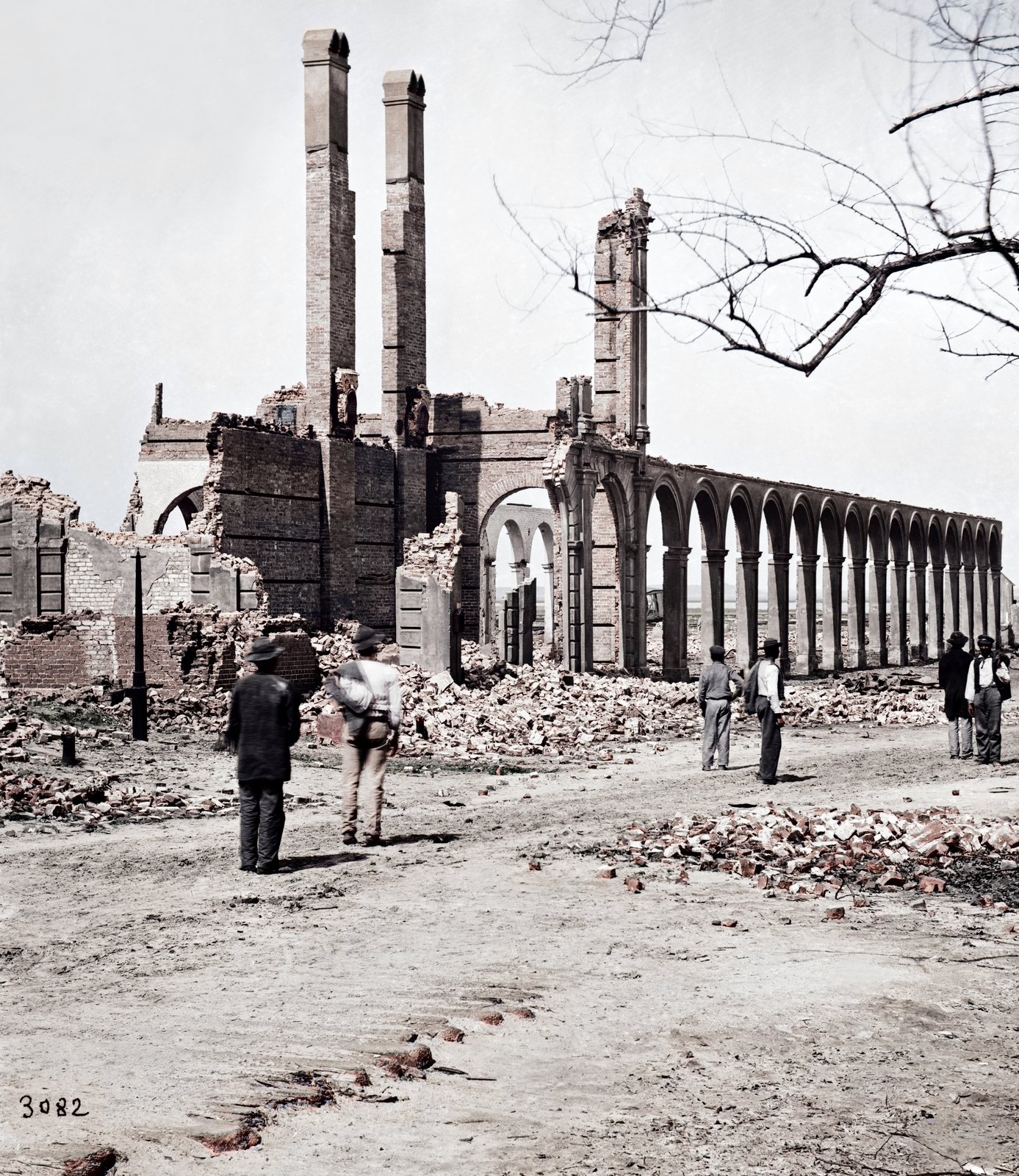
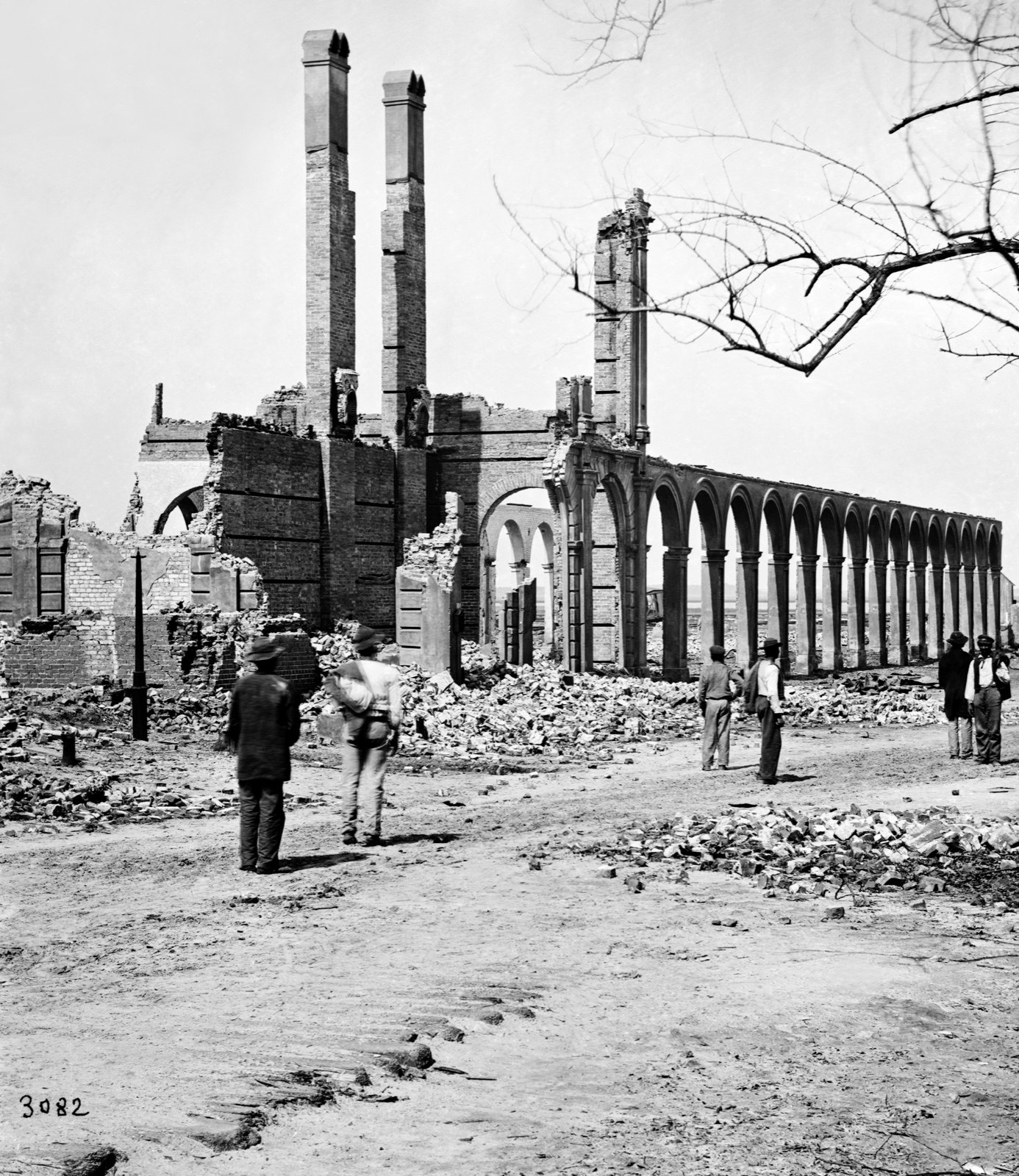
Drag to compareLibrary of Congress
Charleston historian Jack Thomson judges that in the Federal bombardment of the city, August 1863-February 1865, some fifty soldiers and civilians were killed by Northern shells. Three times that number died during the Confederate evacuation, Feb. 17-18, 1865. The abandonment led to a series of frightening explosions and fires everywhere. Authorities had gathered up cotton and piled it in public squares, where it was burned. (Northern officers during the war had profited from seizing and selling the stuff.) This led to flames spreading at different places all over the city. The Ashley River bridge—west of the Peninsula, from where the Yankees would be approaching—was set on fire, too. Along the shoreline, the Confederate warships Palmetto State, Chicora and Charleston were blown up (the latter with twenty tons of powder). Exploded ship pieces fell about, further starting blazes. Casualties from these explosions were minimal, at least unrecorded. Not so the blast at the railroad station. The Northeastern Railroad—so called because it connected Charleston with Wilmington— was located near Chapel and Alexander Streets. Military authorities stored a large quantity of gunpowder at the “Wilmington Depot,” as it was called. Early in the morning of February 18, the powder was accidentally ignited. The explosion killed more than 150 people; perhaps another 150 were burned, crawling away as best they could.
(George N. Barnard, photographer; Library of Congress)
This is the caption as printed in 100 Significant Civil War Photographs: Charleston in the War. It has not yet been through this site’s research and fact-checking pass.