The Collection
What still stands
Every place in the collection, sorted by what is there today. Where a building is gone, the photograph is the record.
Gone
Nothing of what was photographed survives at these places. For these, the photograph is the only record.
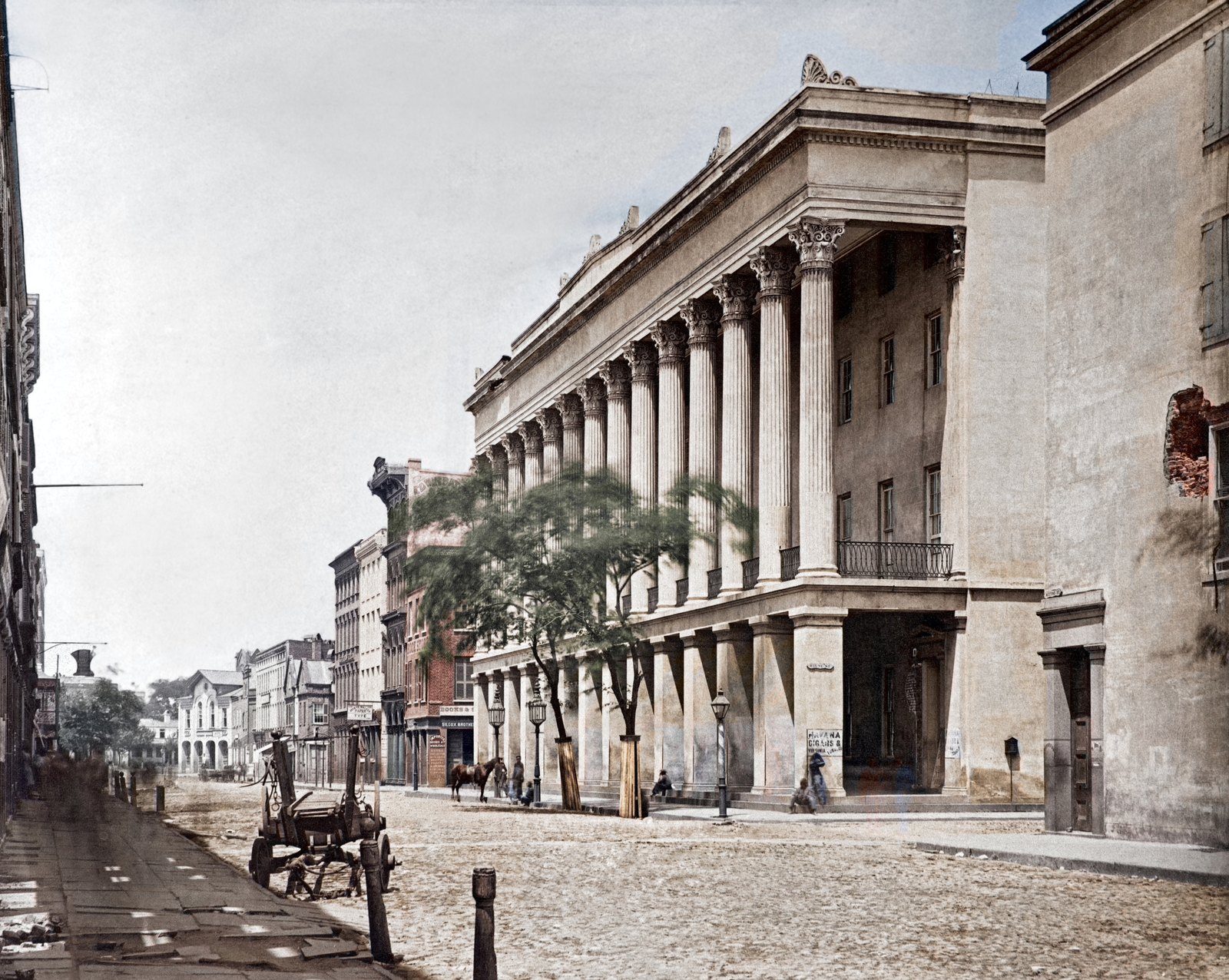
Charleston Hotel
Hotel · 1960 · 1 photograph
Meeting Street hotel of 1839 with a celebrated Corinthian colonnade. Demolished in 1960.
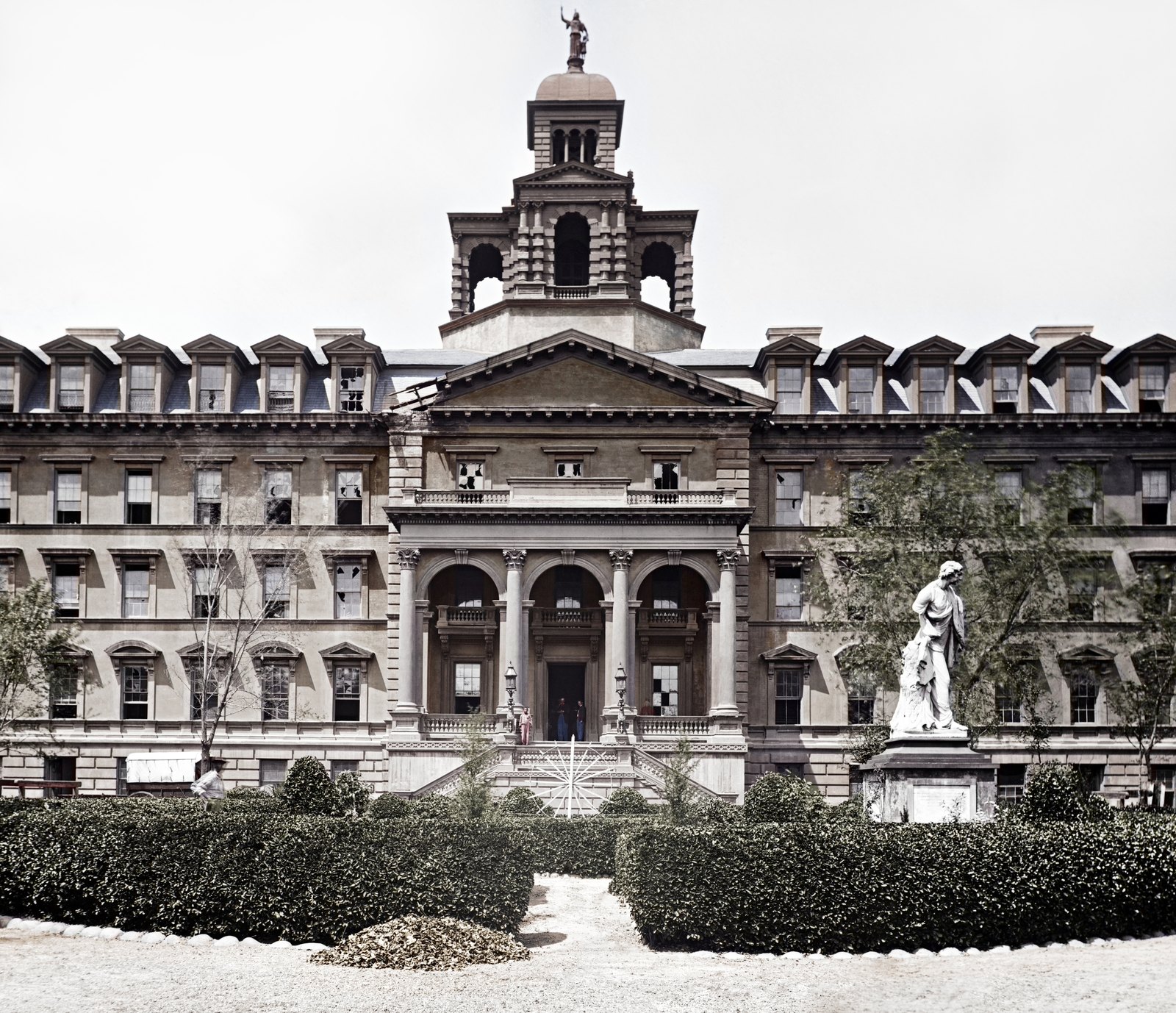
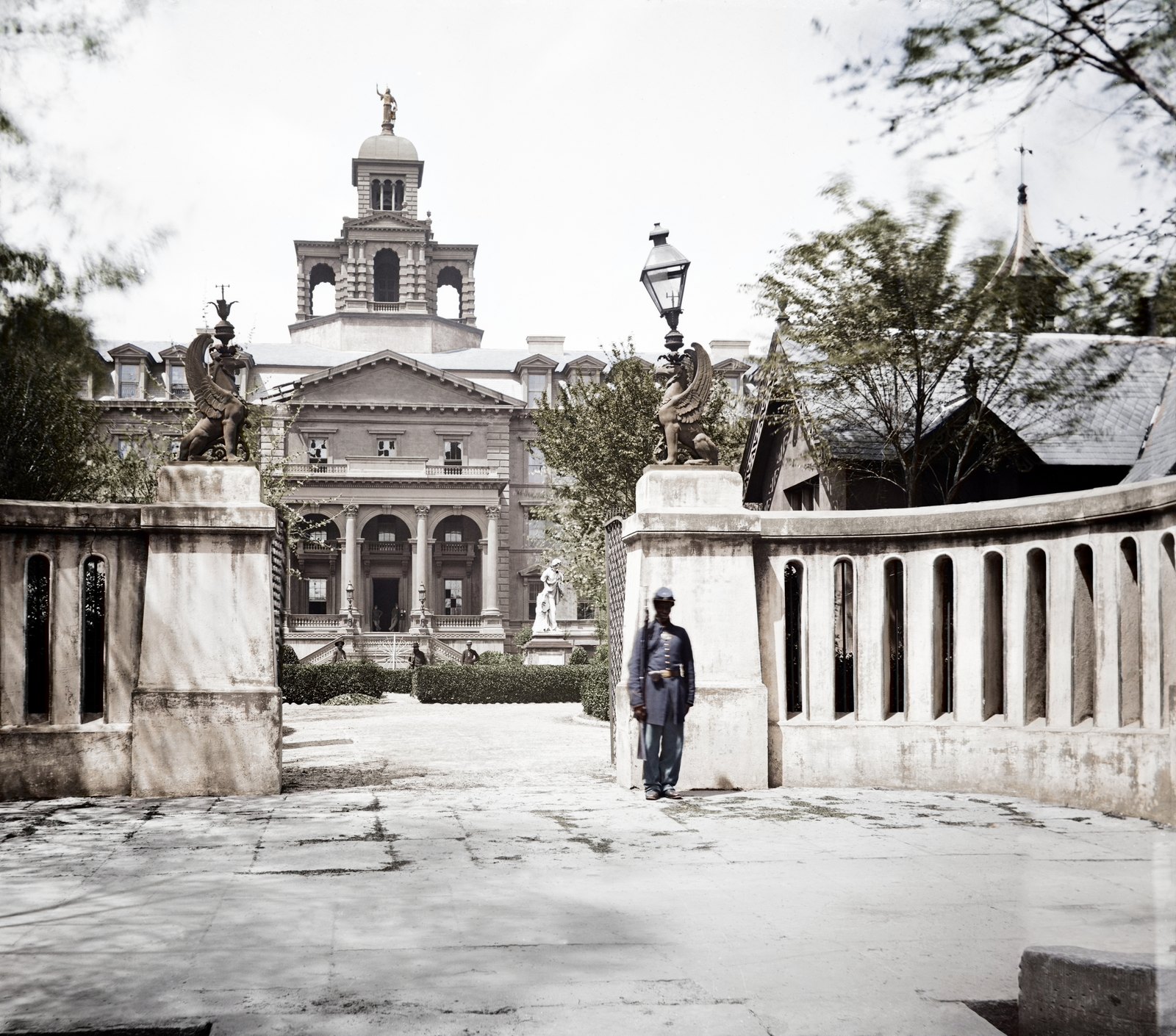
Charleston Orphan House
Public Building · 1953 · 2 photographs
Founded 1790, the first municipal orphanage in the United States. Demolished in 1953.
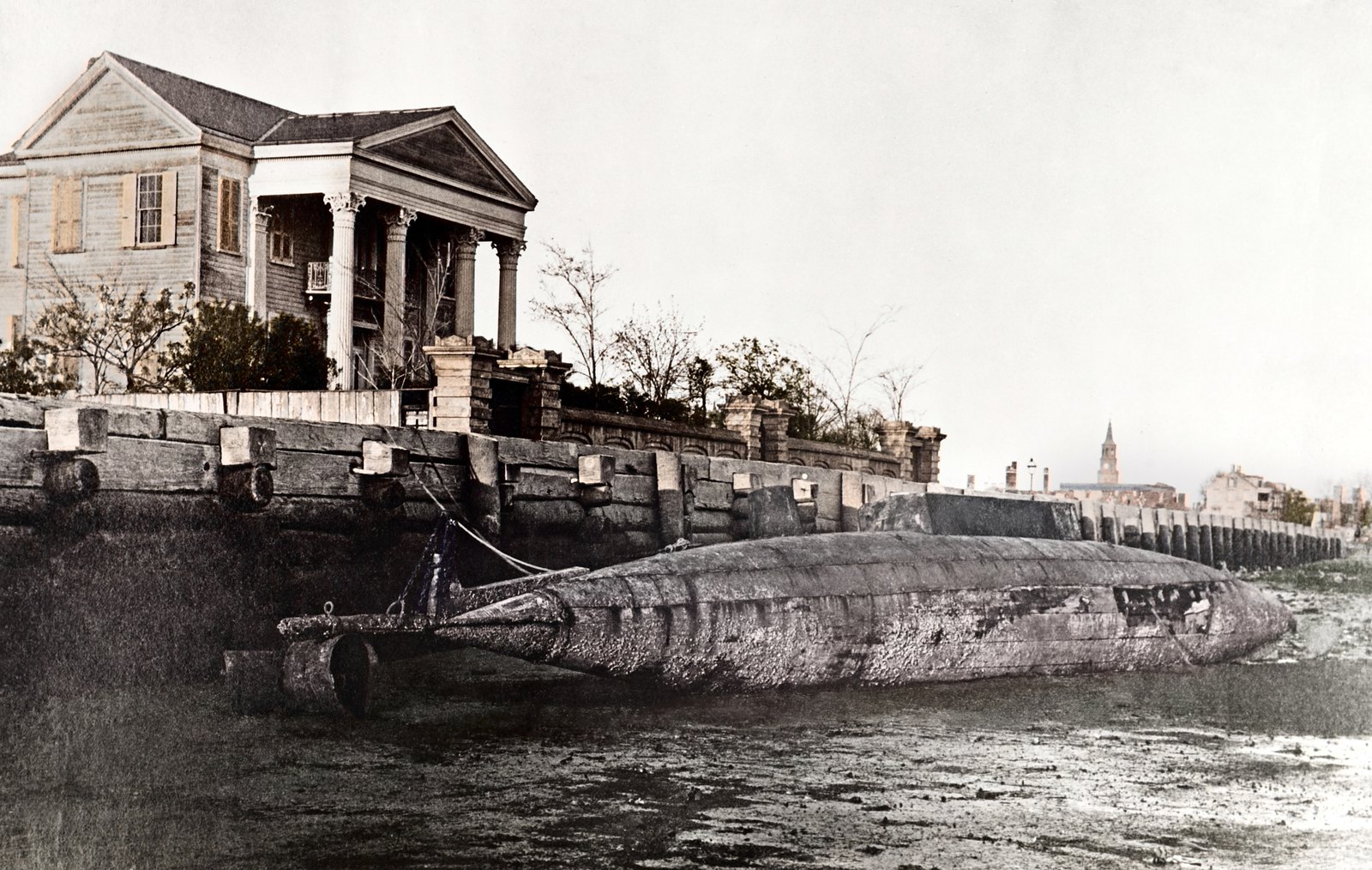
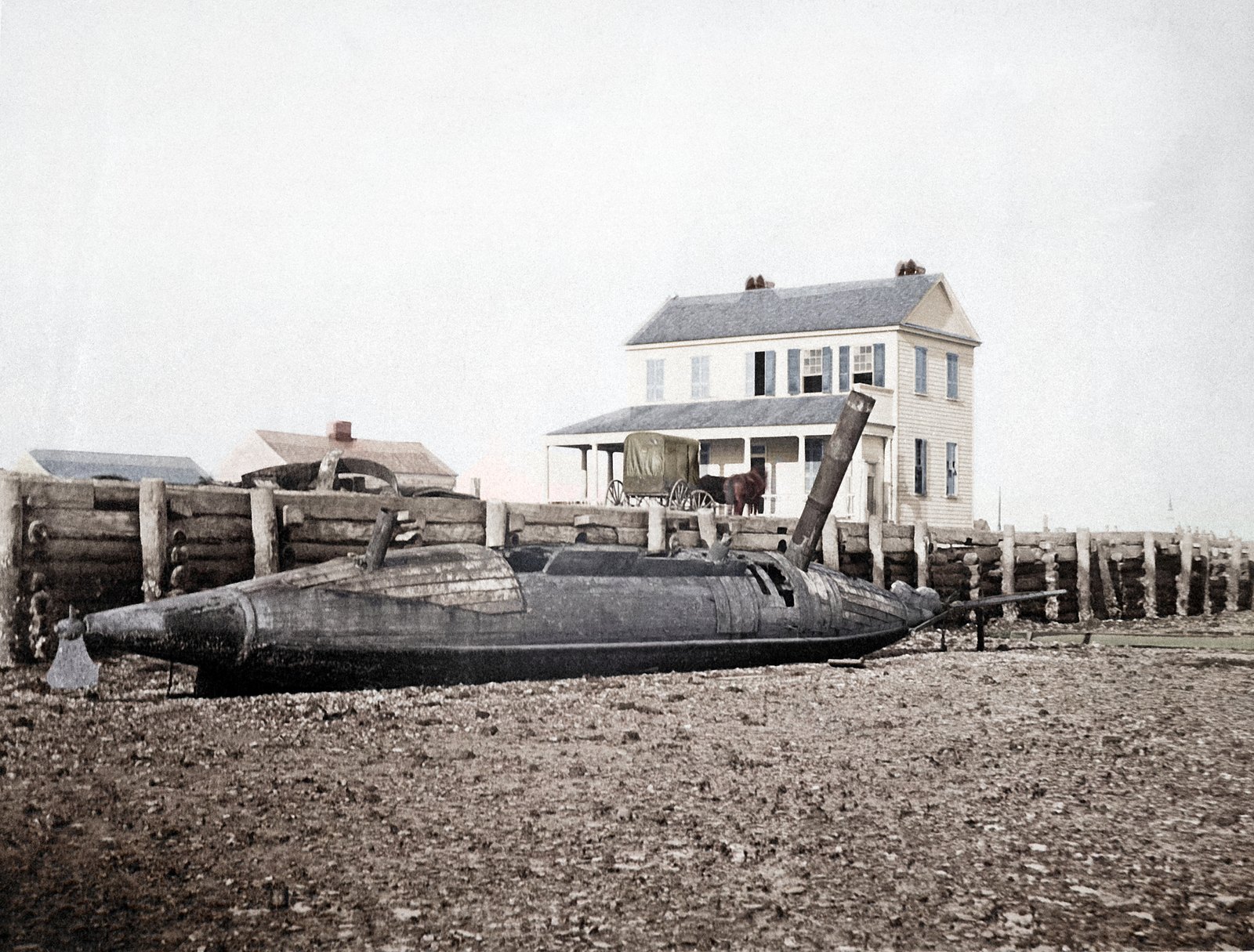
Chisolm Causeway, Ashley River
Wharf · 2 photographs
Where a number of the David-type torpedo boats were found after the Confederate evacuation.
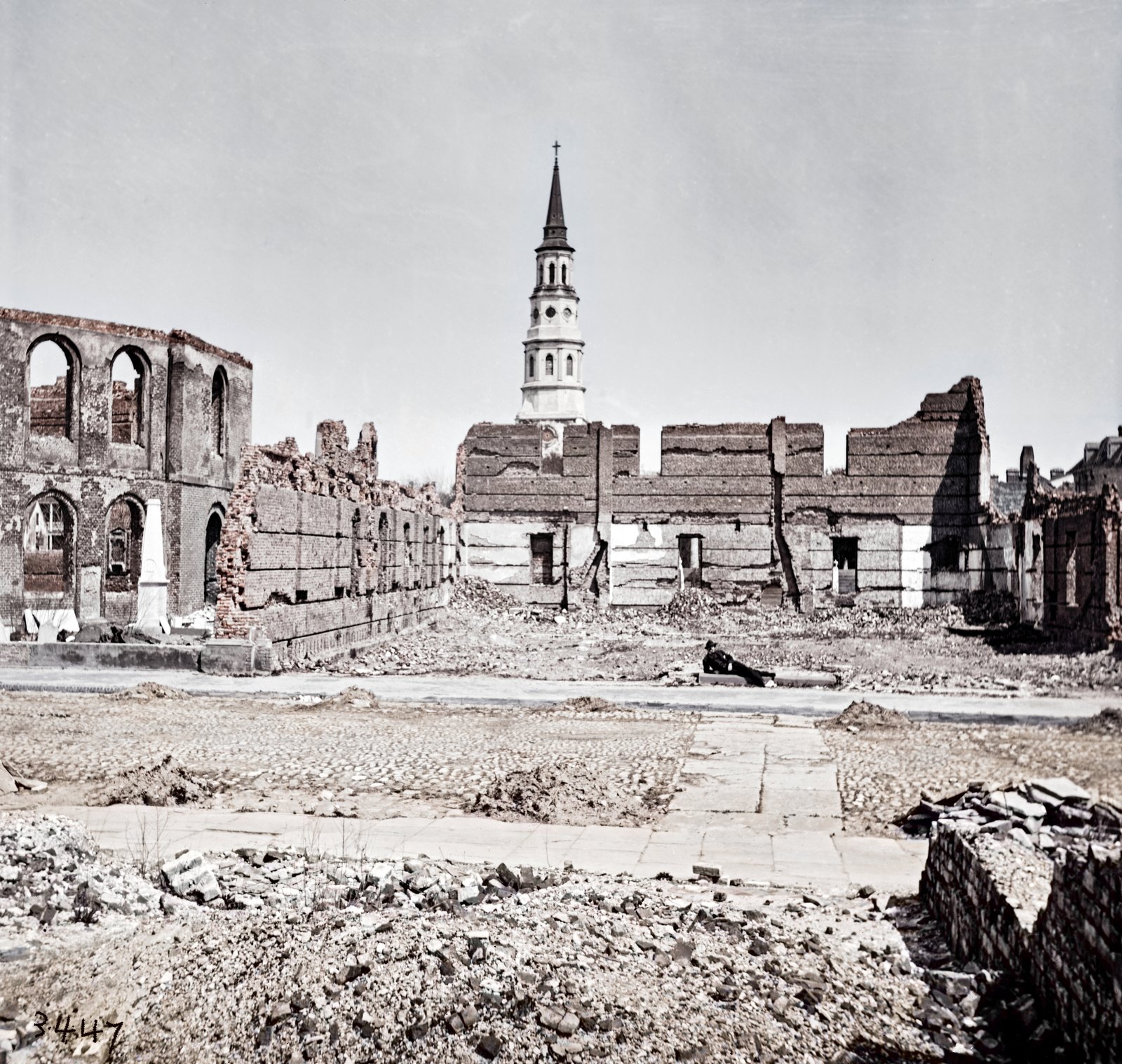
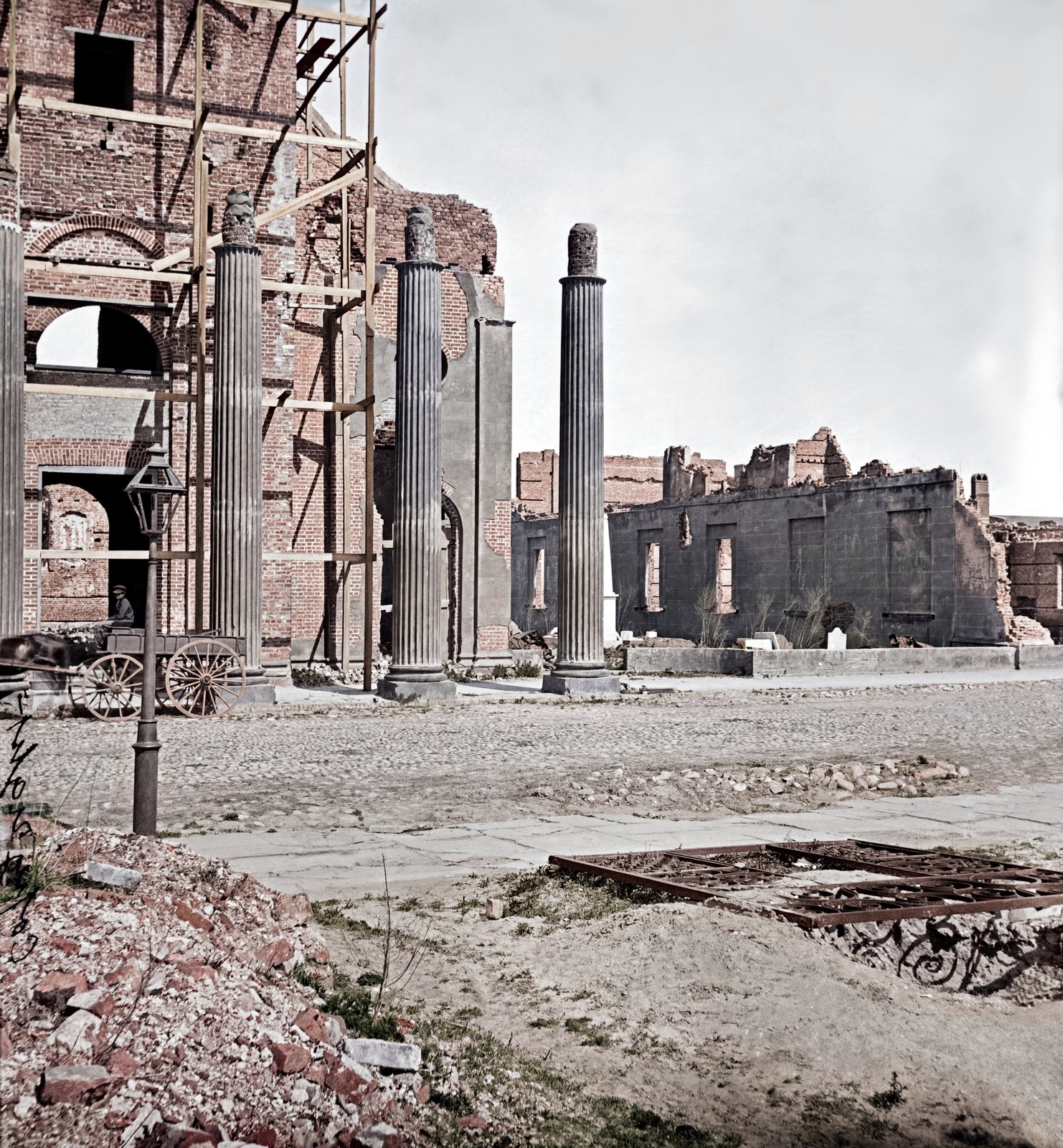
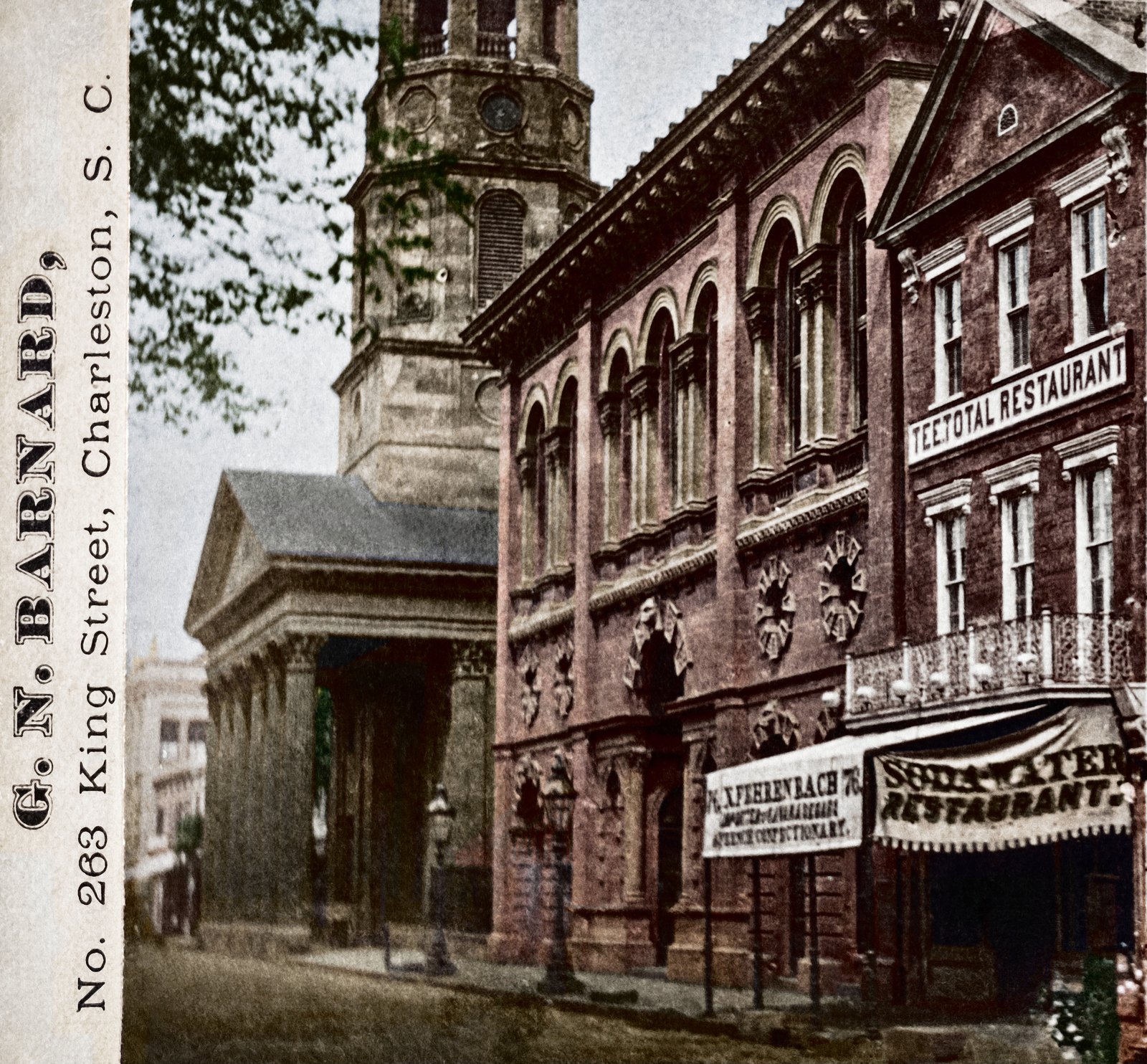
Institute Hall
Public Building · 1861 · 3 photographs
Where the Ordinance of Secession was signed on 20 December 1860. Gutted in the fire of December 1861 and never rebuilt.
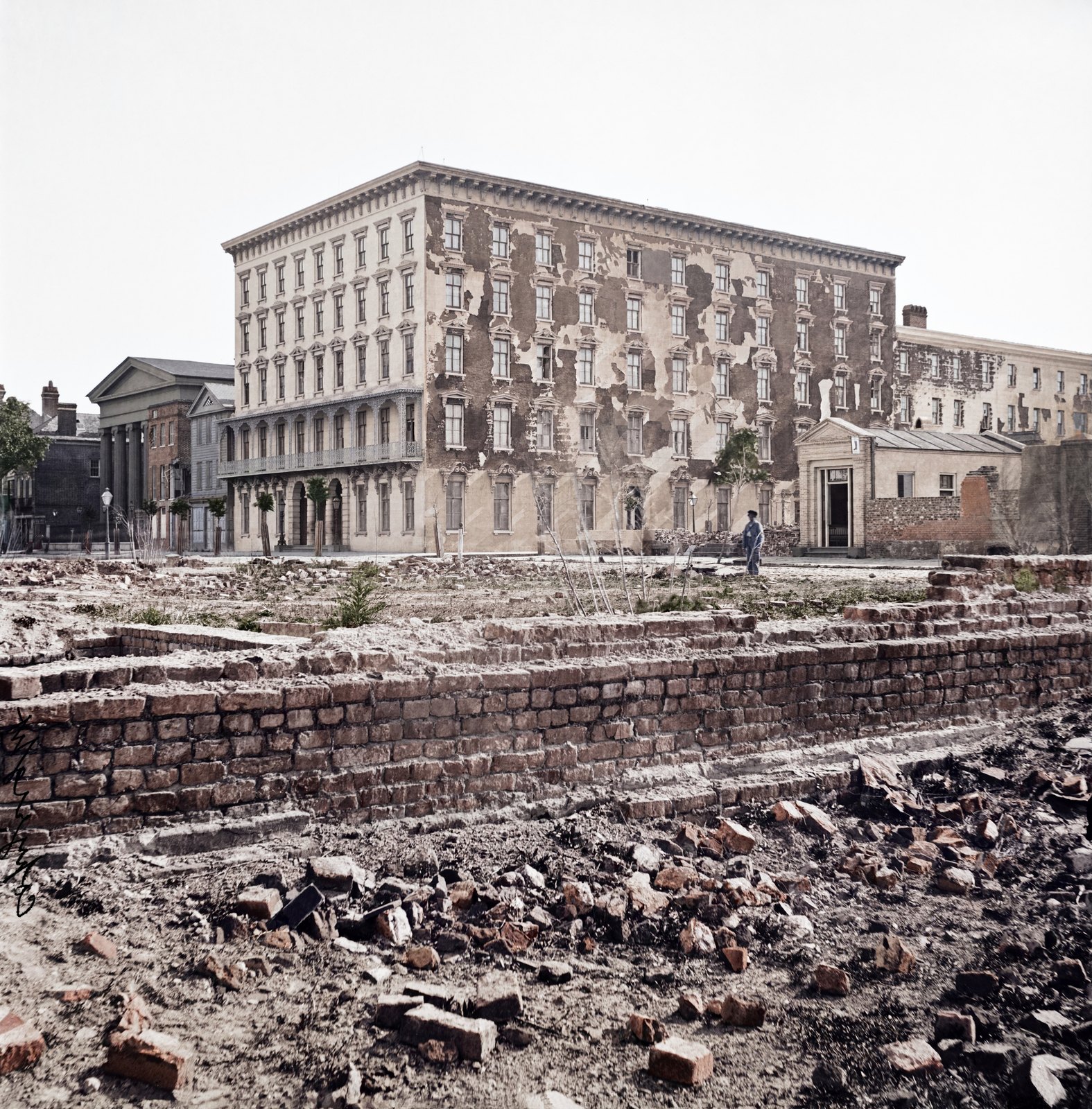
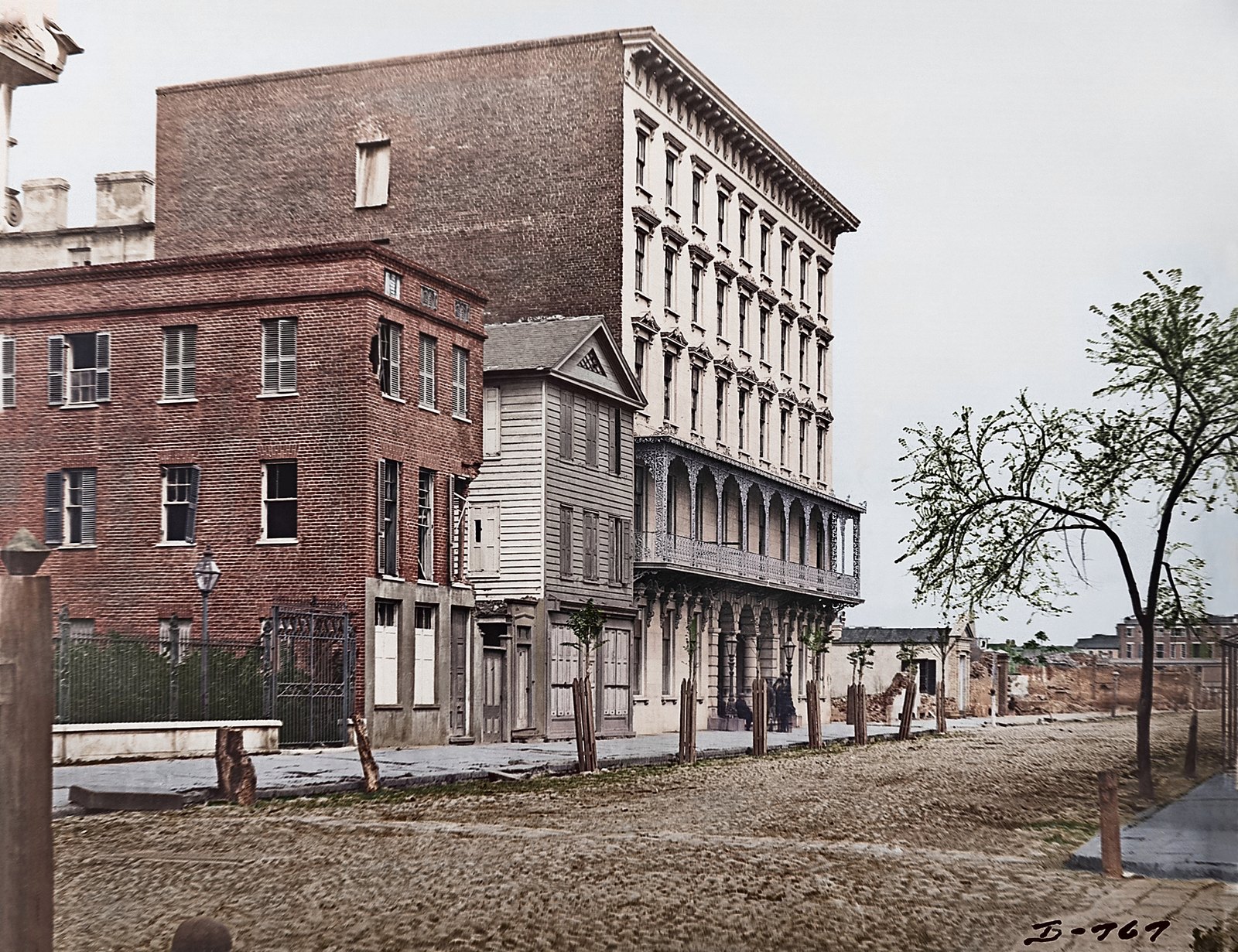
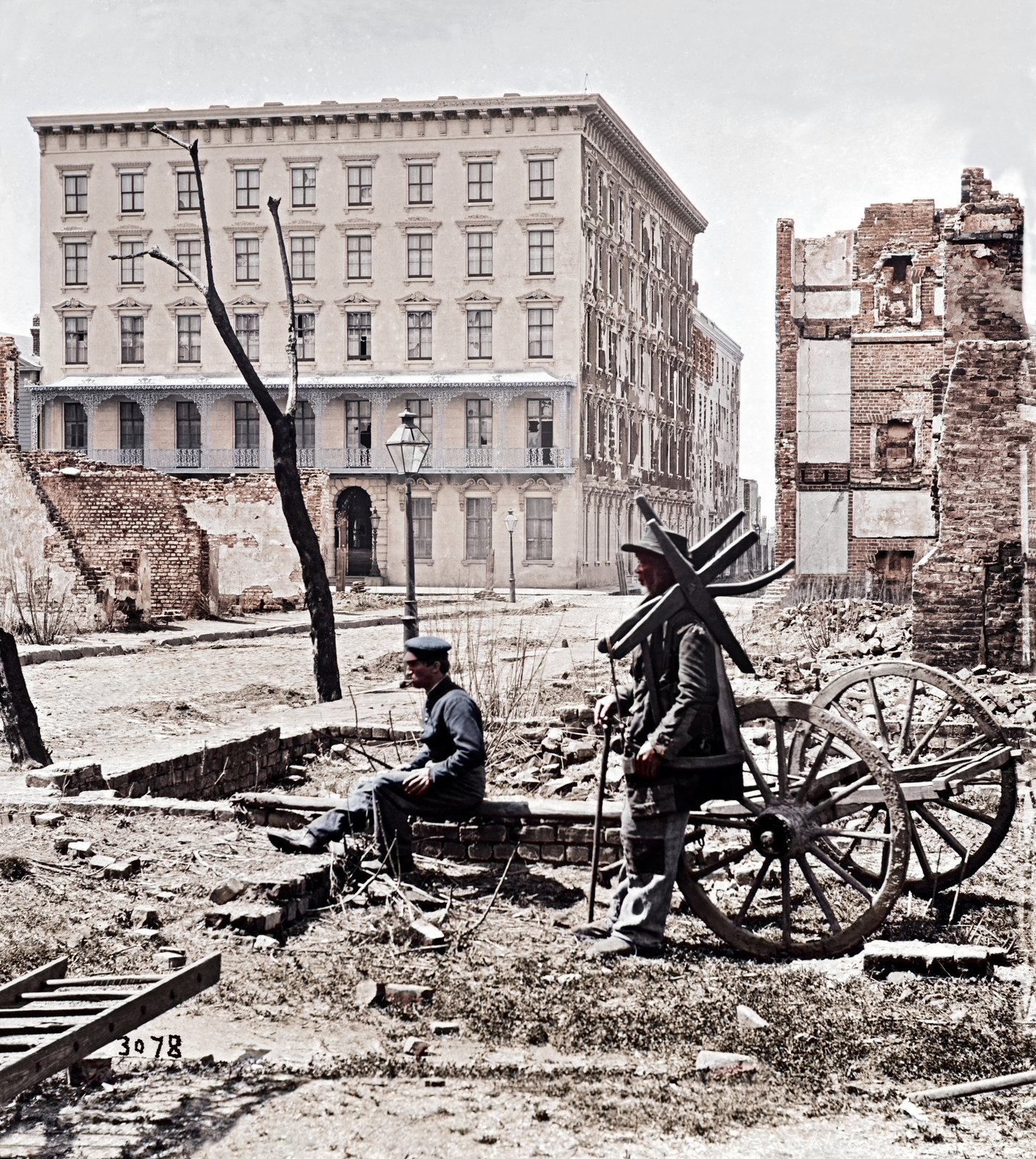
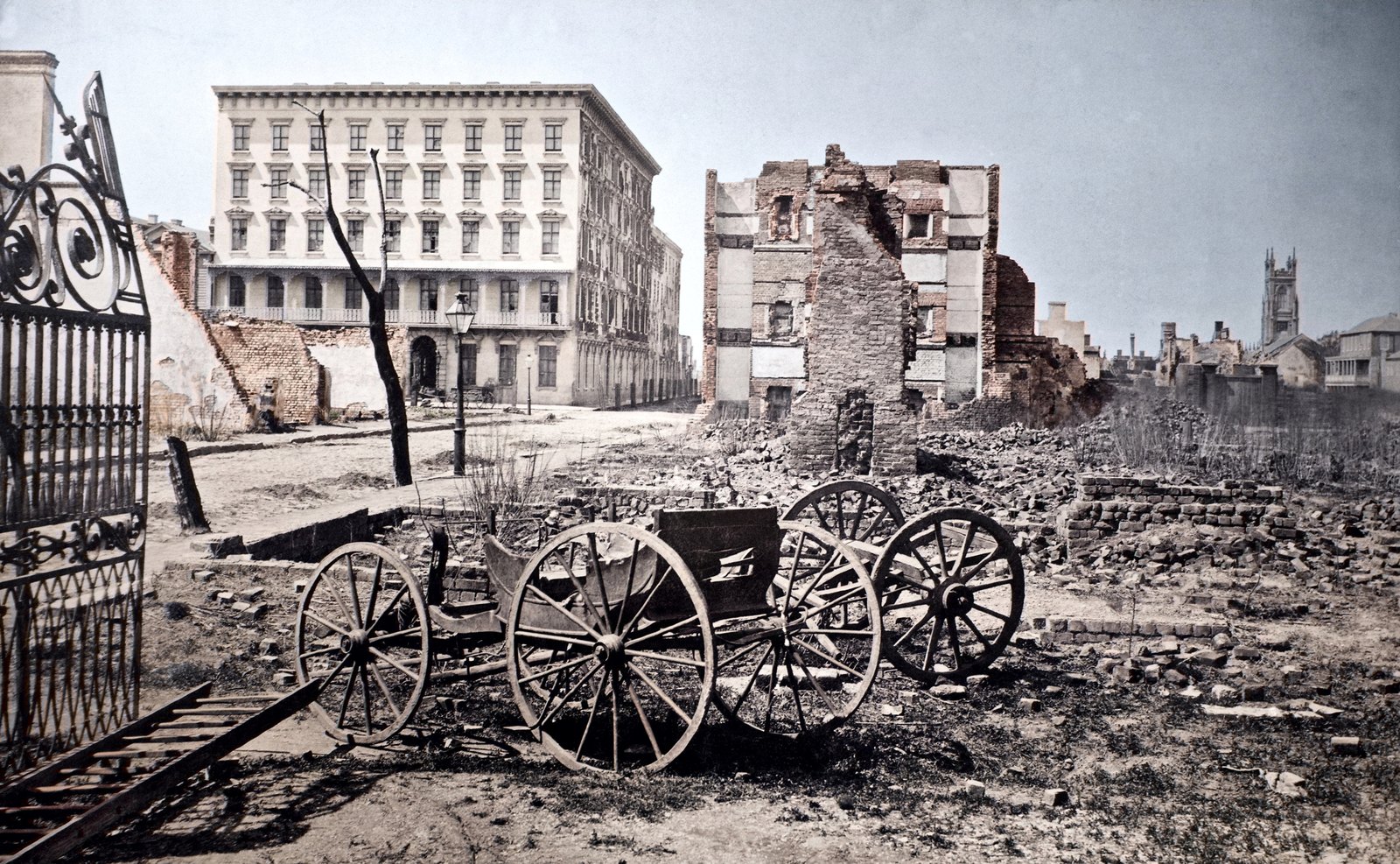
Mills House
Hotel · 1968 · 4 photographs
Opened 1853, architect John Earl. Demolished 1968; the hotel on the corner today opened in 1970 and reproduces the facade one storey taller.
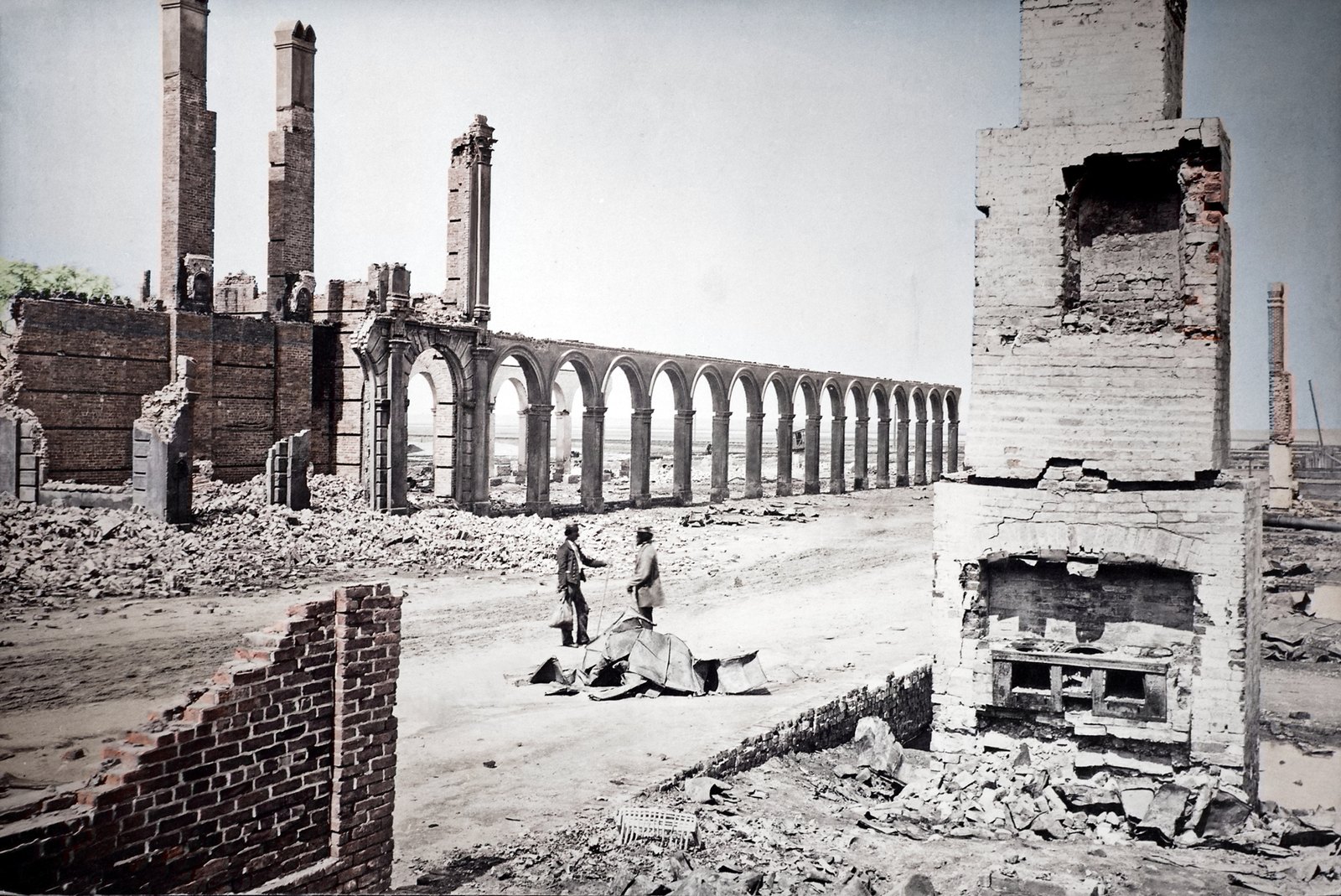
Northeastern Railroad Depot
Rail · 1865 · 1 photograph
Terminus of the Northeastern Railroad, burned in the destruction that accompanied the Confederate evacuation in February 1865.
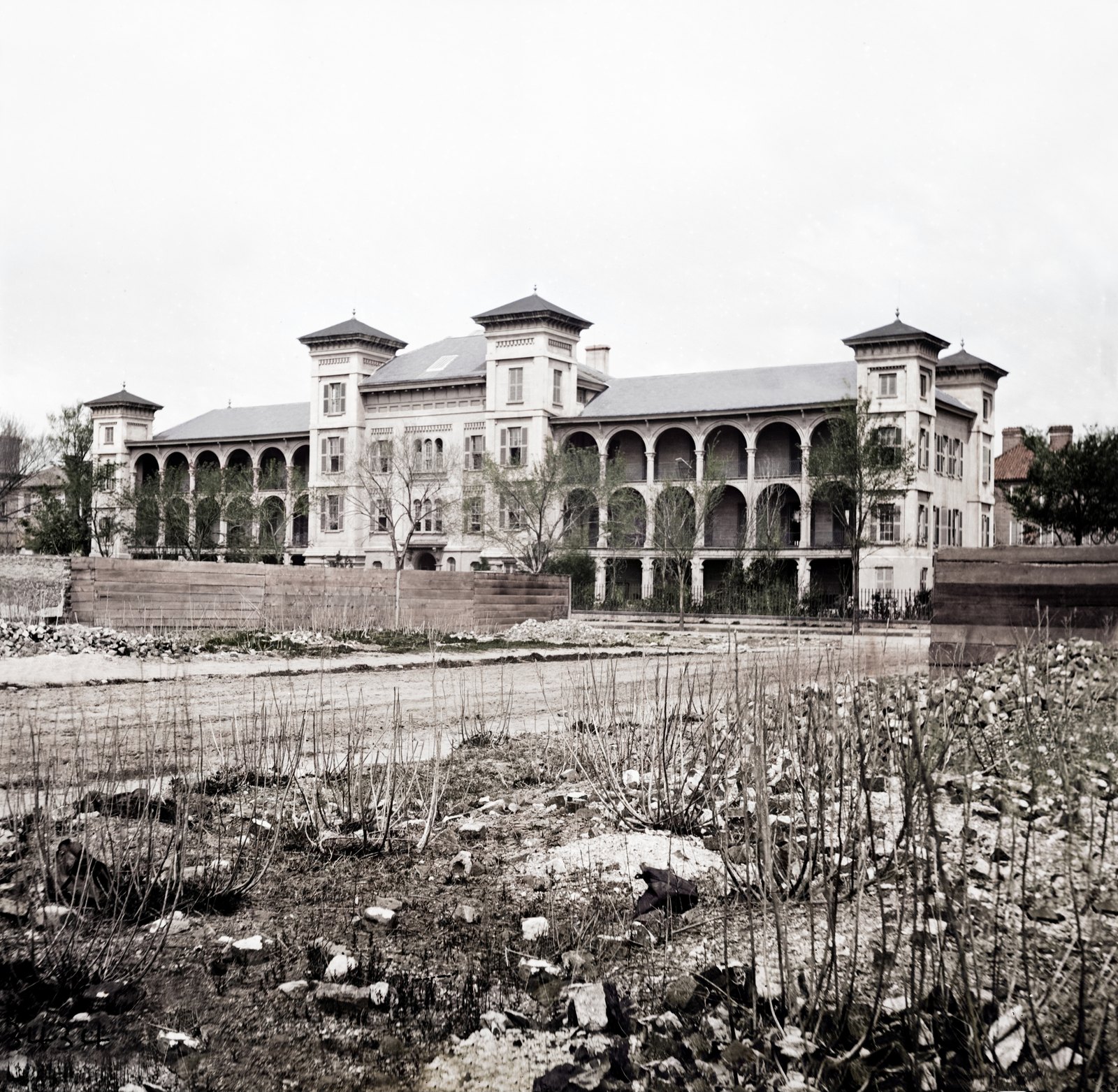
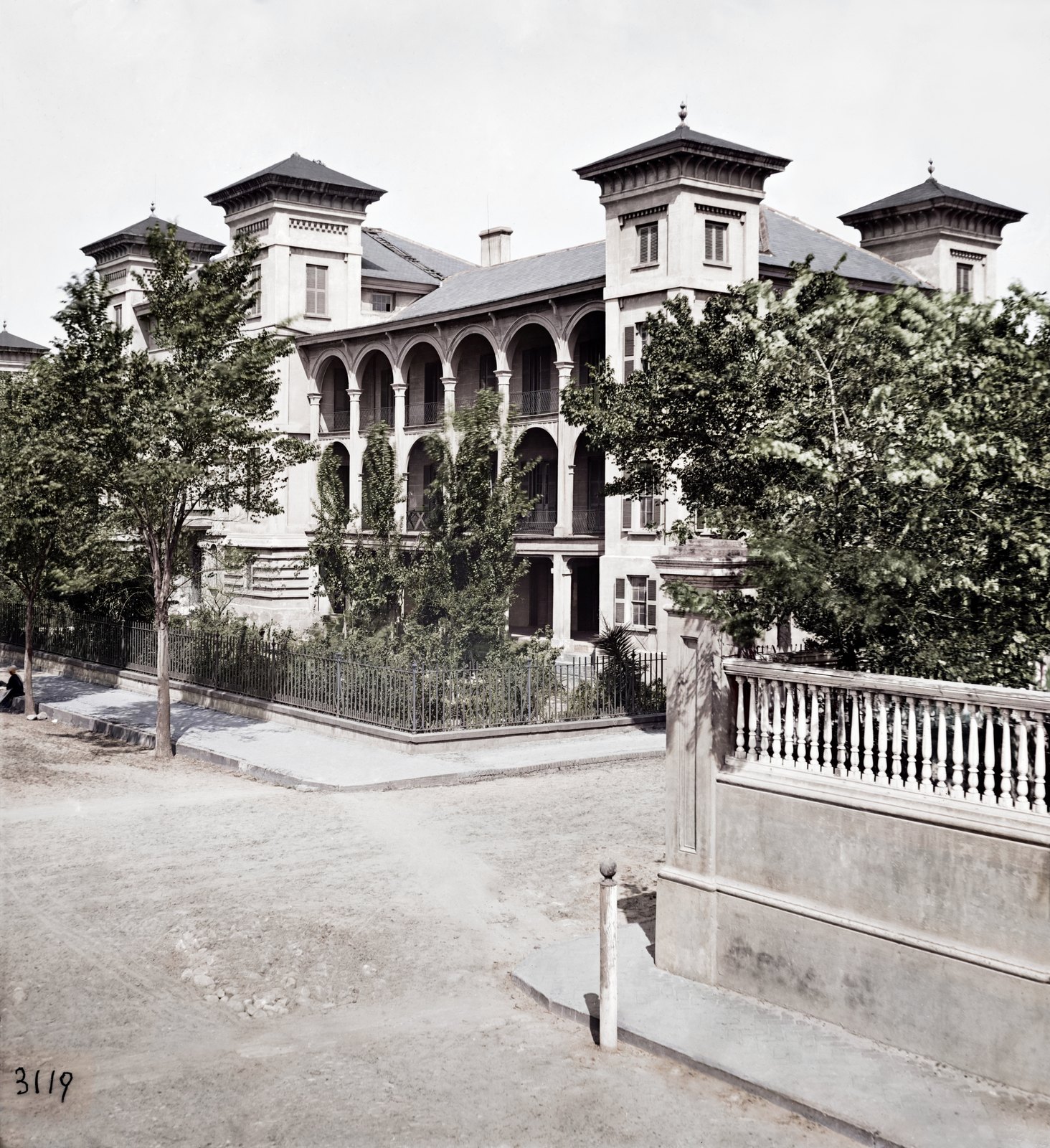
Roper Hospital
Hospital · 2 photographs
Opened 1856, the first community hospital in the Carolinas. Used for Federal prisoners under fire during the bombardment.
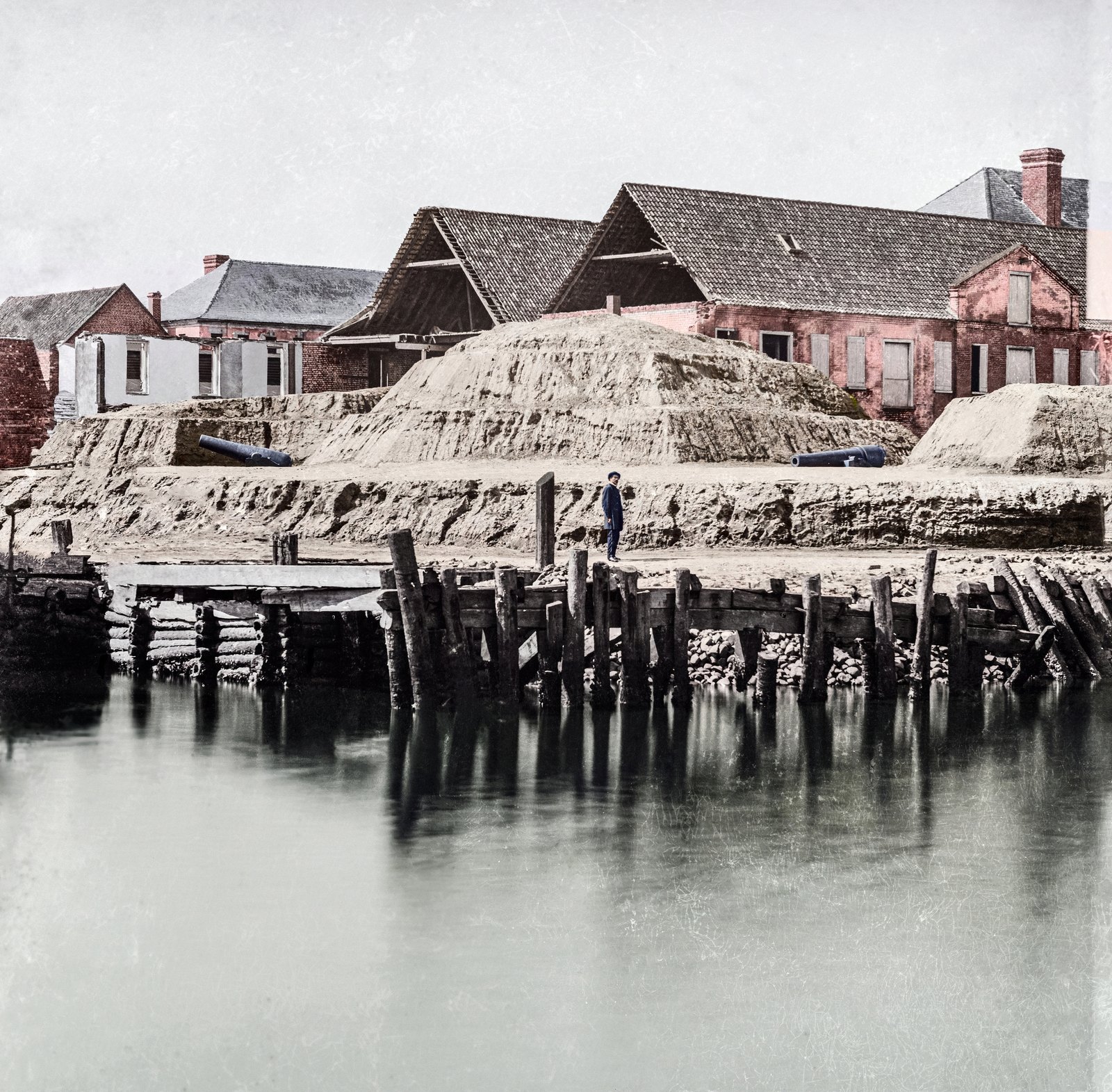
Vanderhorst's Wharf
Wharf · 1 photograph
Confederate earthwork battery on the shoreline beside the wharf.
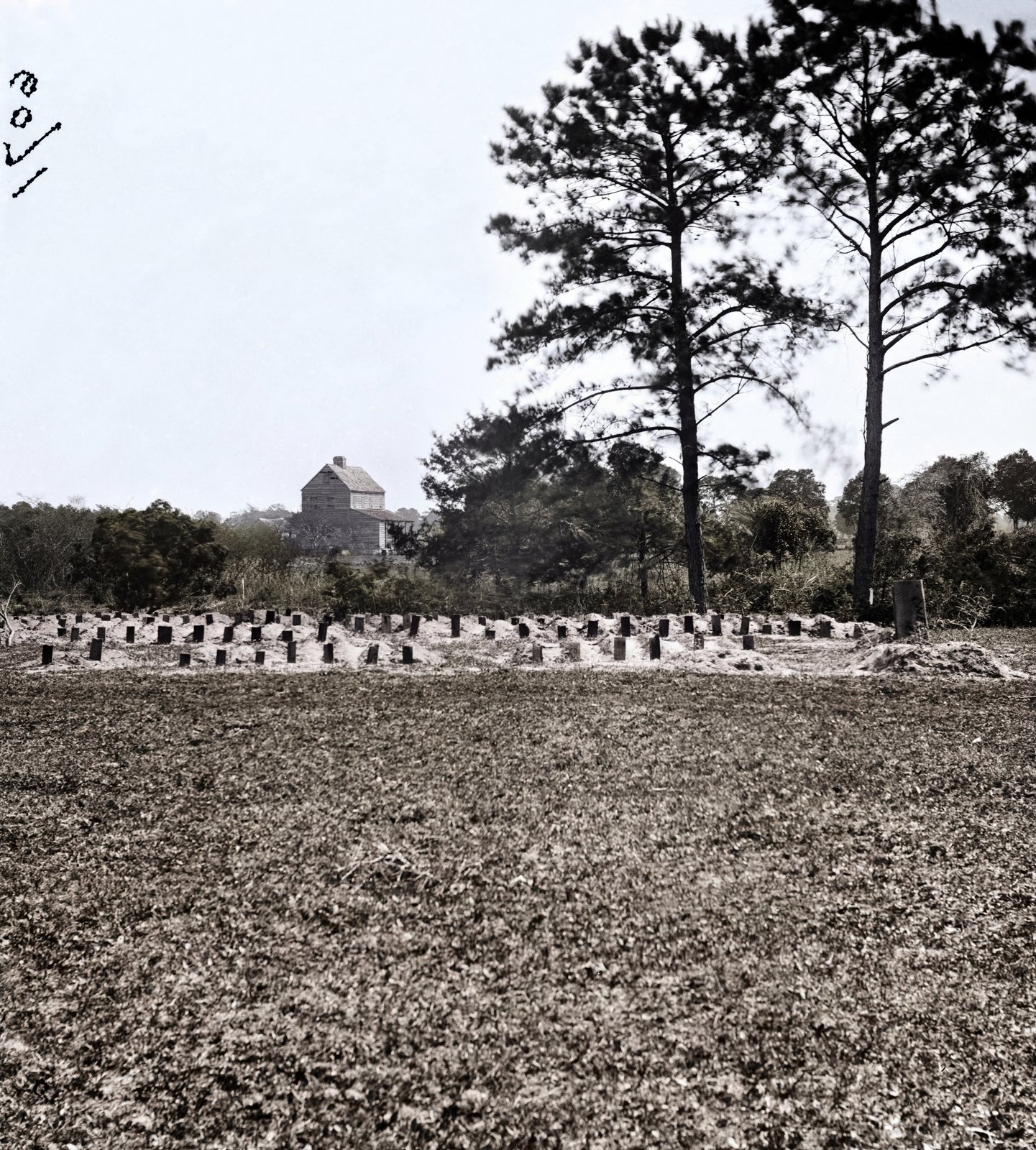
Washington Race Course
Cemetery · 1 photograph
Planters’ racecourse used as an open-air prison in 1864–65. The burial ground is gone; the site is now Hampton Park.
Rebuilt
The site survives, but what stands there today is not what the camera saw.
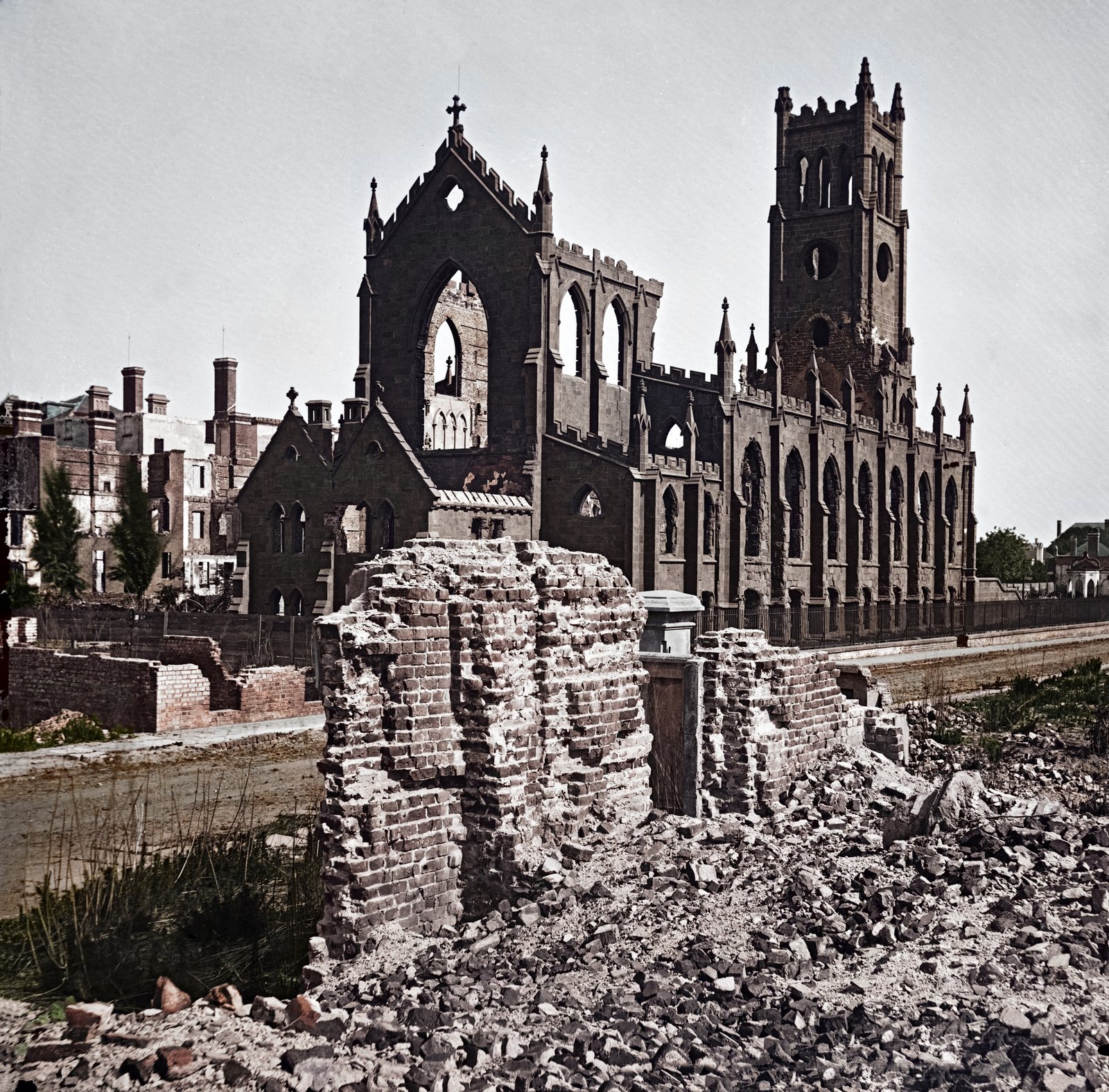
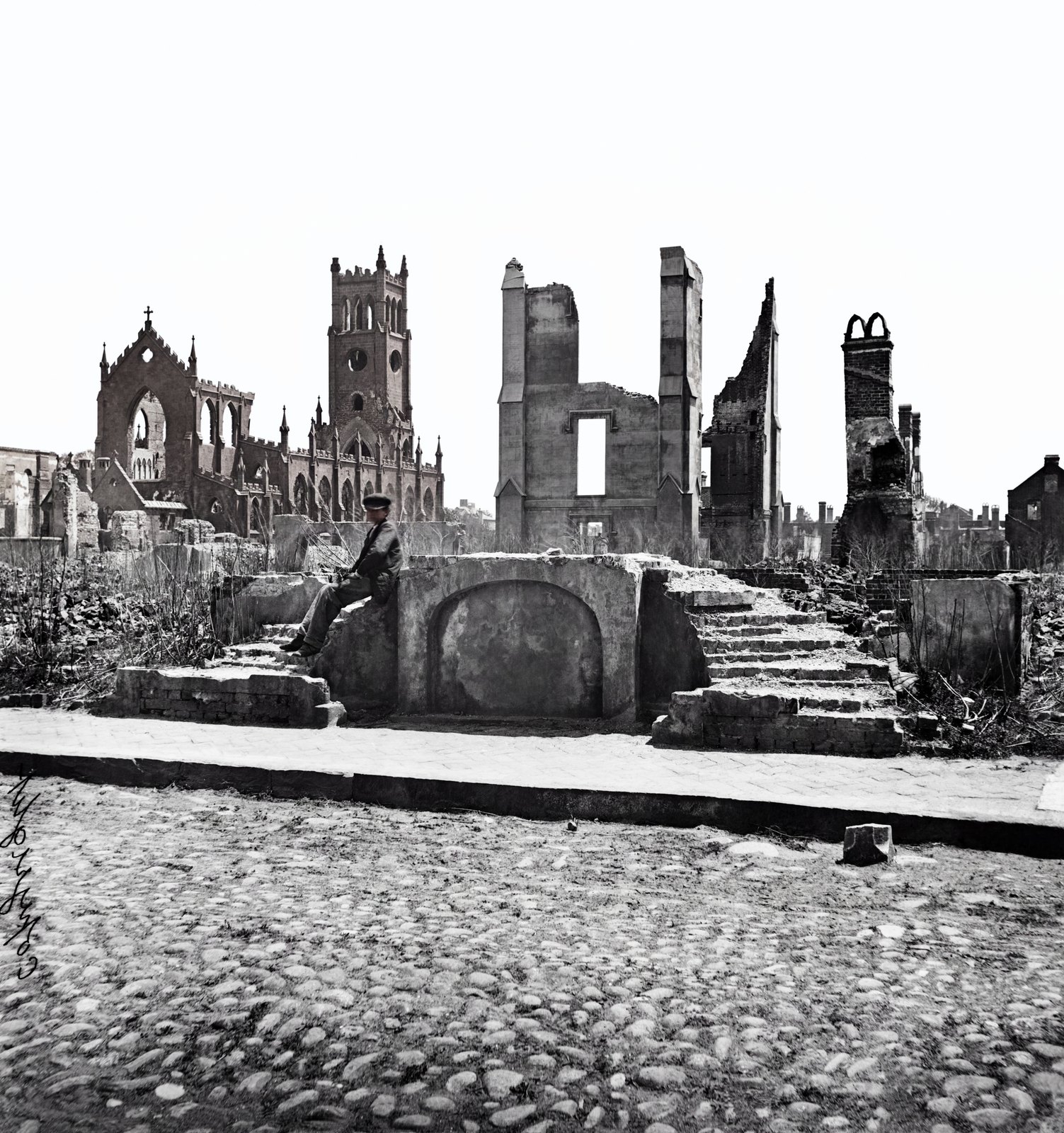
Cathedral of St. John the Baptist and St. Finbar
Church · 1907 · 3 photographs
Completed 1854 with a spire two hundred feet high; gutted in the fire of December 1861. Reconstruction was not finished until 1907, and the steeple was not added until 2010.
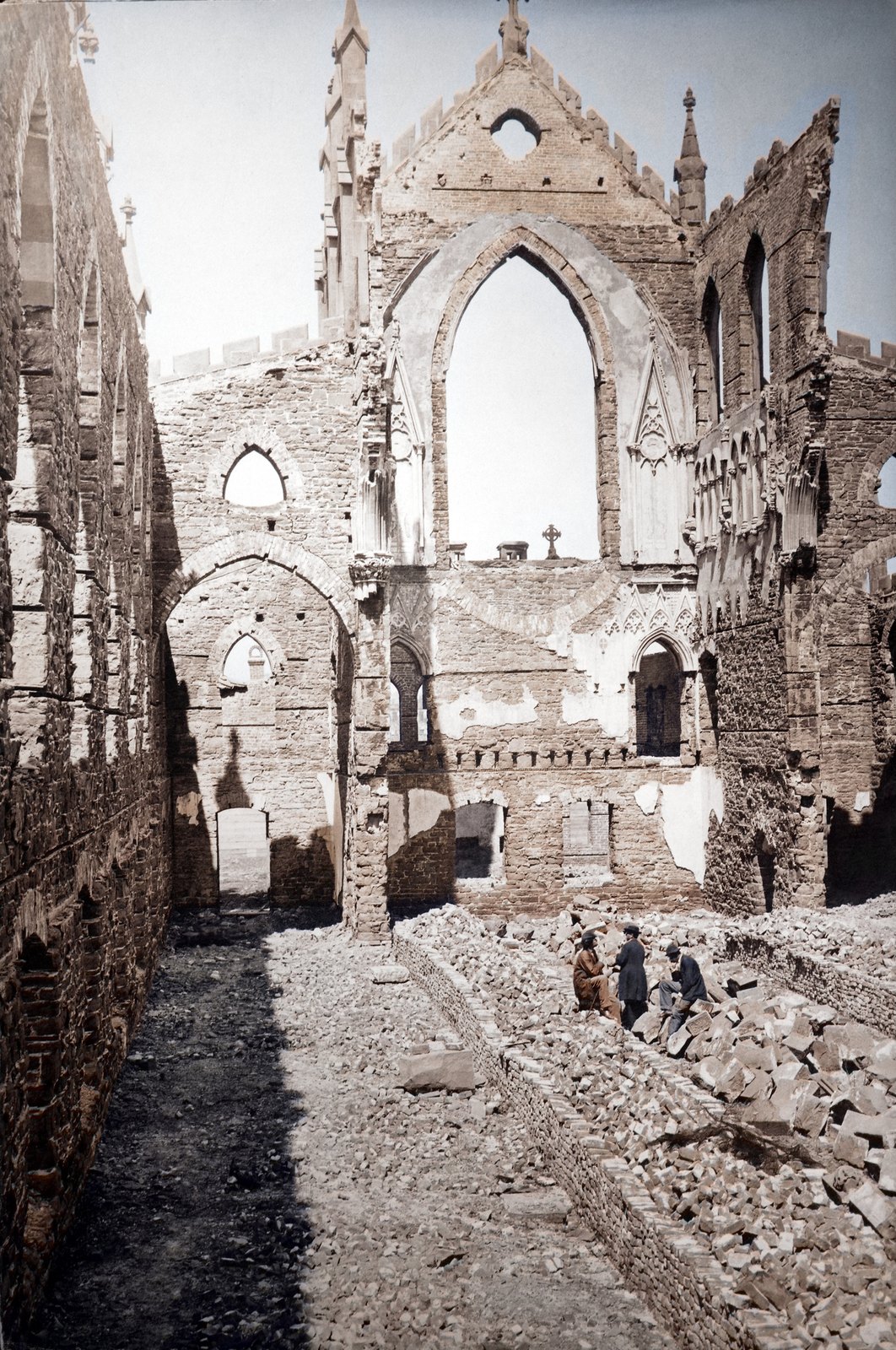
Circular Congregational Church
Church · 1892 · 4 photographs
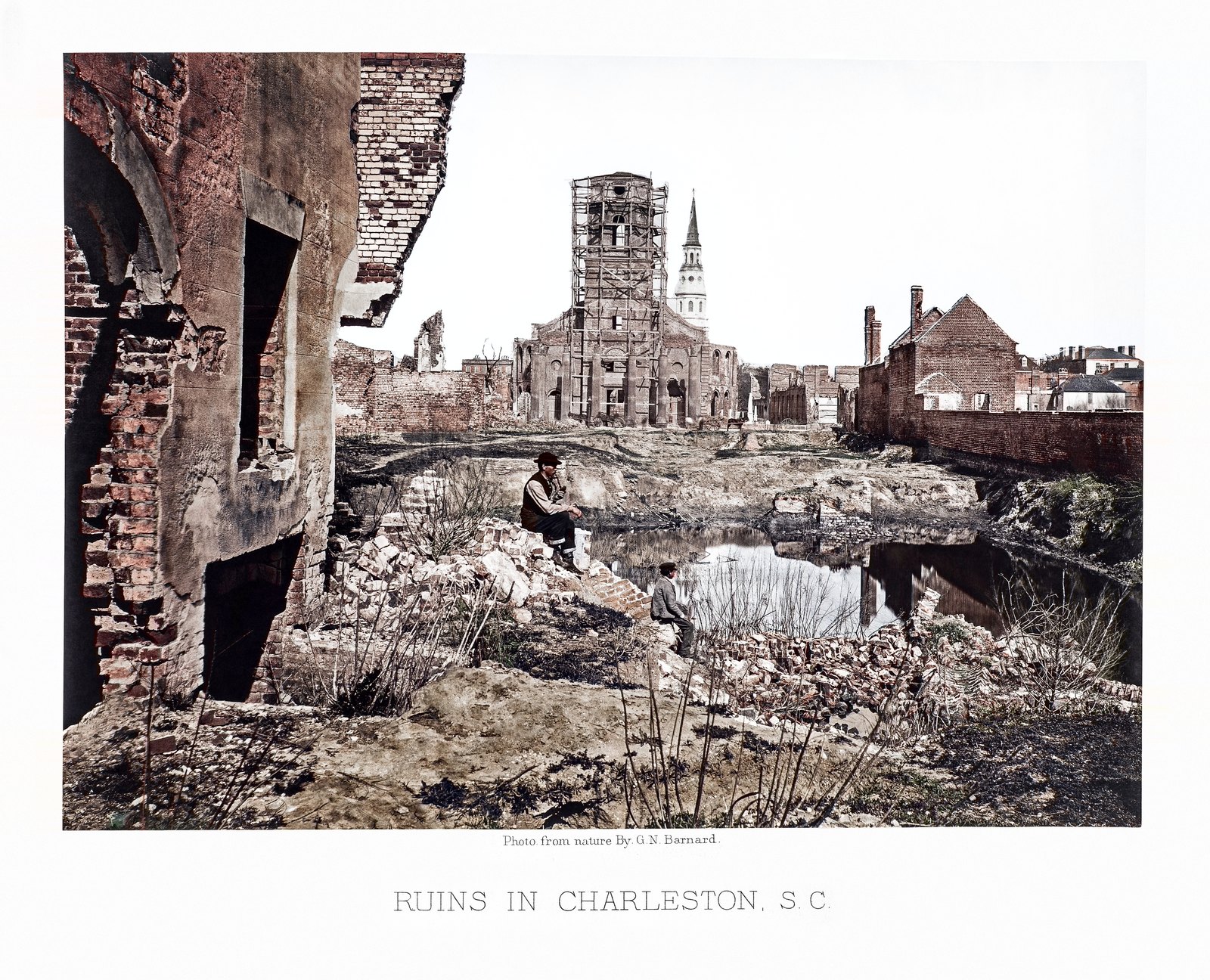
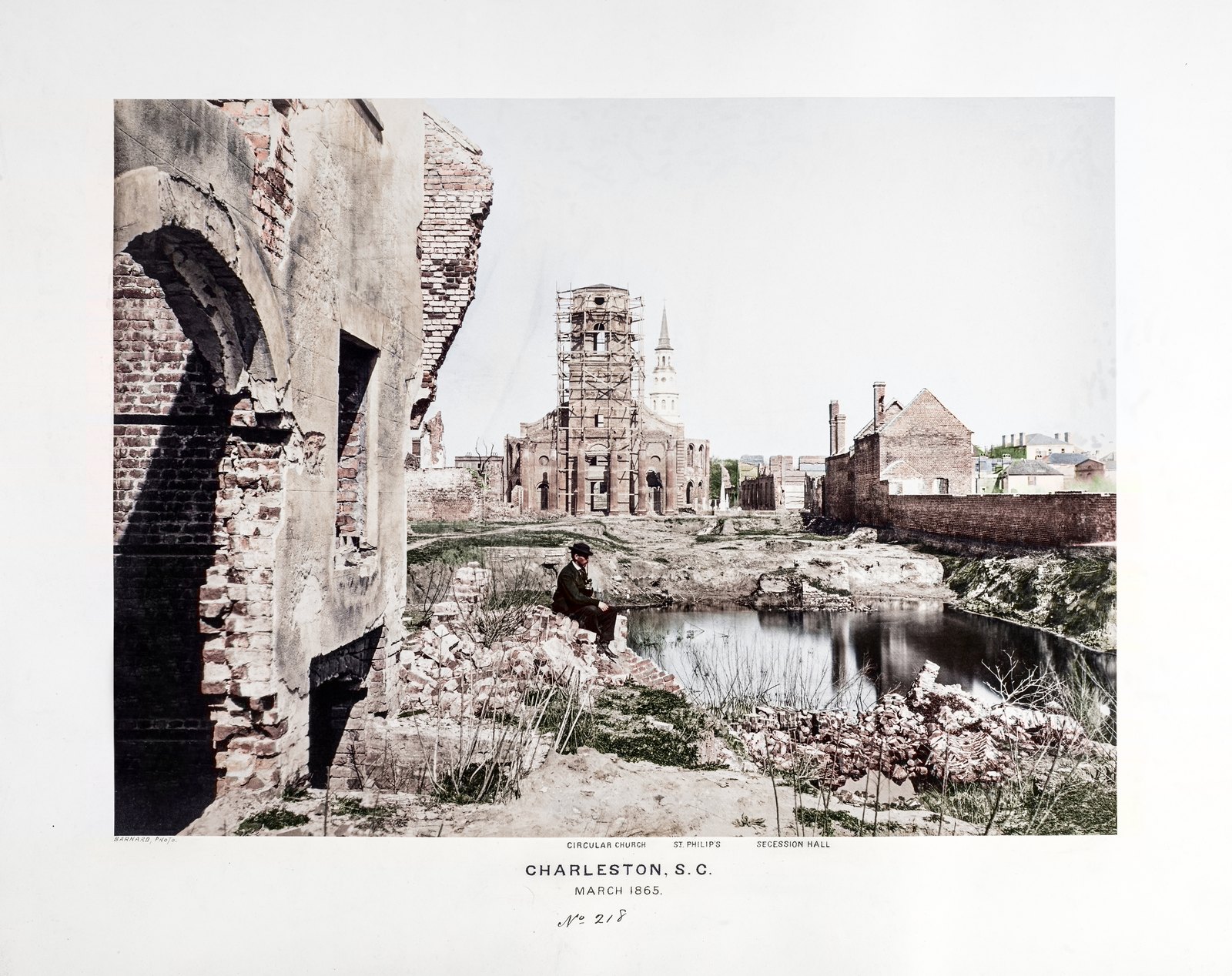
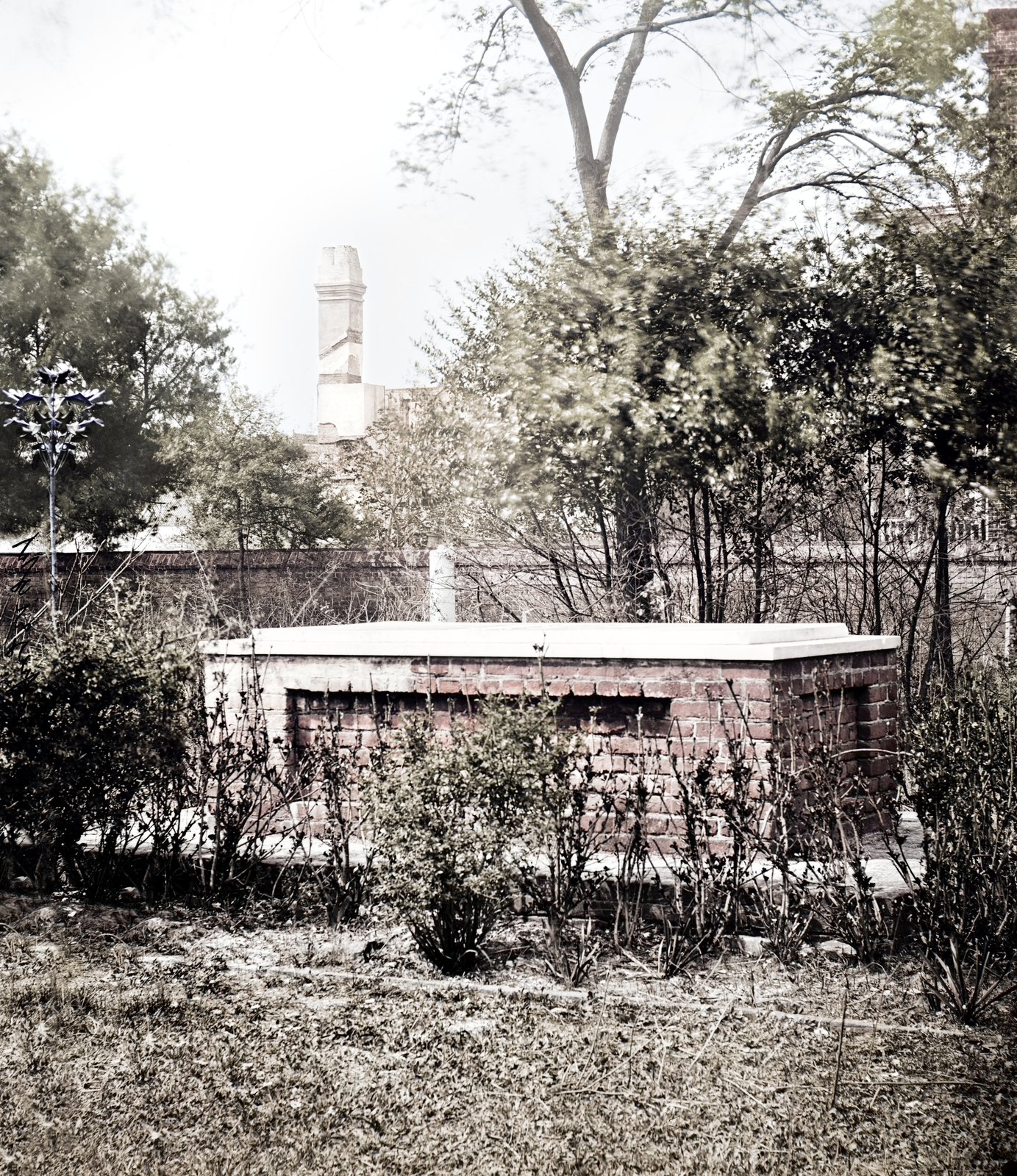
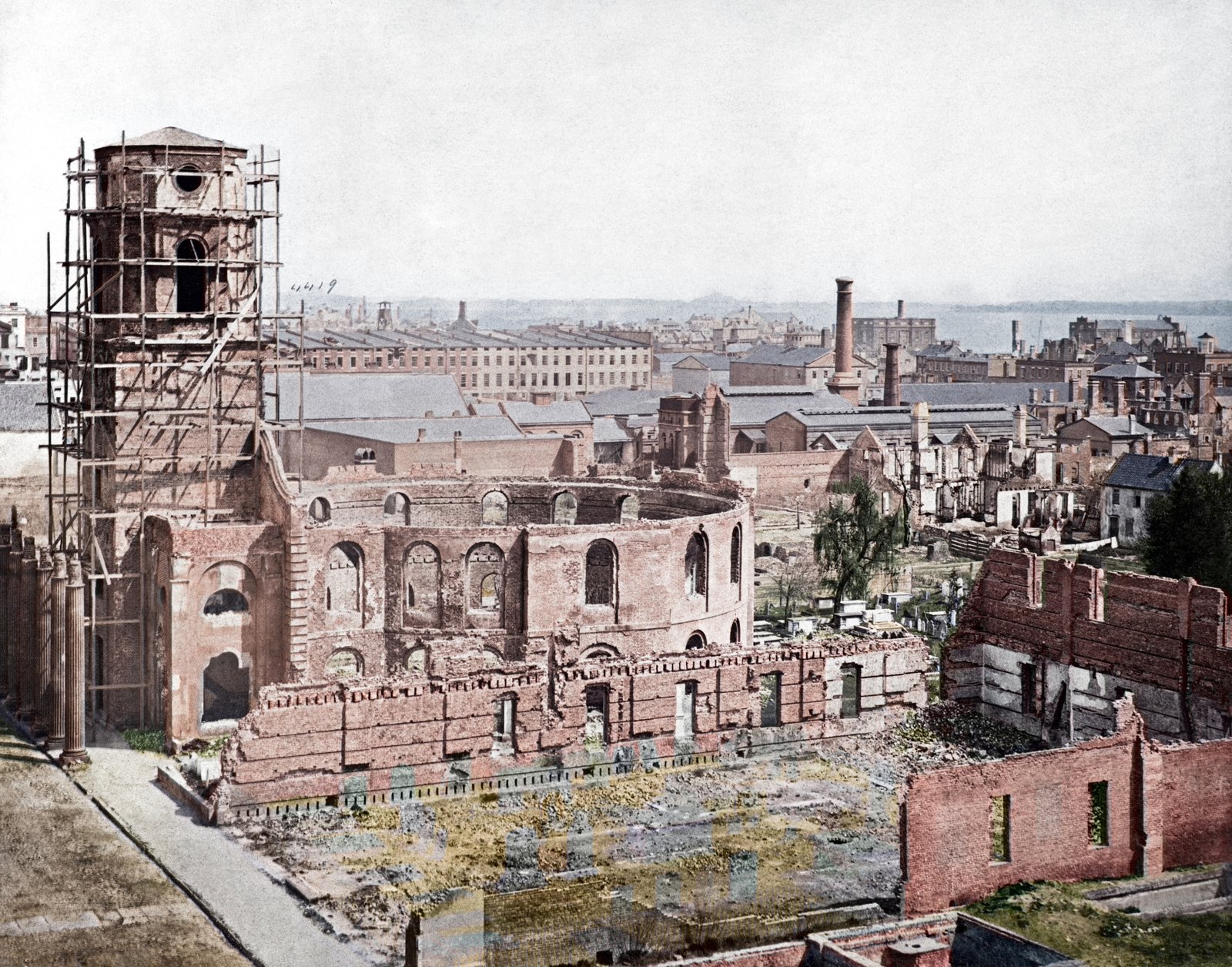
Burned in the fire of December 1861. The present church on the site was built in 1890–92 from the ruins of the old walls; the graveyard is the oldest in the city.
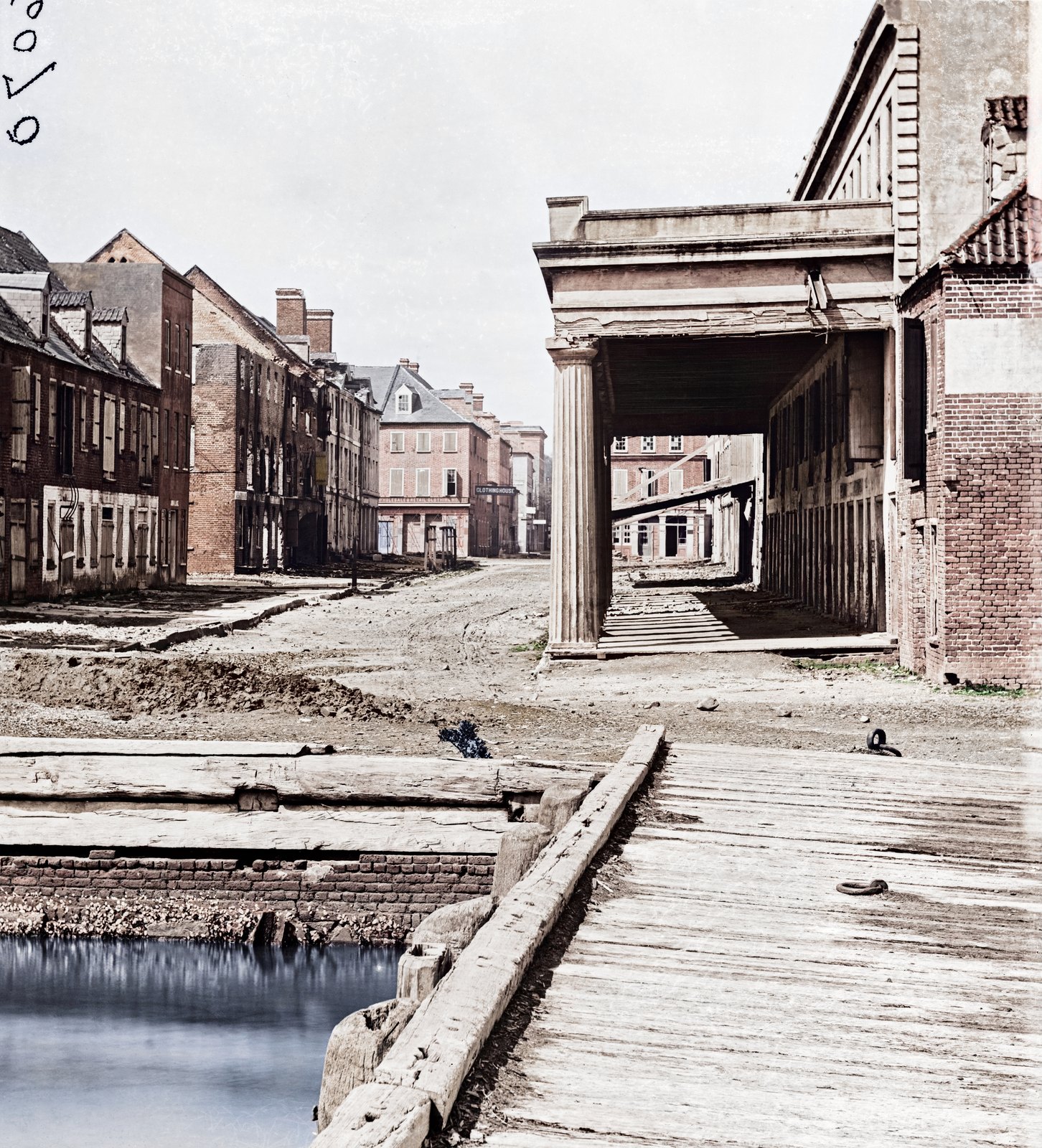
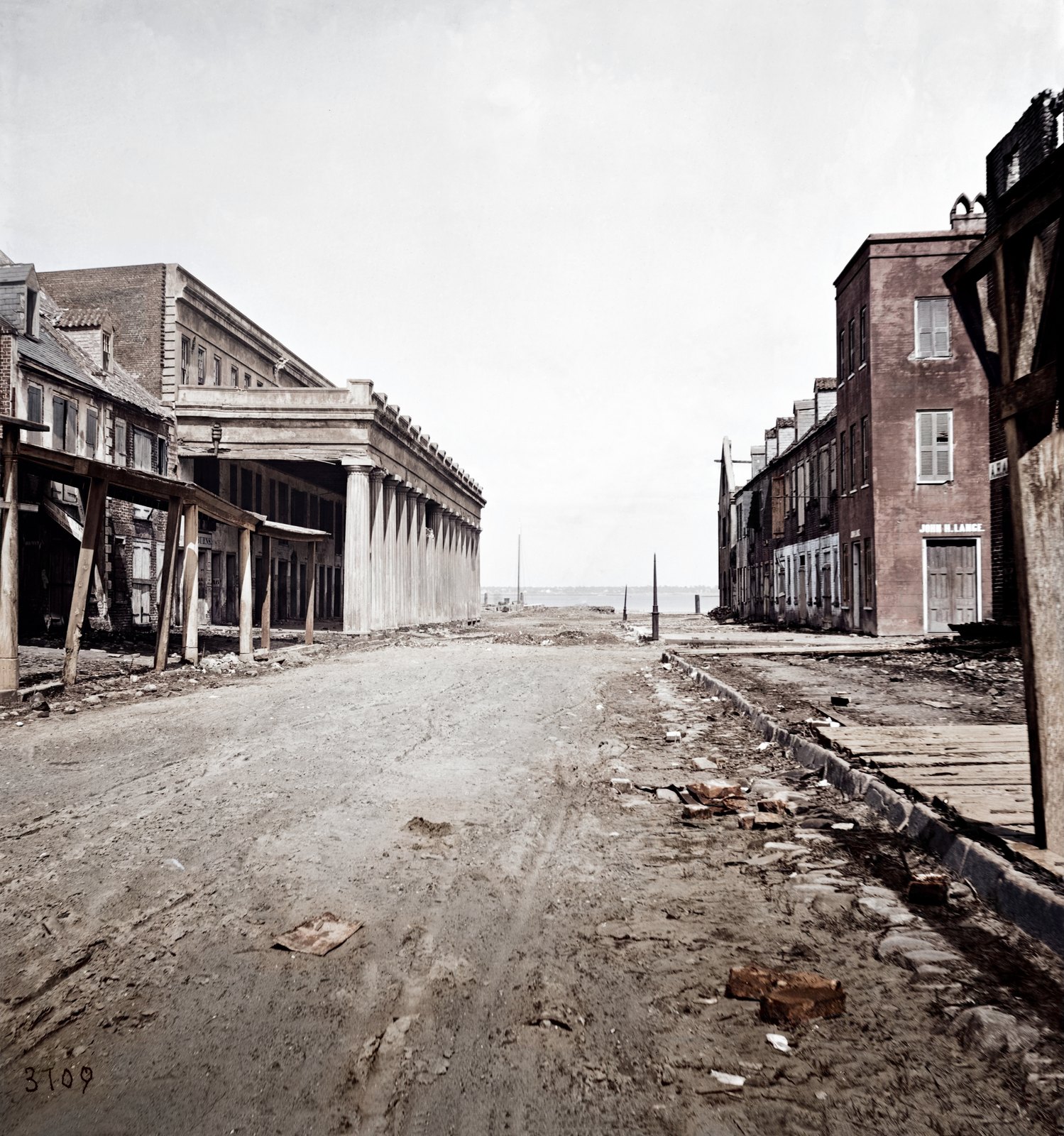
Vendue Range
Commercial · 3 photographs
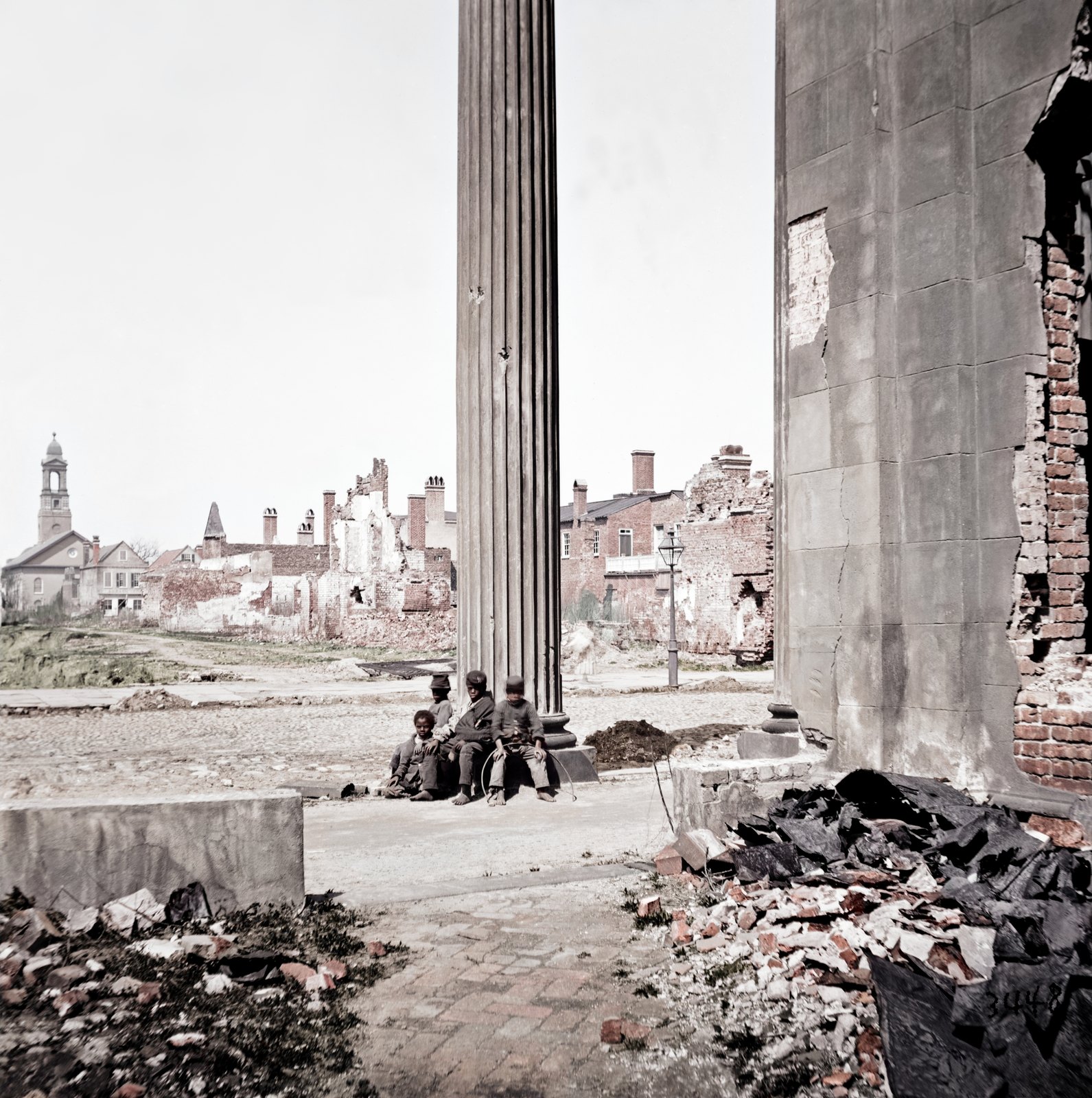
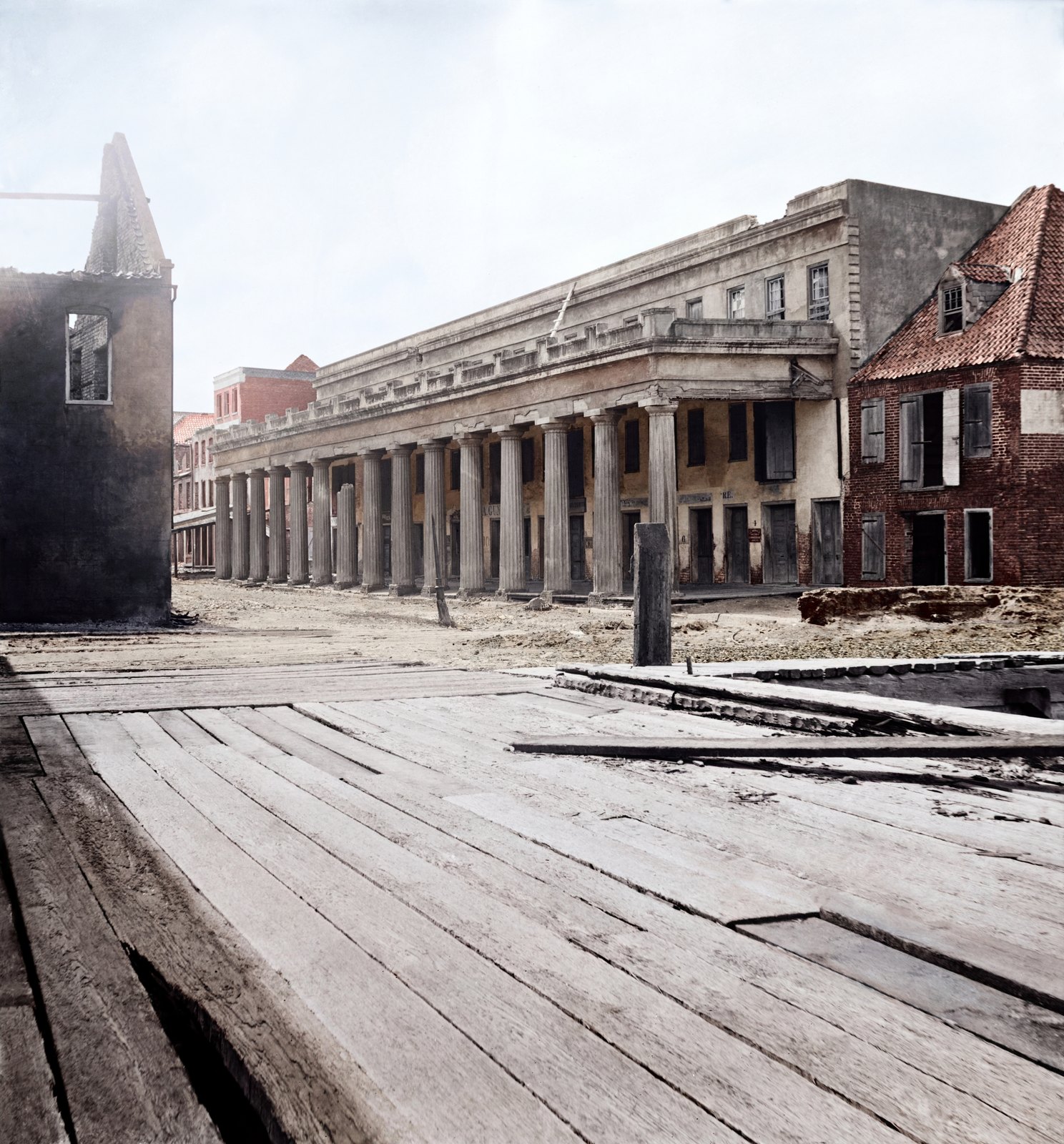
Laid out after the Revolution as commercial space for the auction trade. The colonnade in the photograph is gone.
Still standing
You can stand where the photographer stood and see the same building.
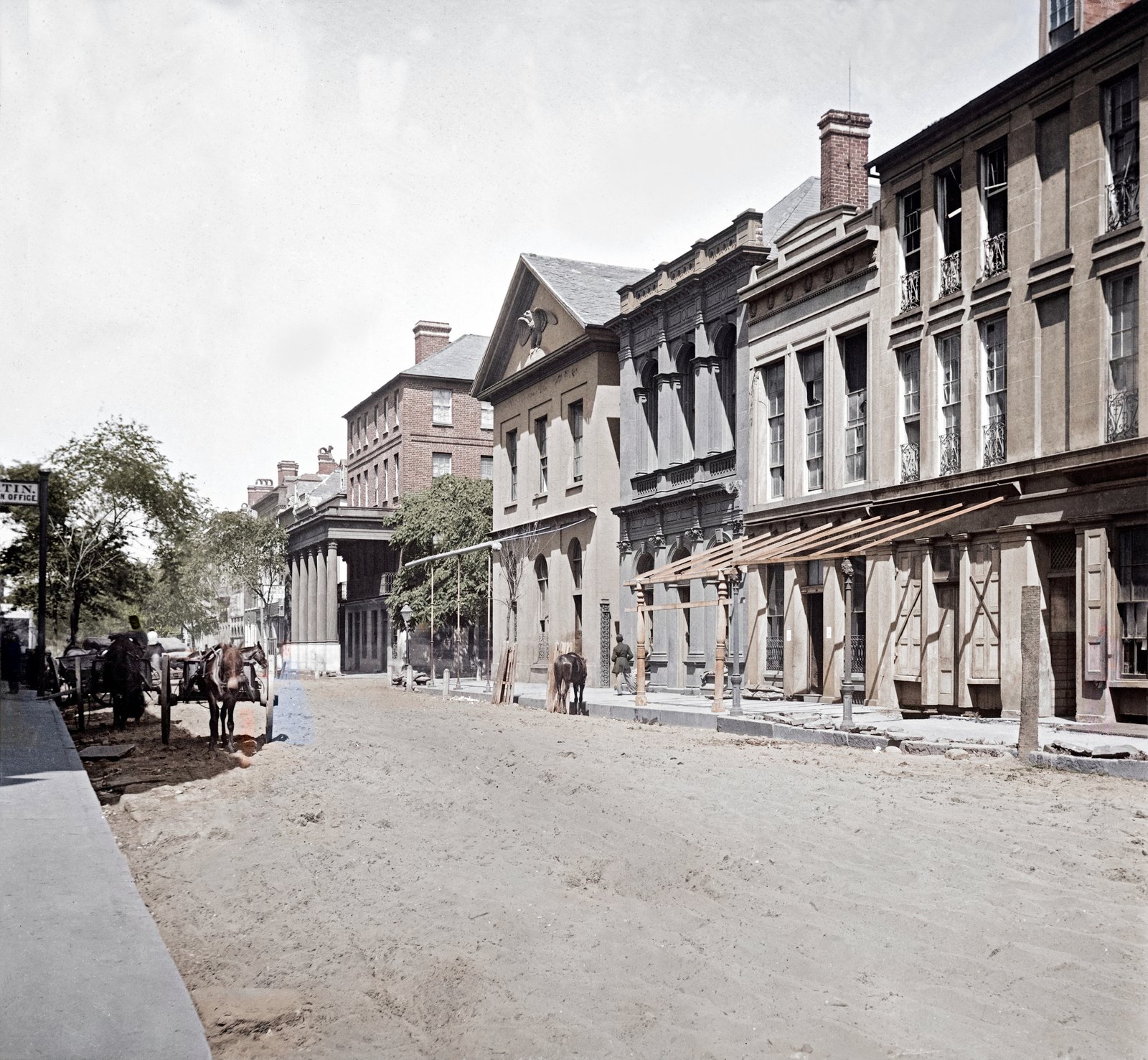
Broad Street
Street · 1 photograph
The east–west axis of the old city, meeting Meeting Street at the Four Corners of Law.
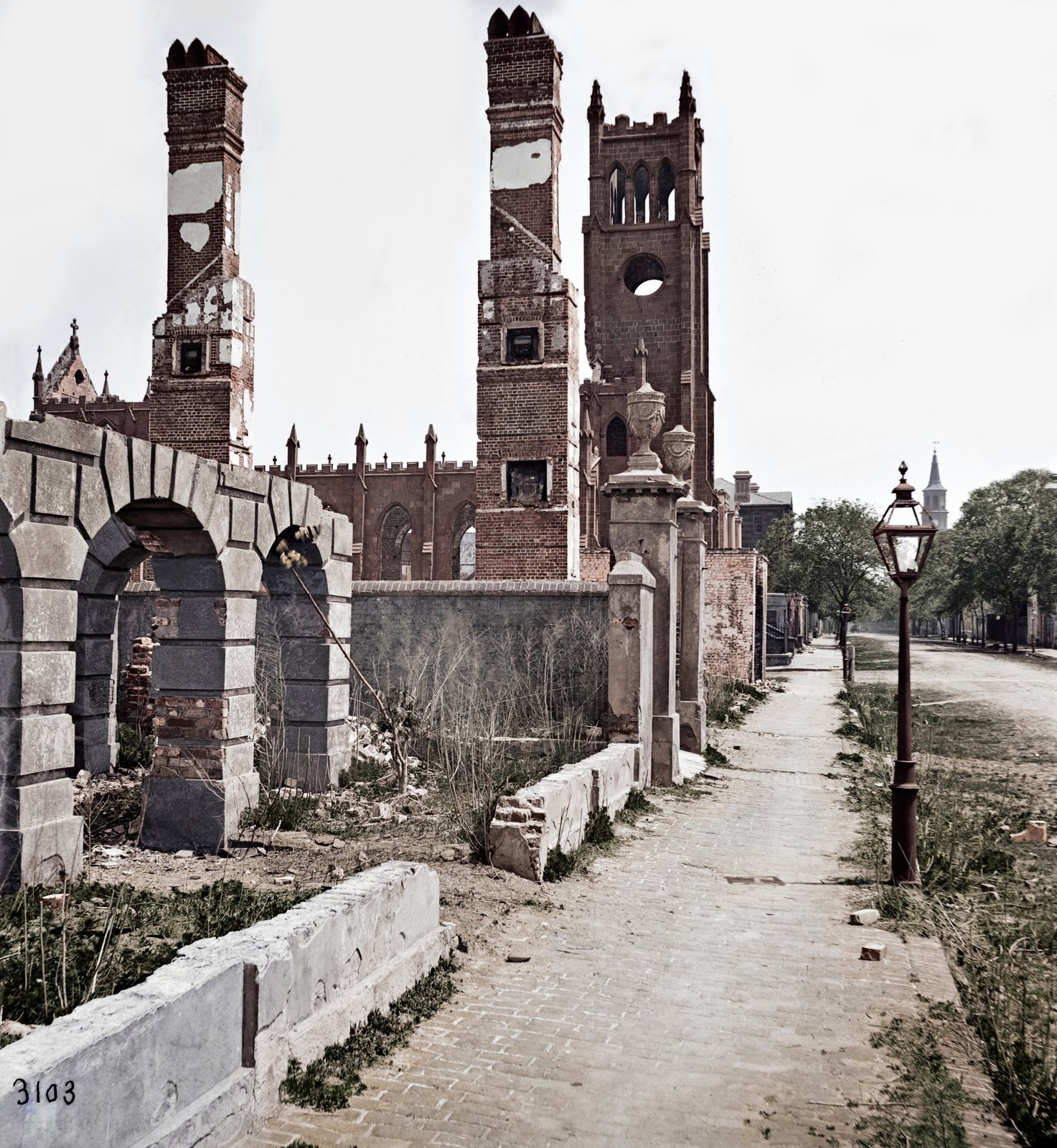
Charleston City Hall
Public Building · 1 photograph
Built 1800–04 as a branch of the First Bank of the United States; the city’s hall since 1818.
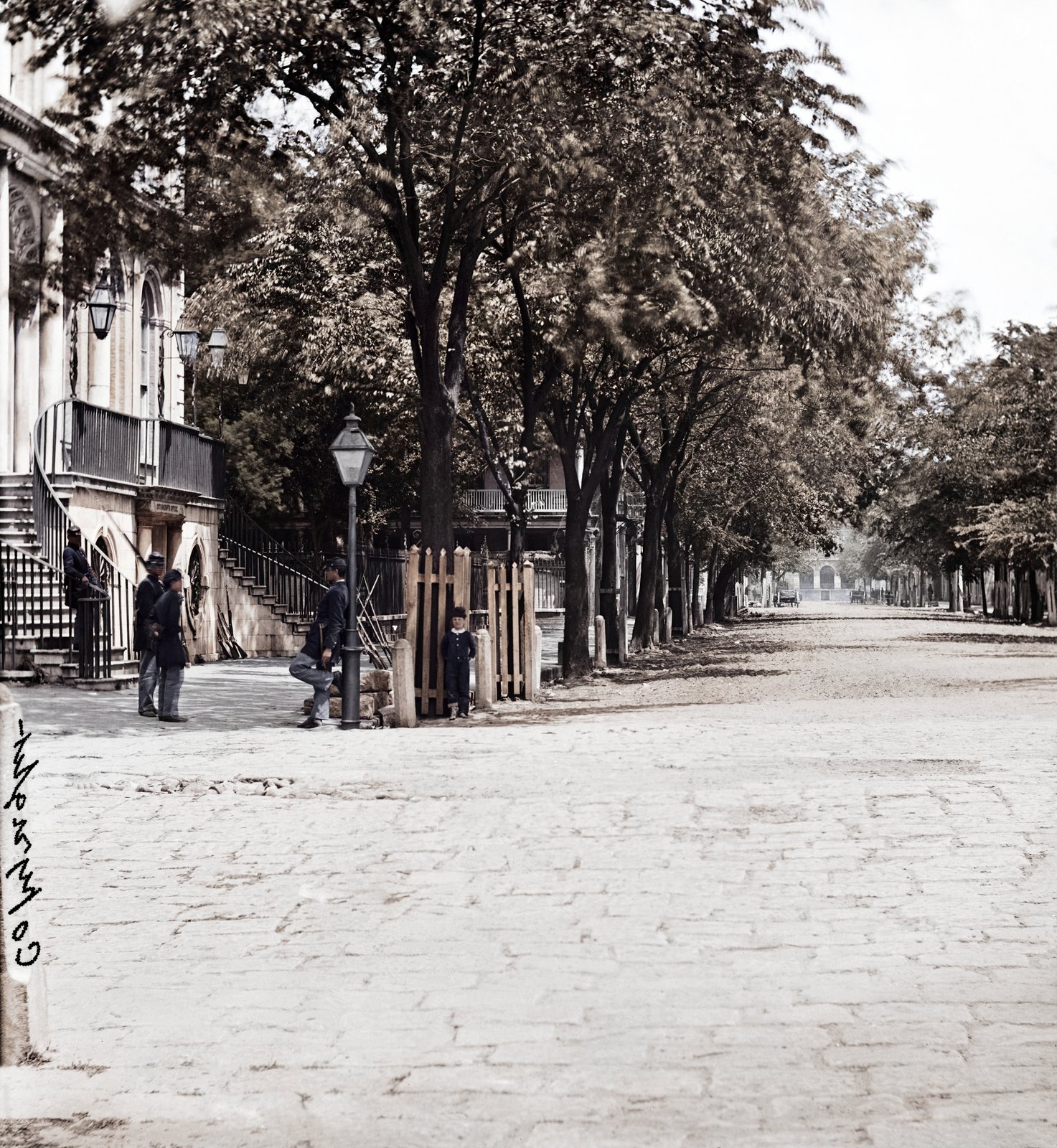
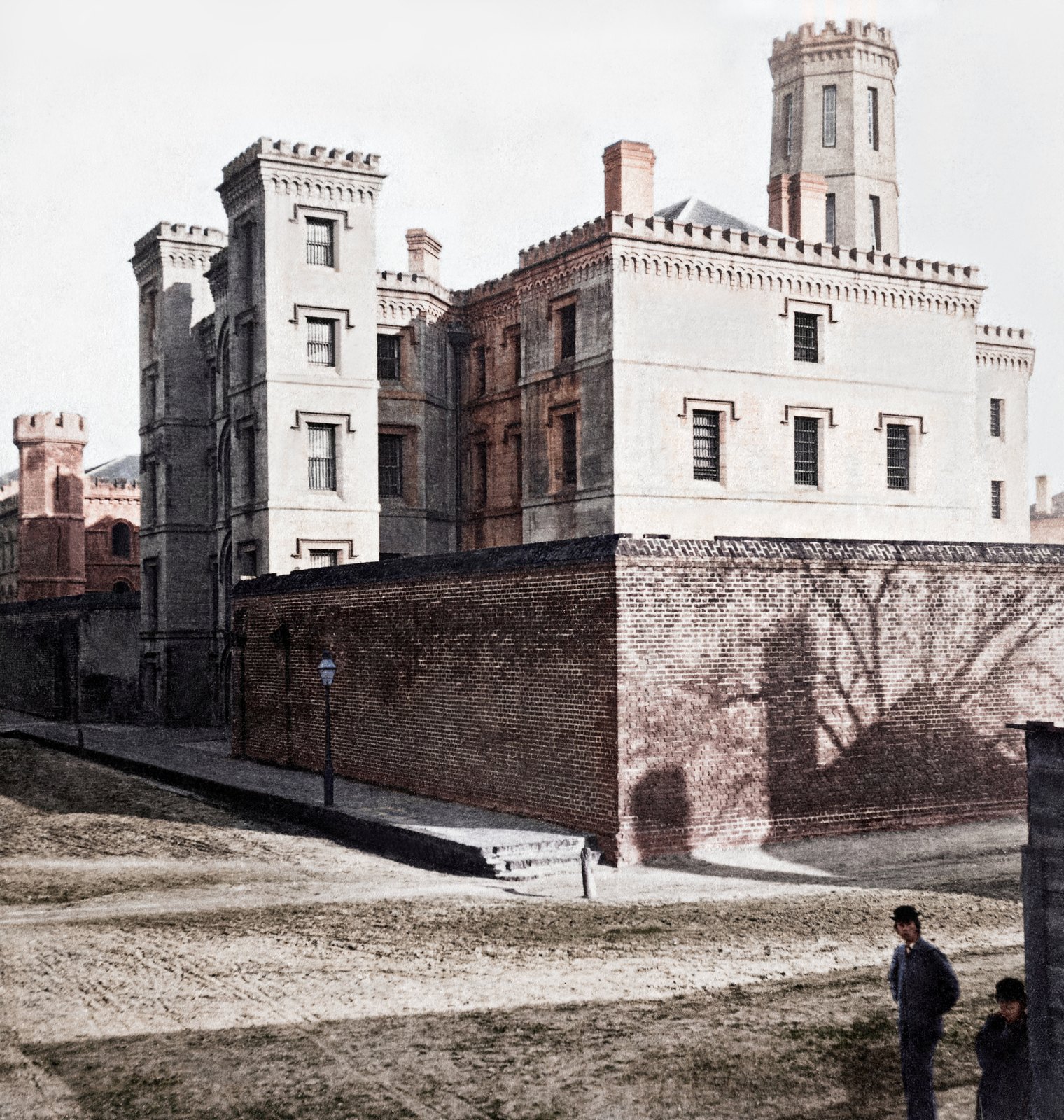
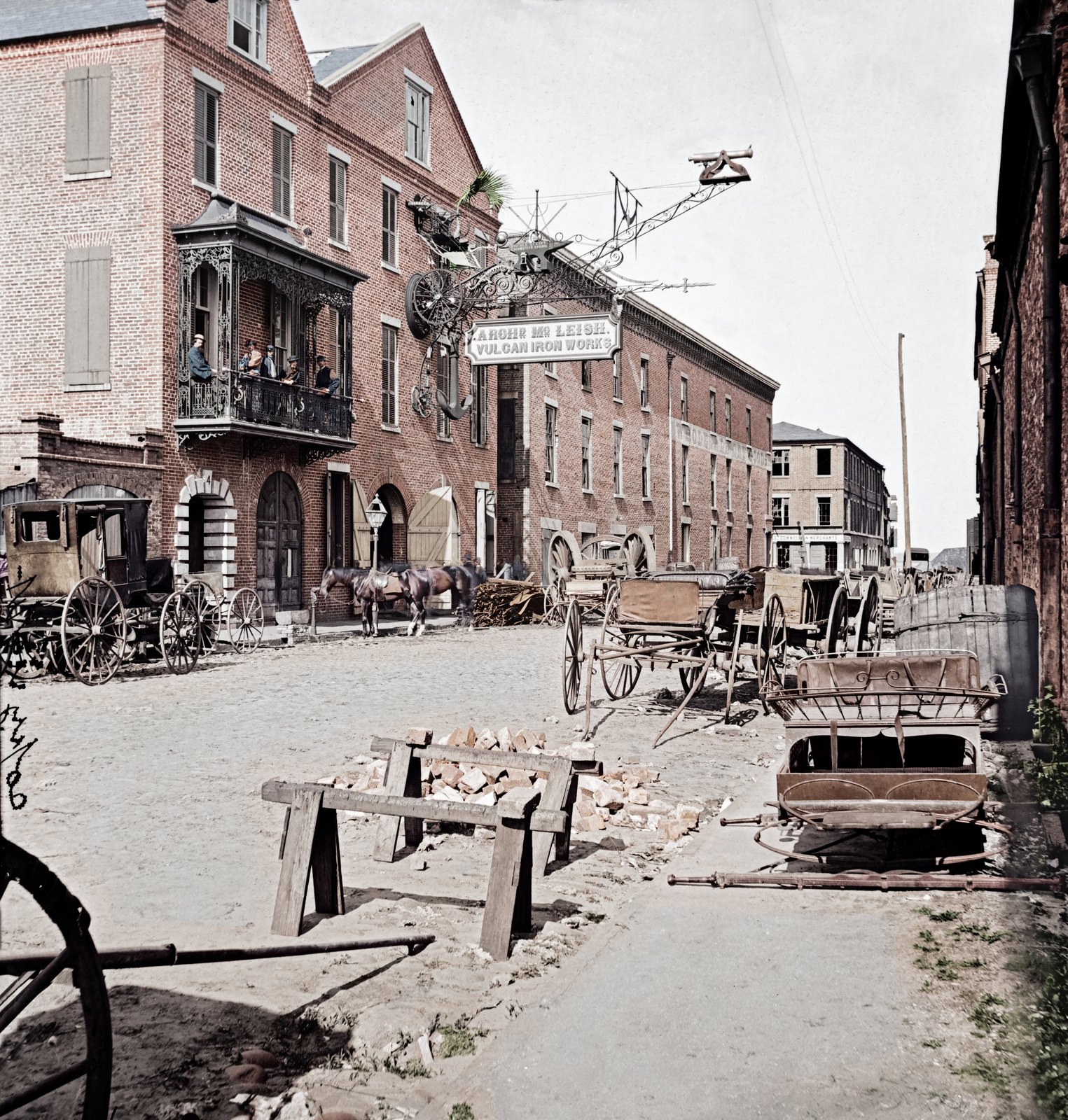
East Bay Street
Street · 3 photographs
The commercial waterfront street running the length of the peninsula’s eastern side.
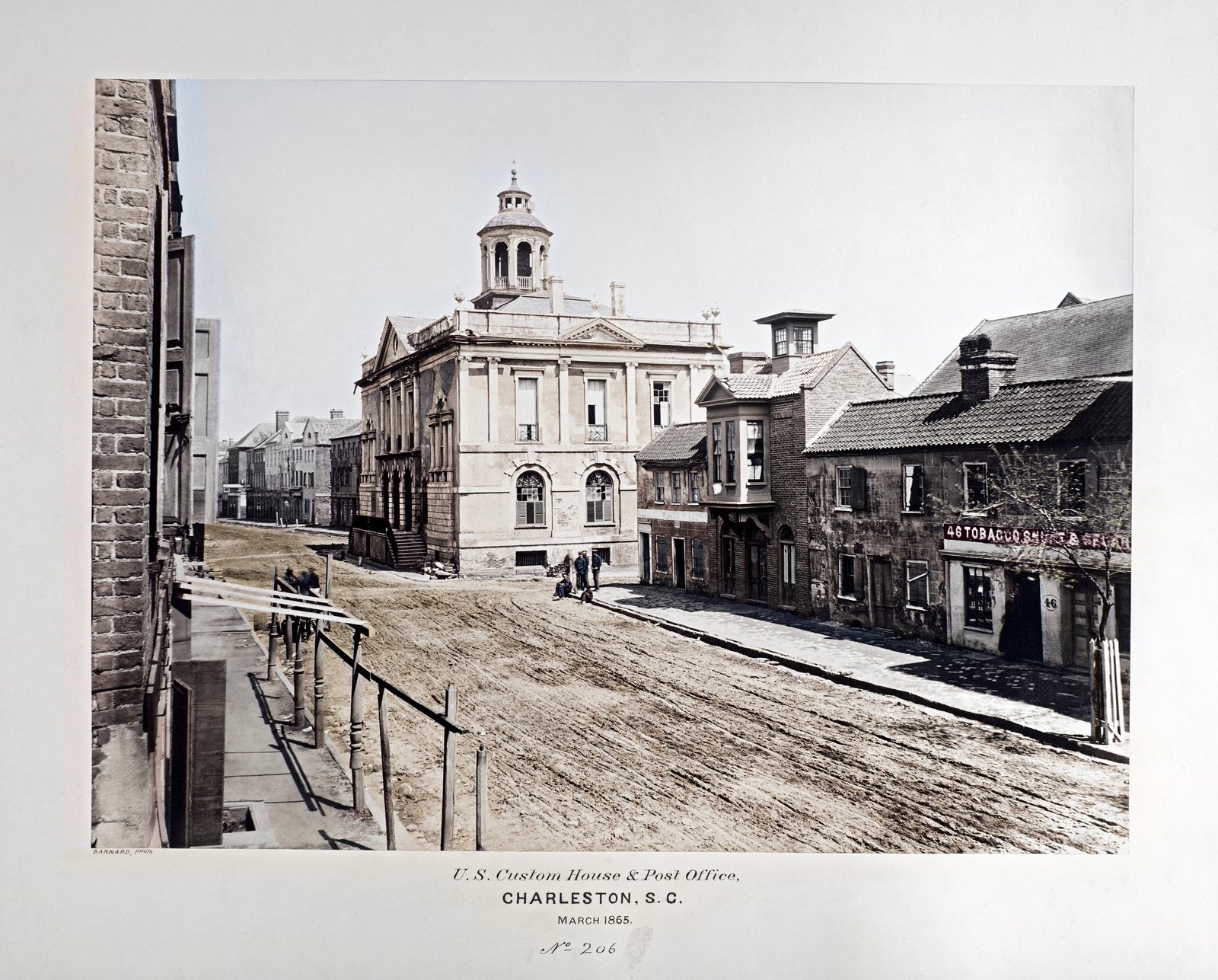
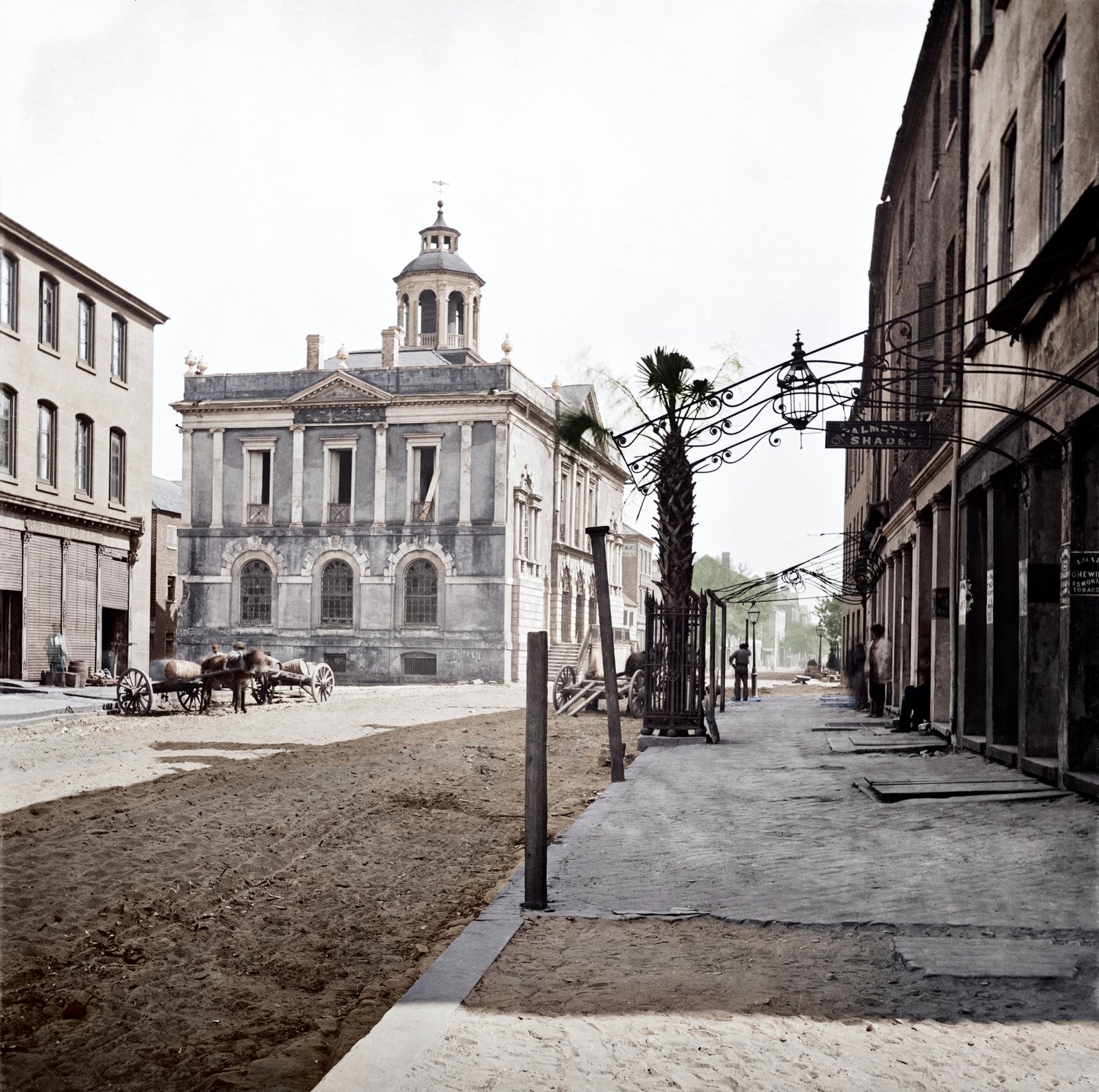
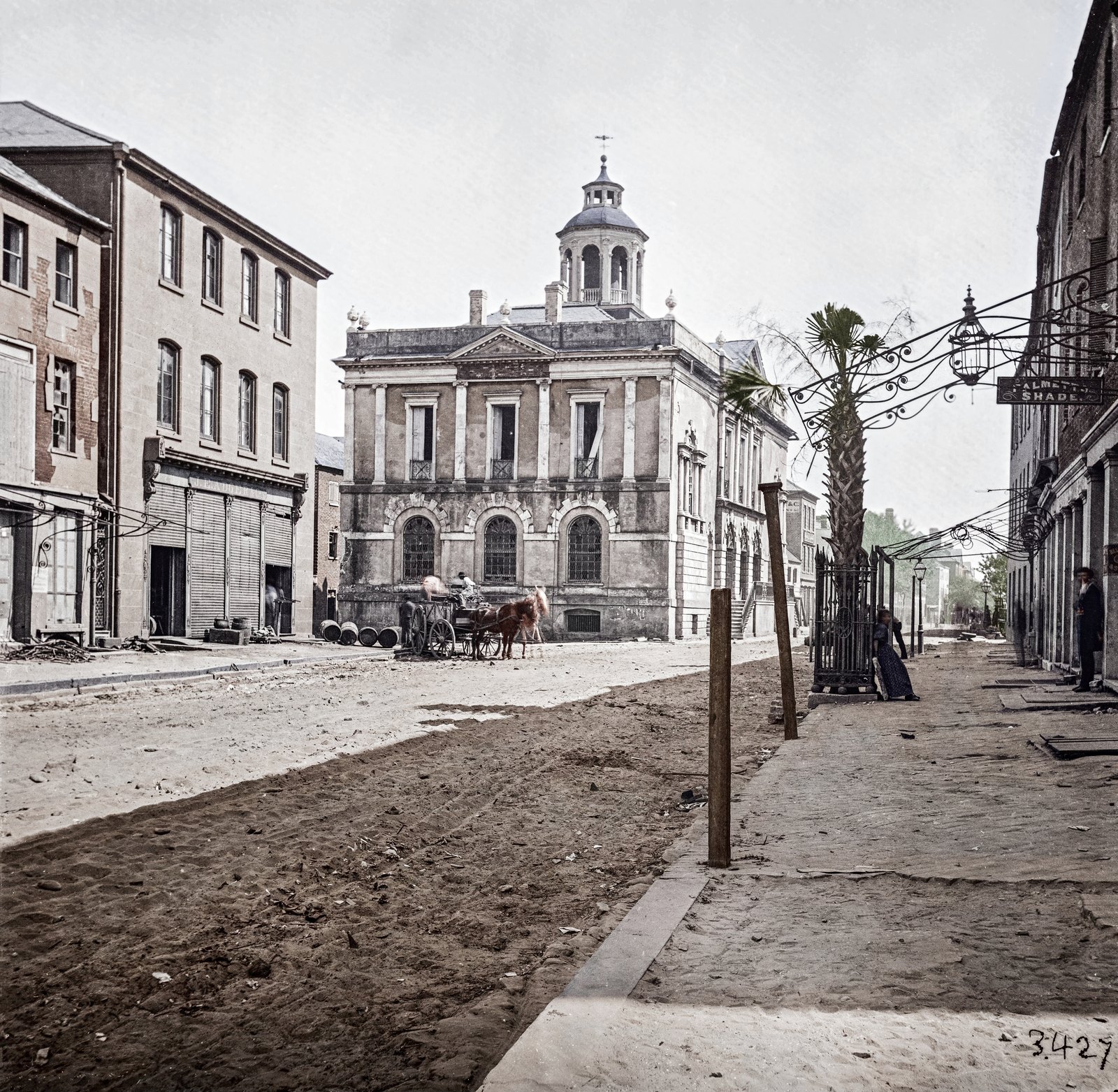
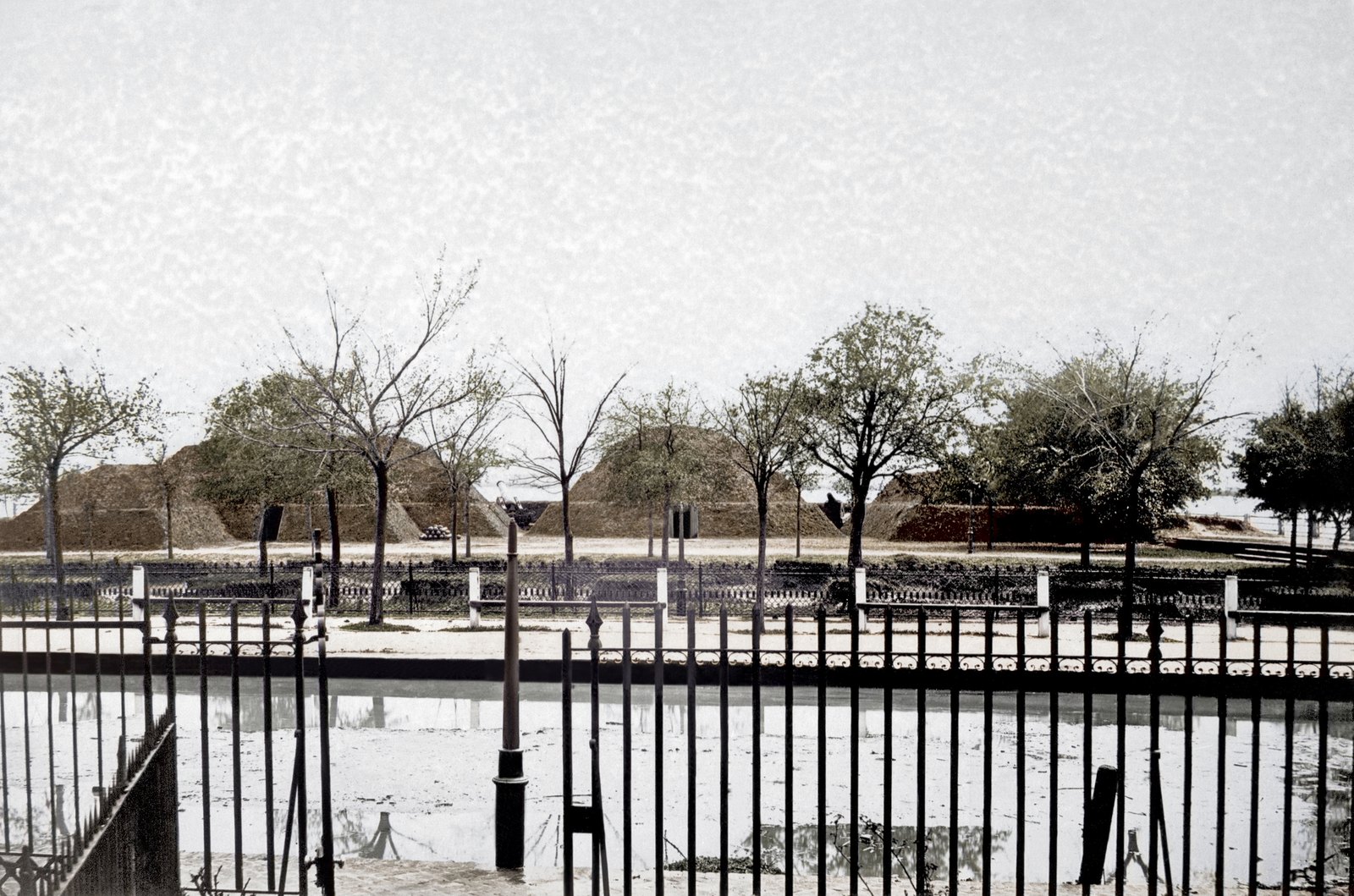
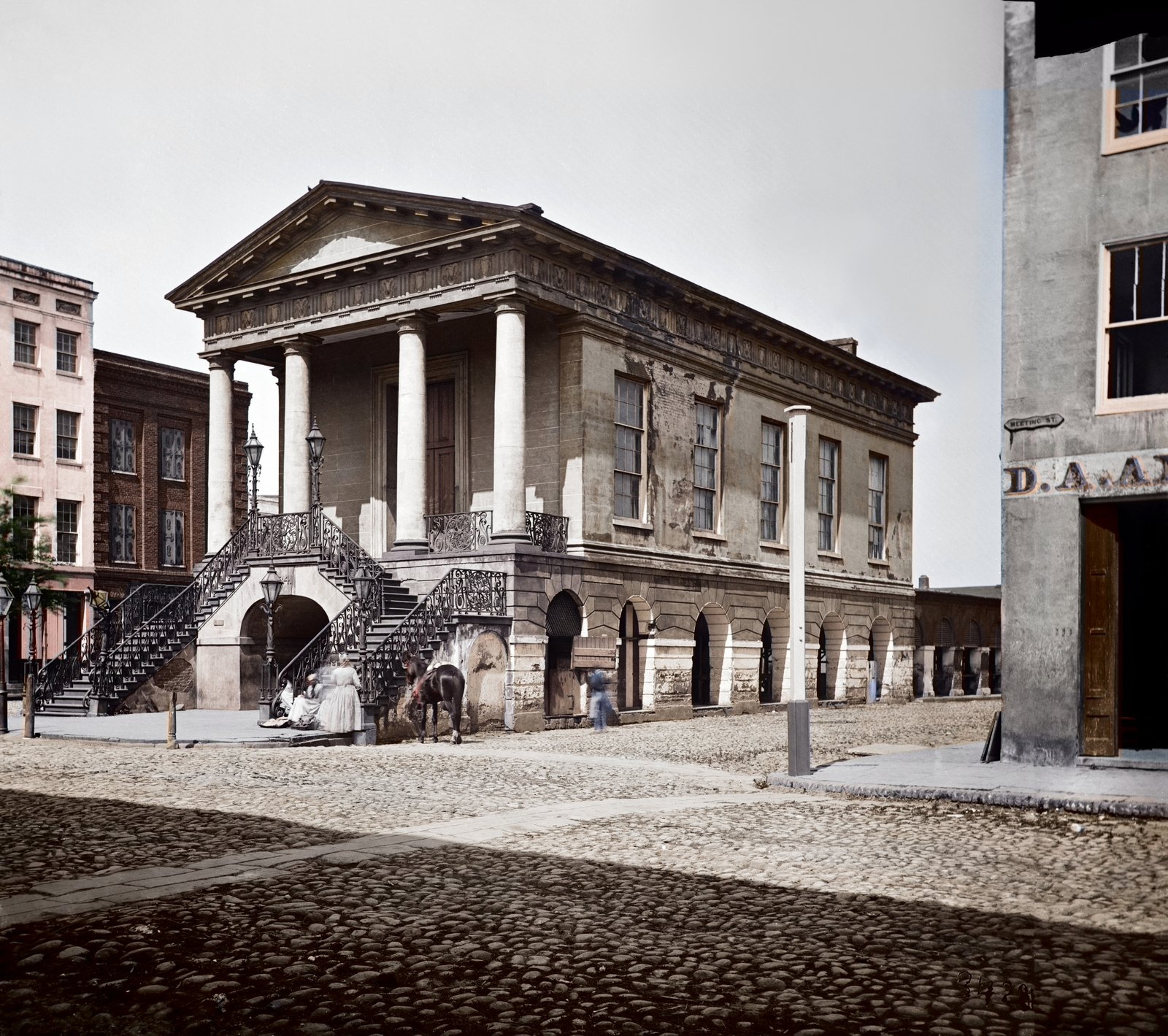
Market Hall
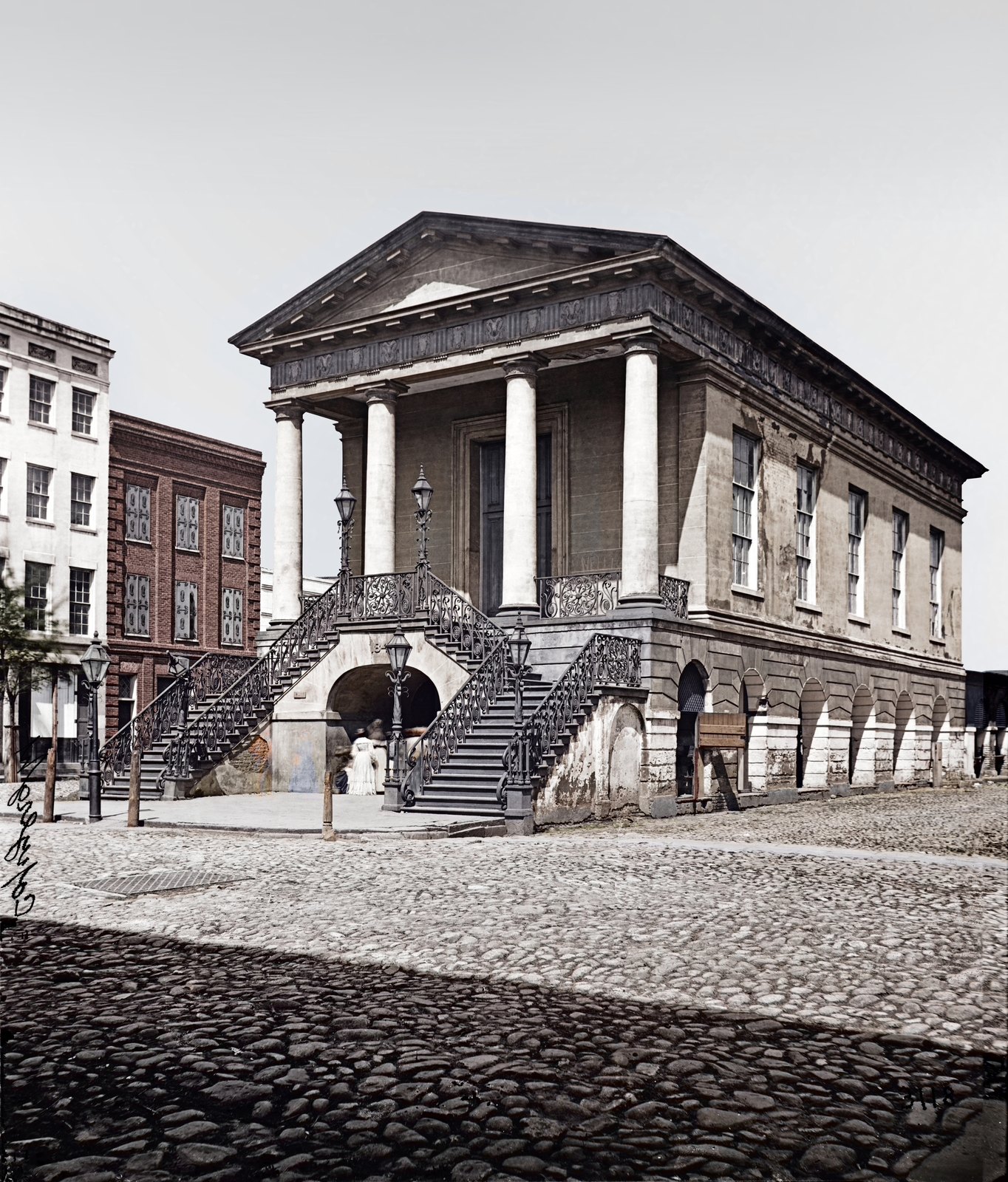
Market · 2 photographs
Greek Revival hall of 1841 at the head of the Market. Later the Confederate Museum.
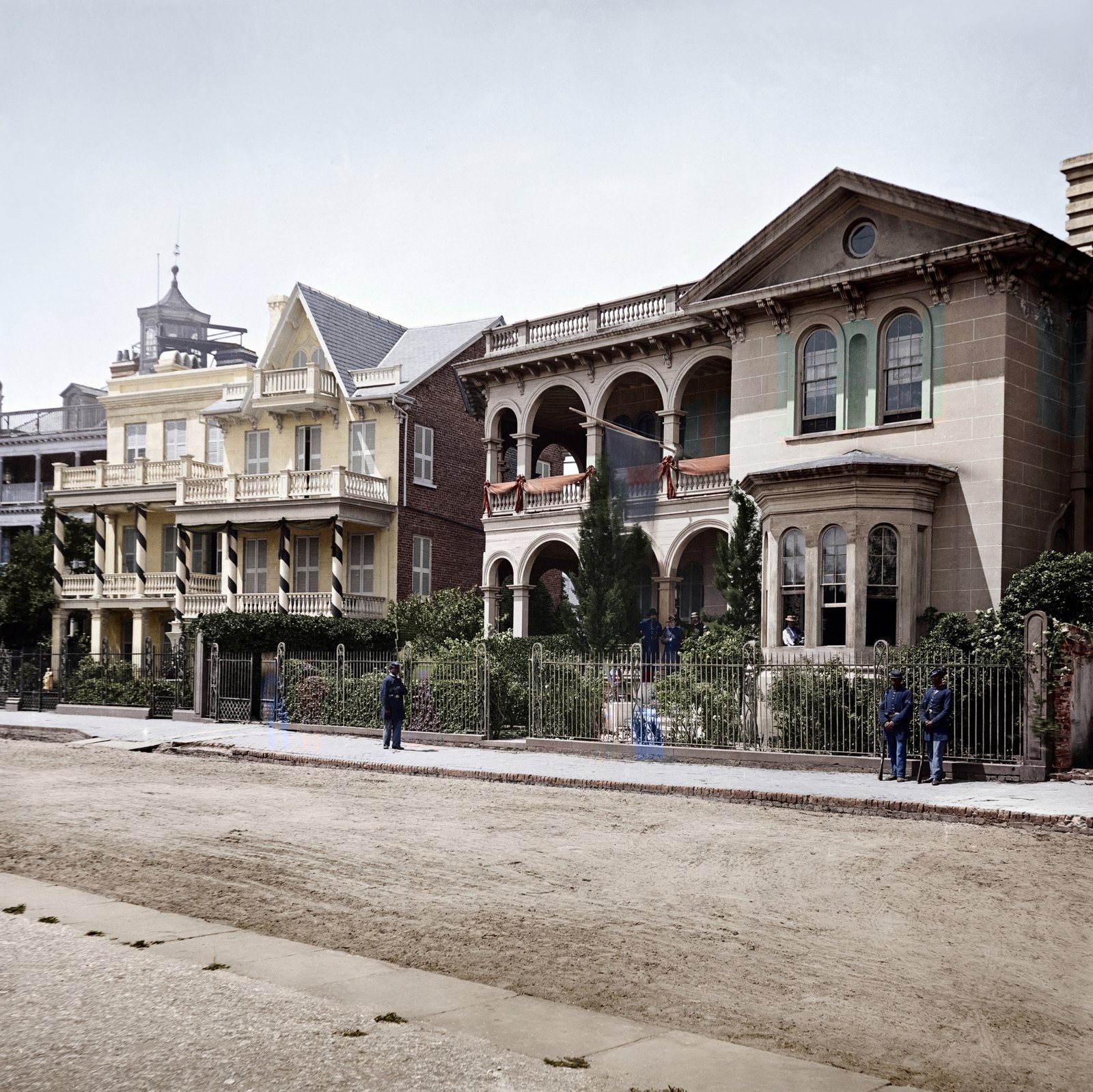
South Battery
Street · 1 photograph
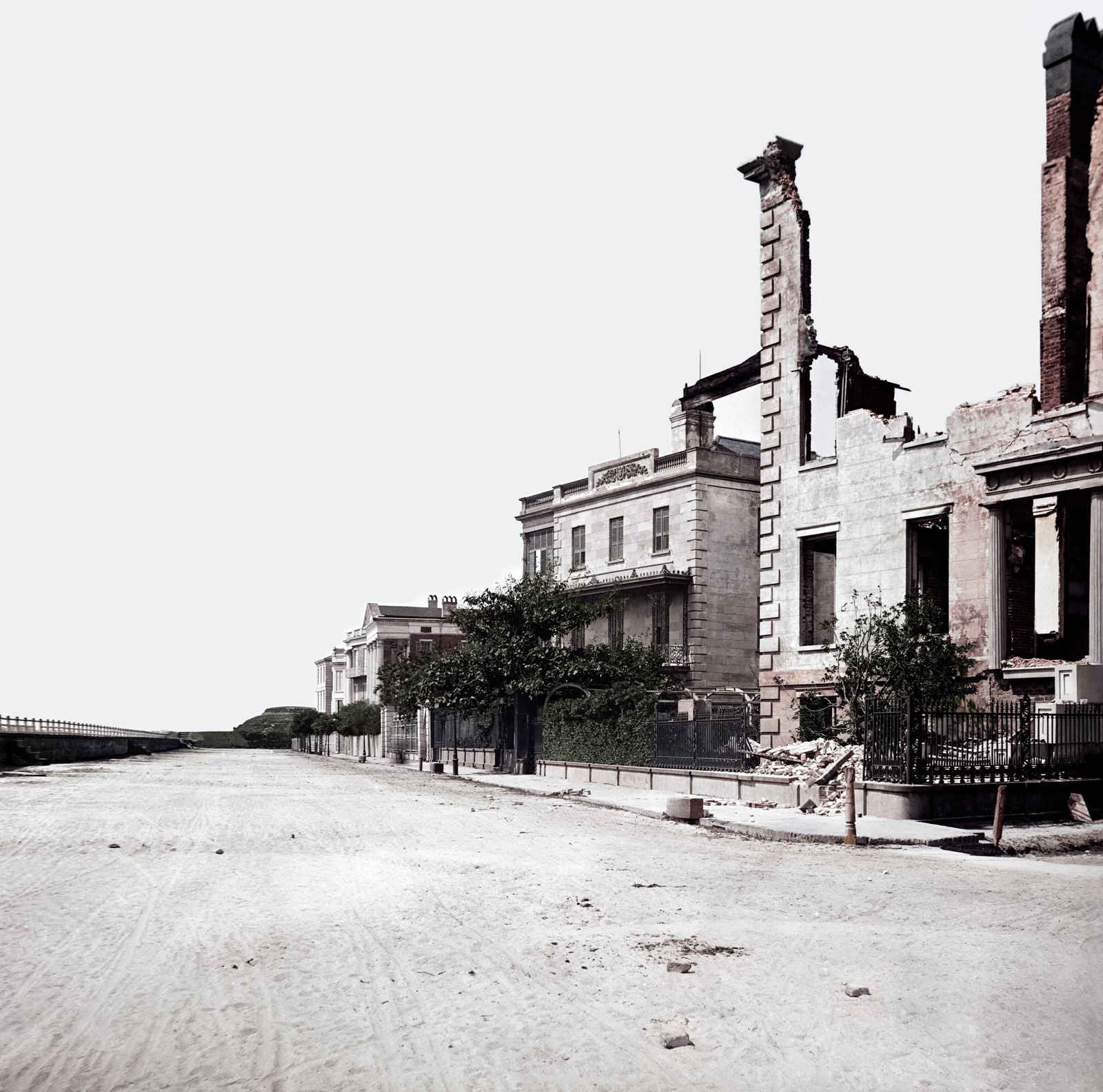
Headquarters of Brig. Gen. John P. Hatch during the Federal occupation, February to August 1865.
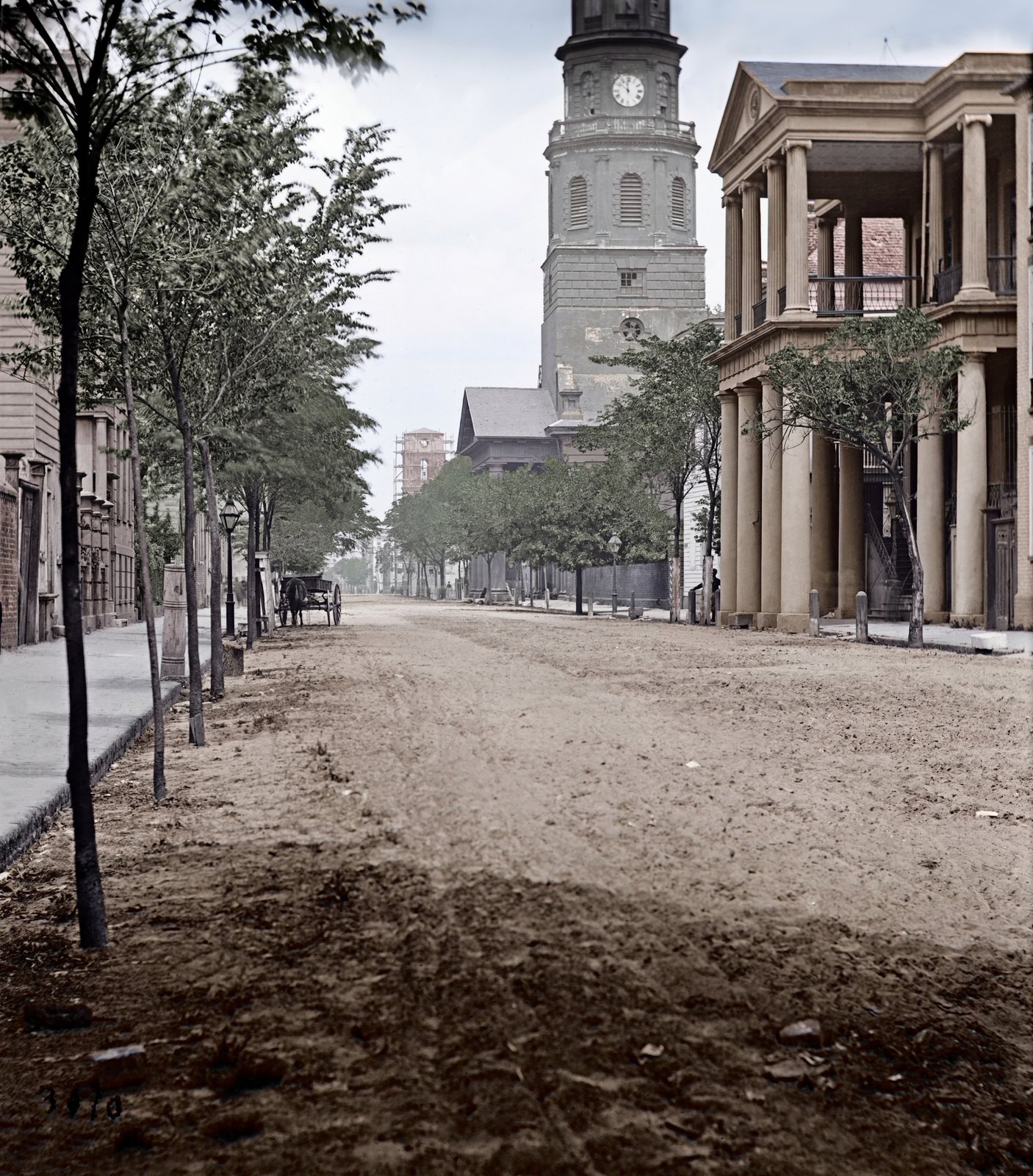
St. Michael's Church
Church · 1 photograph
Cornerstone laid February 1752; opened for services 1761. The oldest church edifice standing in Charleston.
St. Philip’s Church
Church · 5 photographs
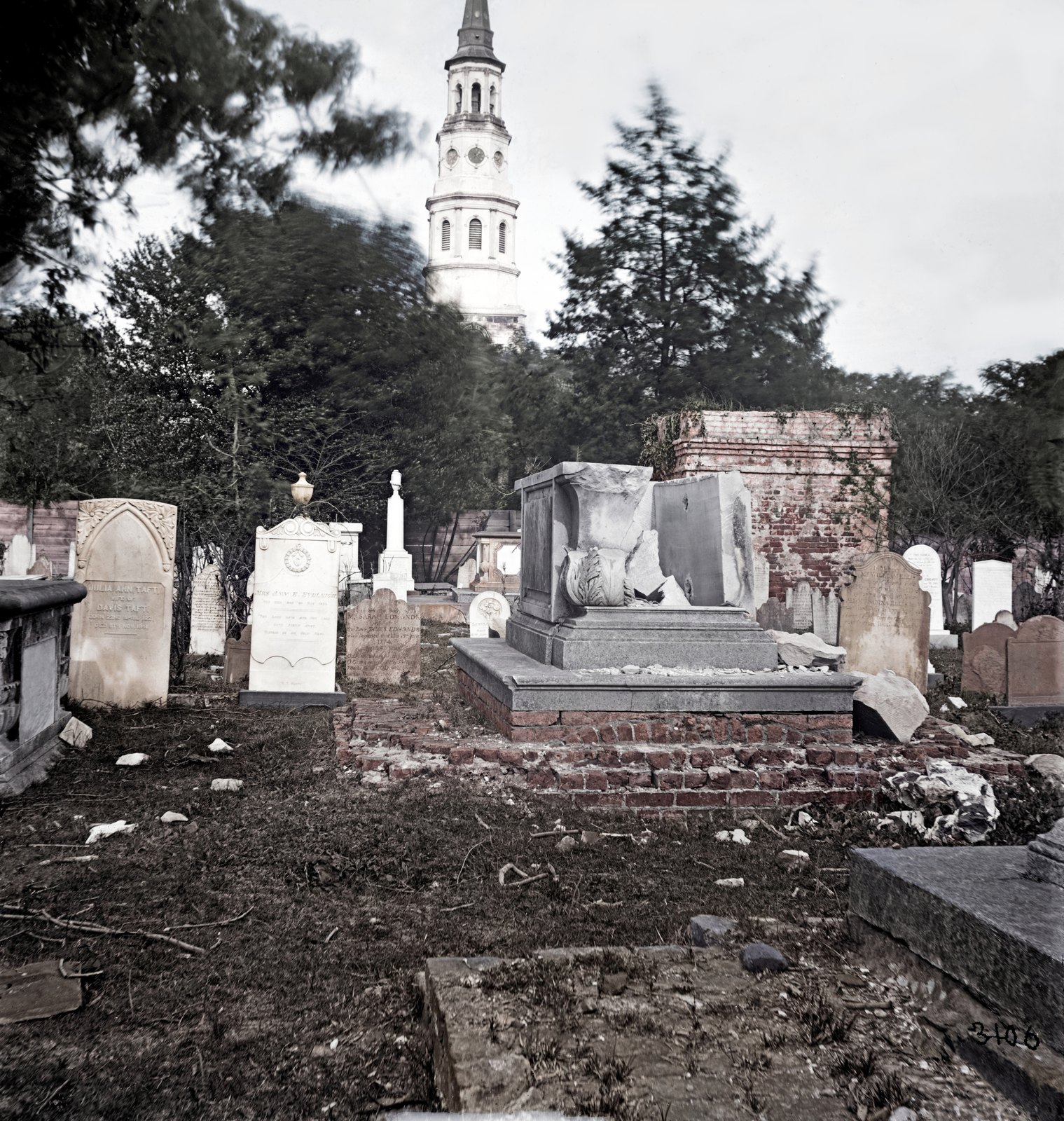
The congregation moved to Church Street in 1723; the present building dates from 1835–38 after fire destroyed its predecessor.
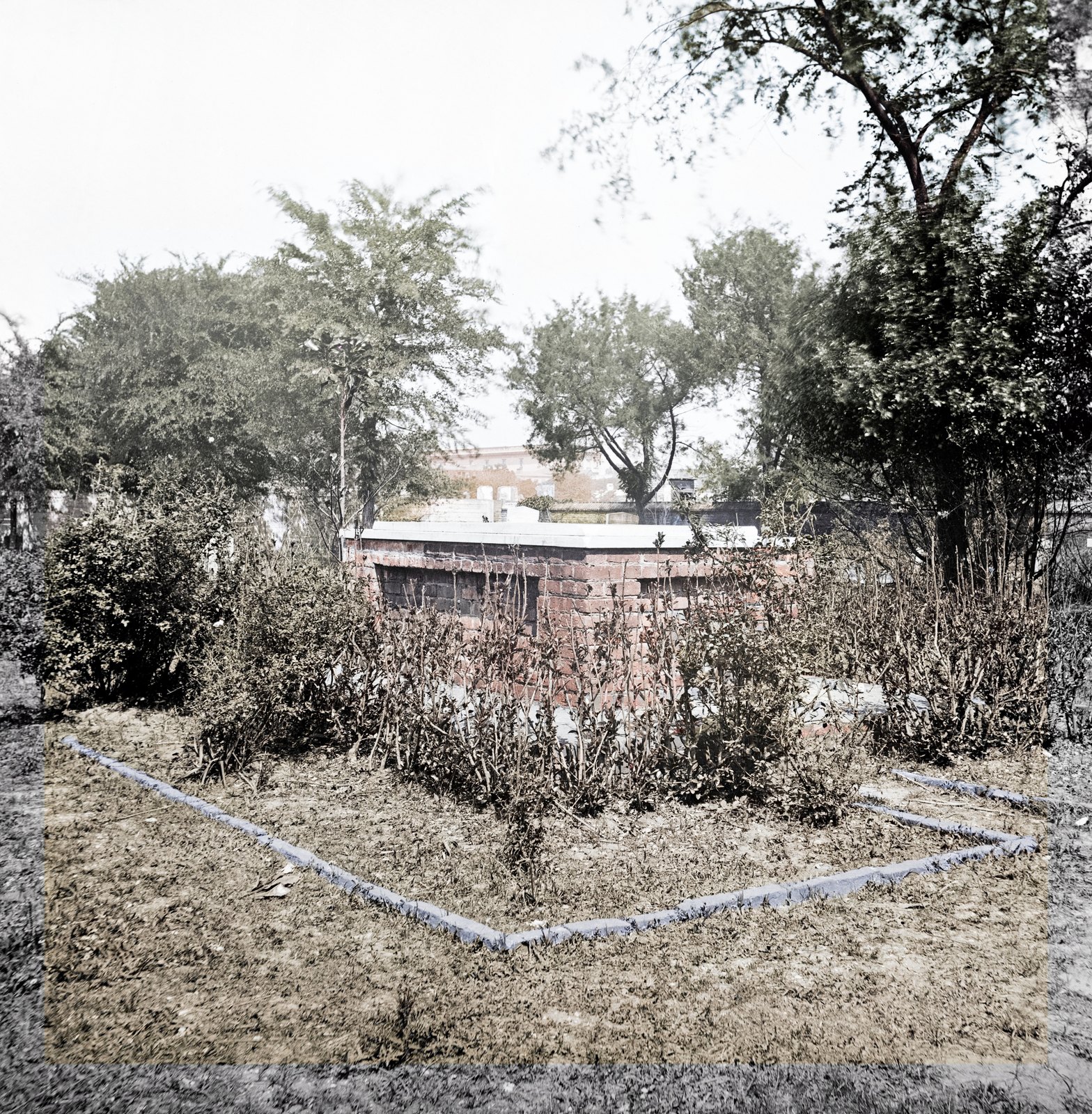
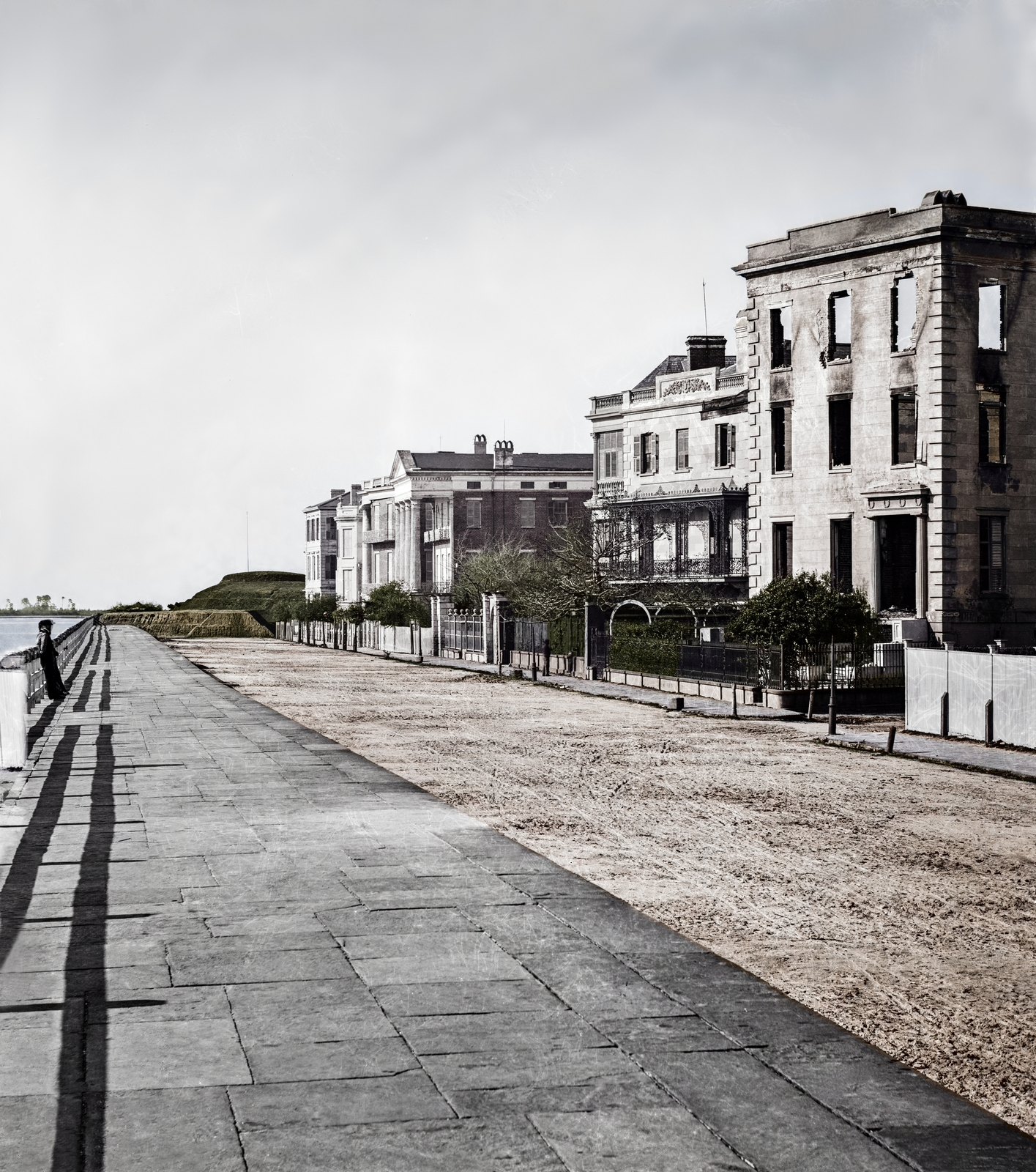
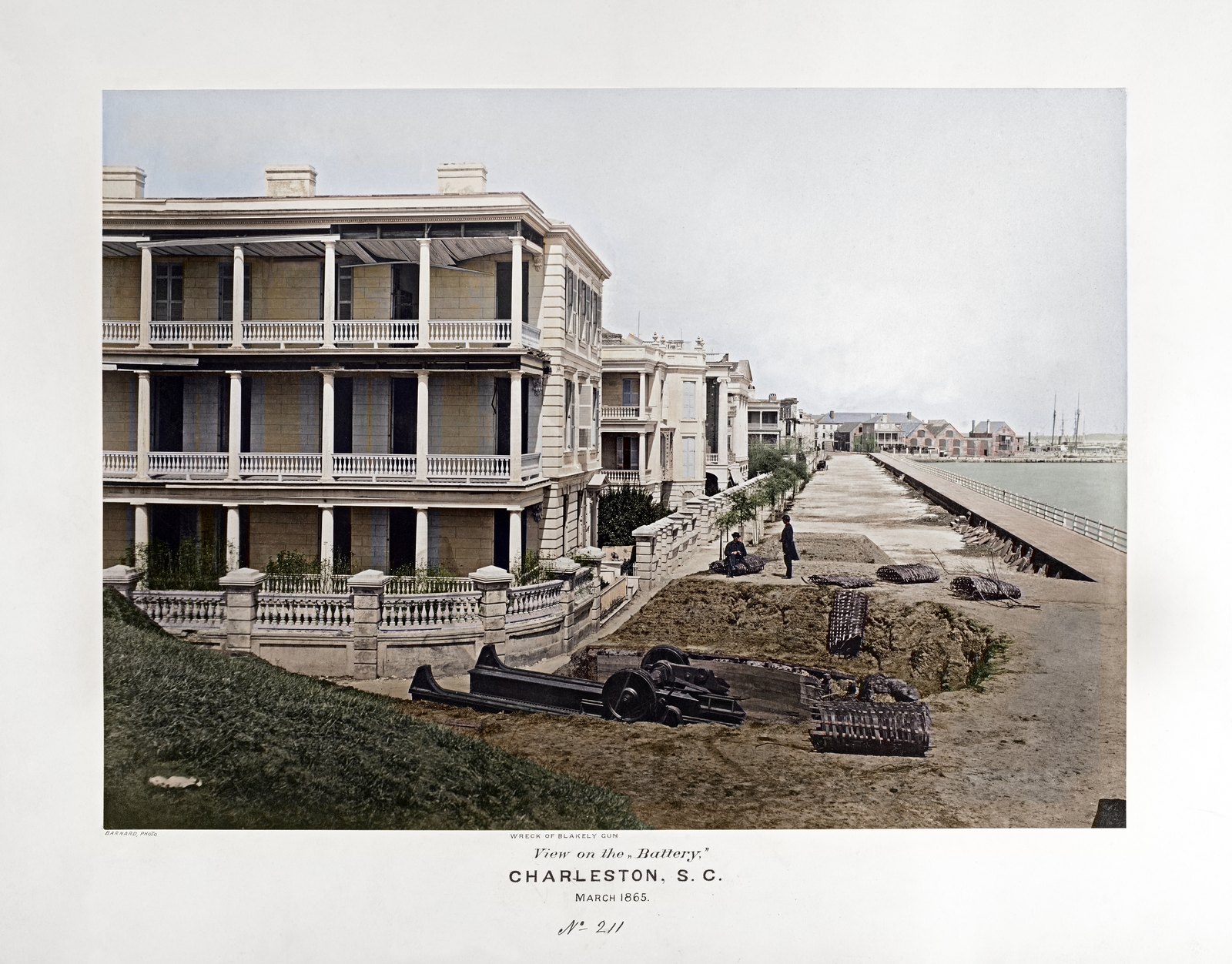
The Battery
Street · 3 photographs
The seawall promenade along the southern and eastern edge of the peninsula.
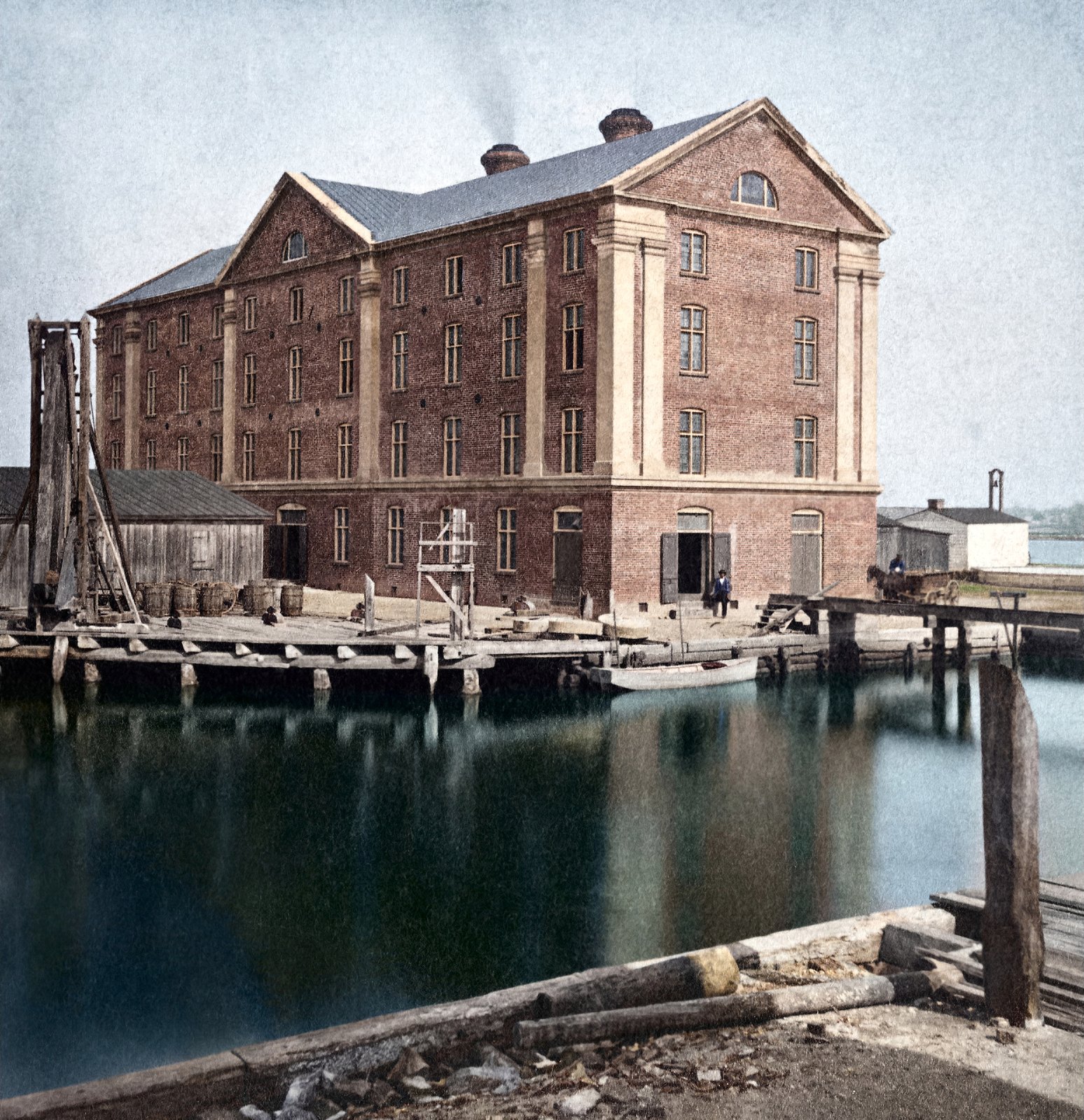
West Point Rice Mill
Commercial · 1 photograph
Built 1861 to replace an earlier mill that burned in 1859. The only completely intact rice mill left in Charleston.
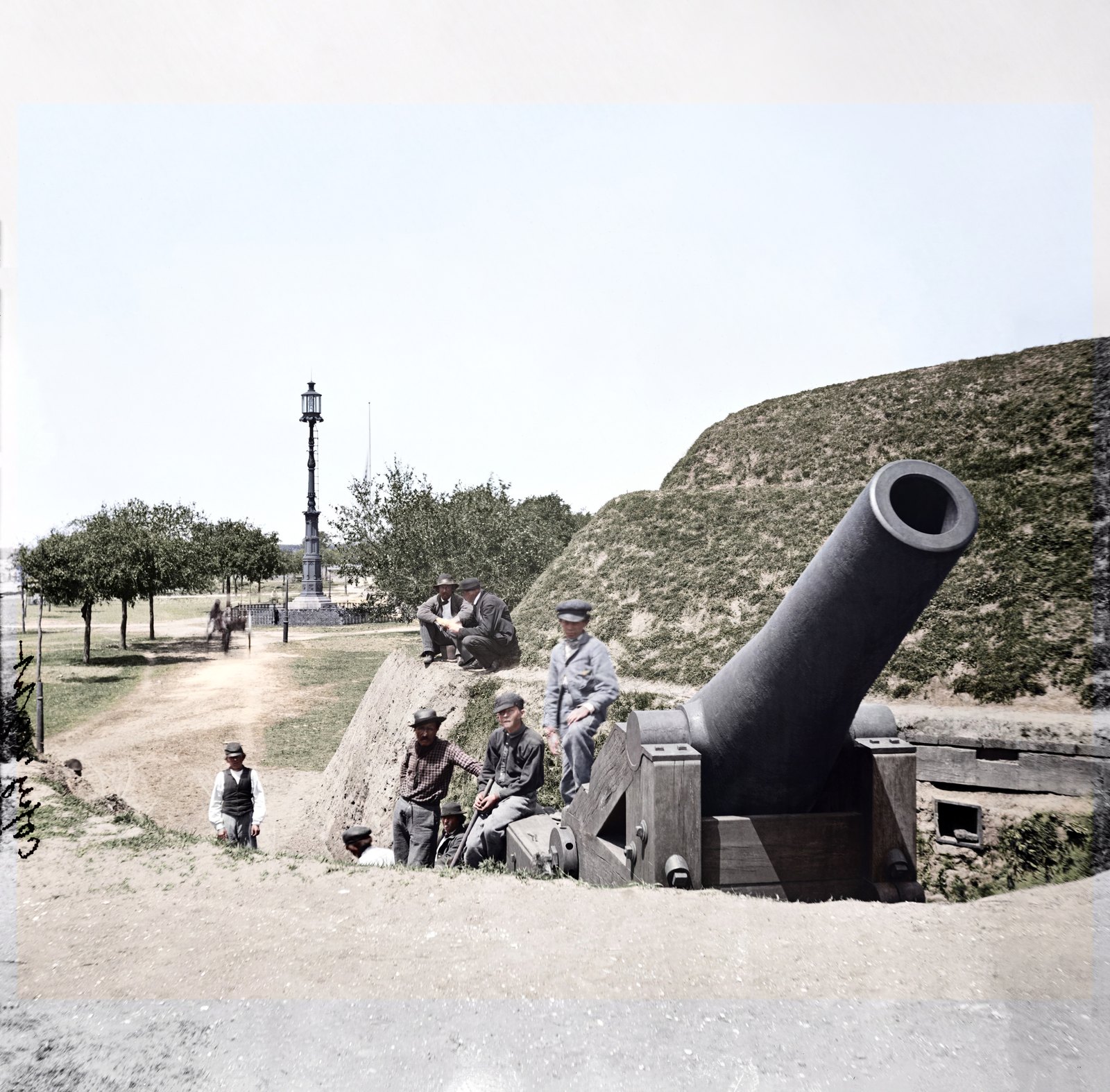
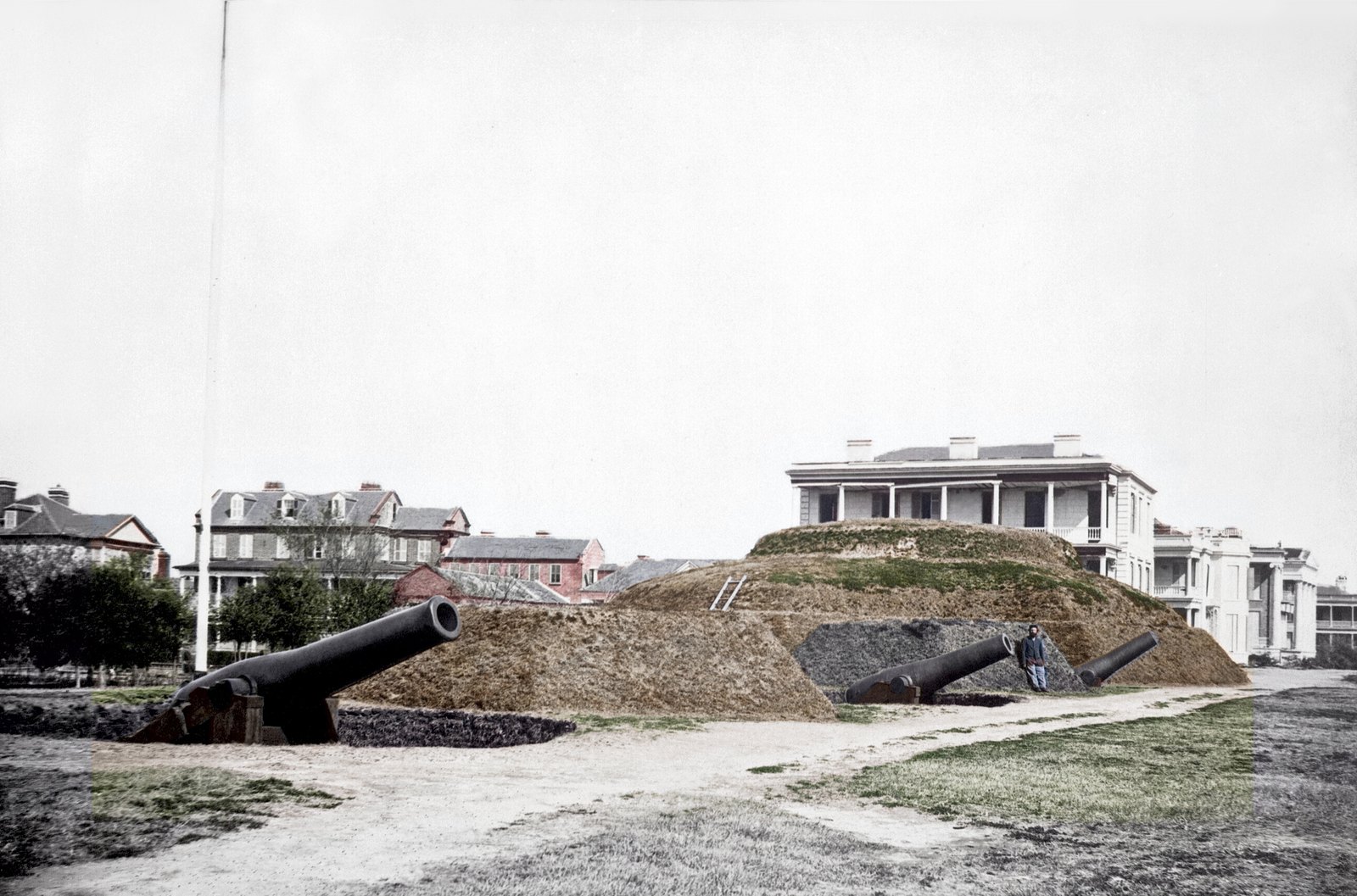
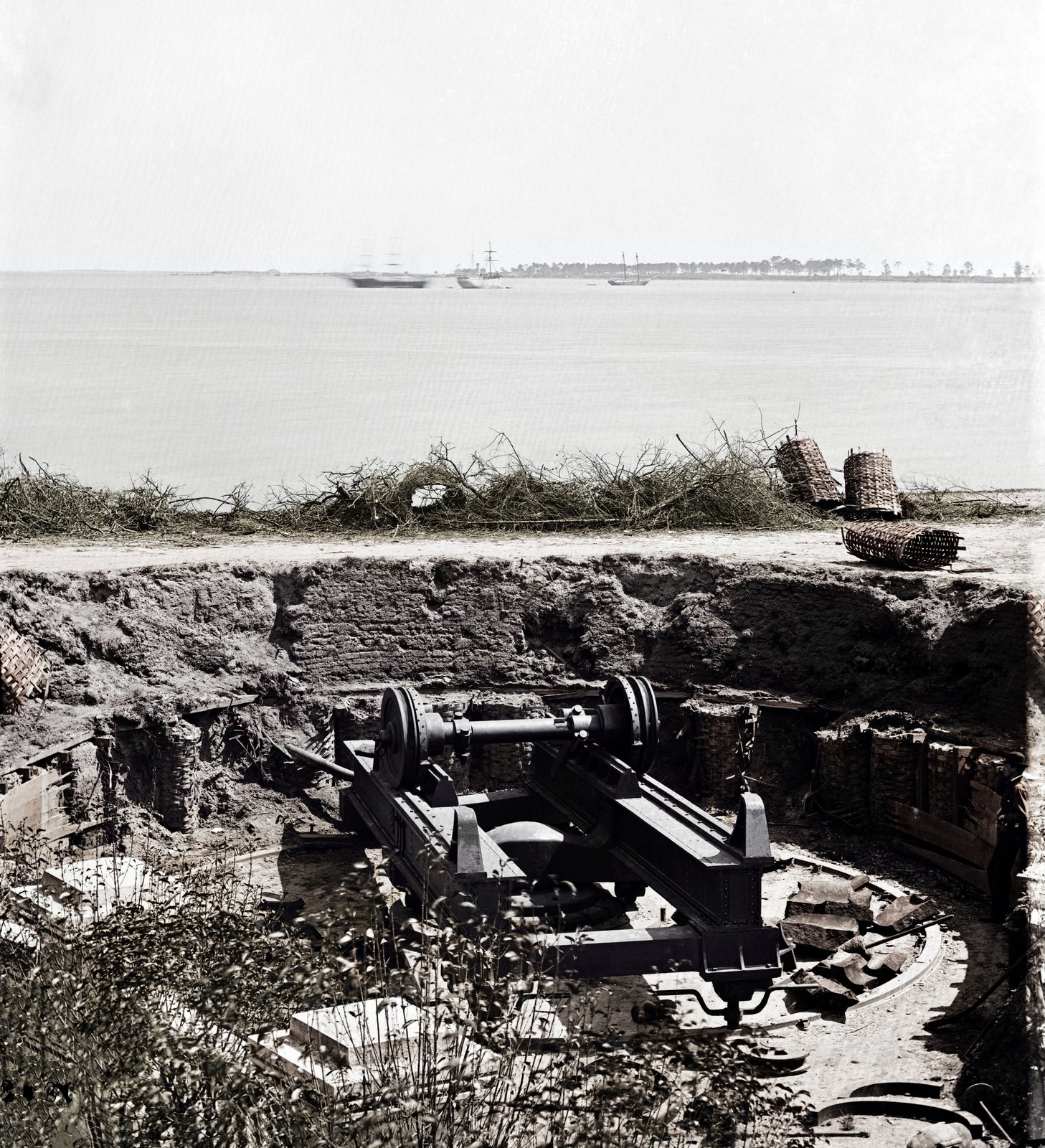
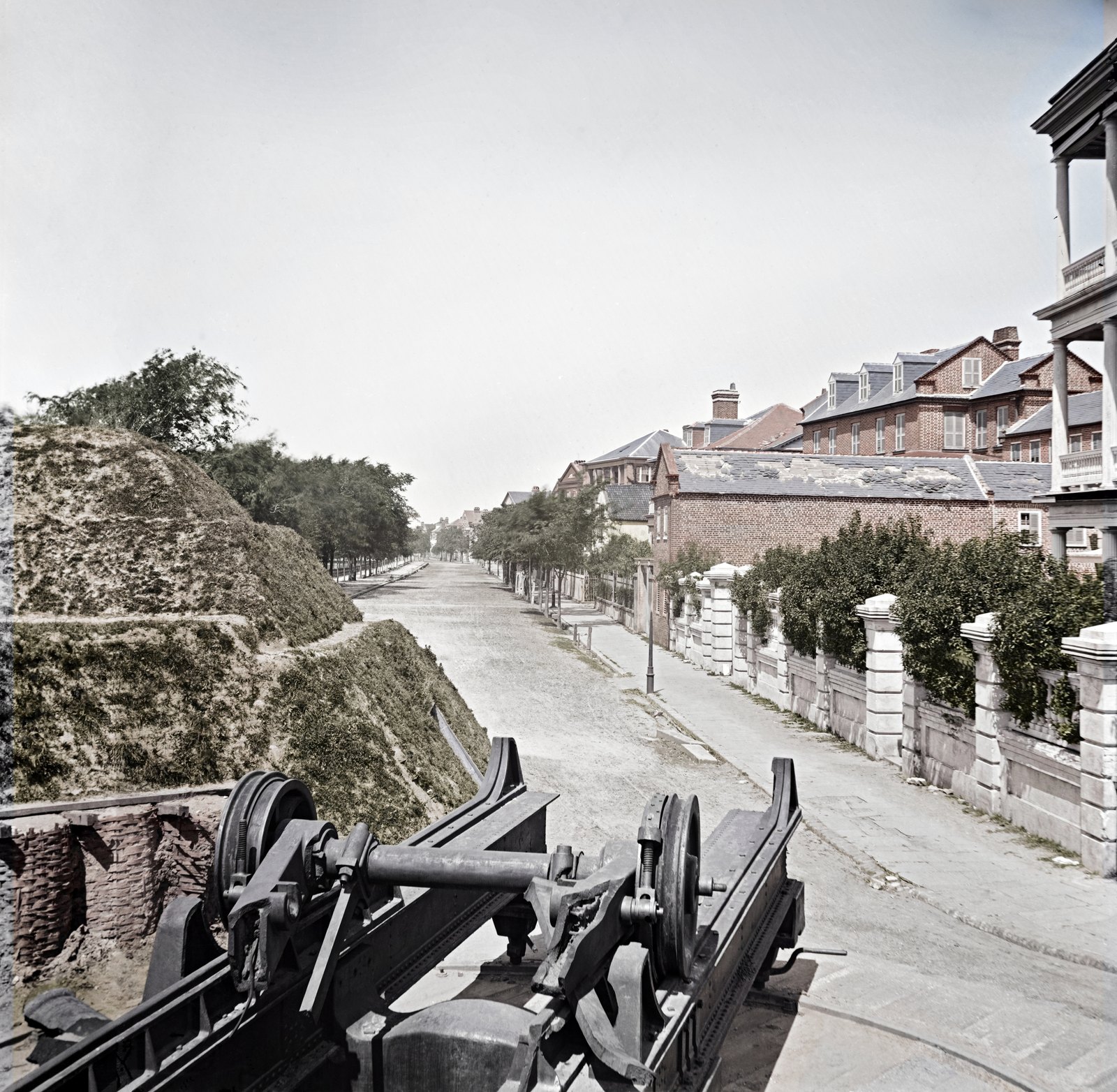
White Point Garden
Battery · 8 photographs
Confederate battery at the southern tip of the peninsula; now a public park.
Unconfirmed
Whether these survive has not yet been established.
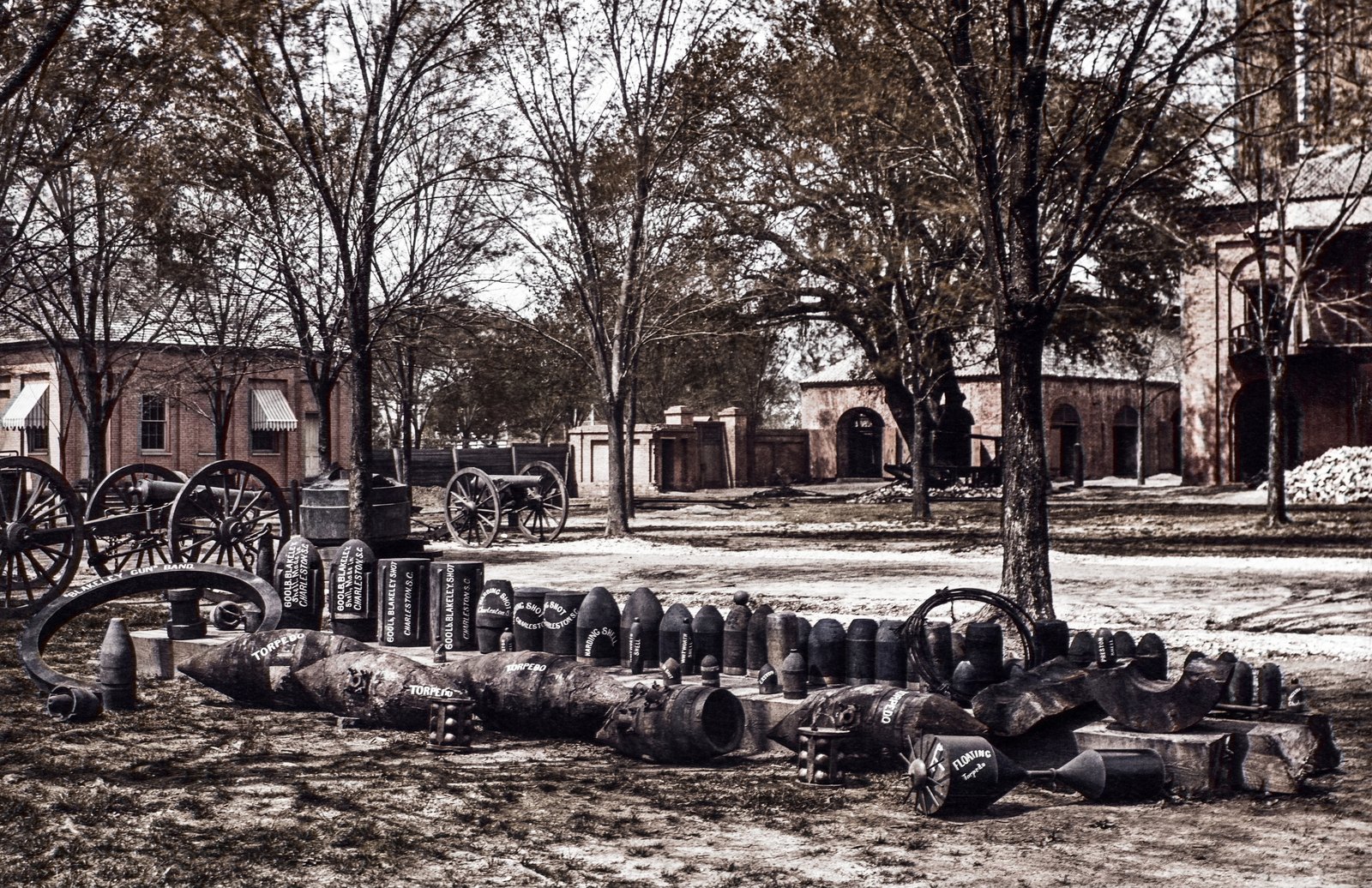
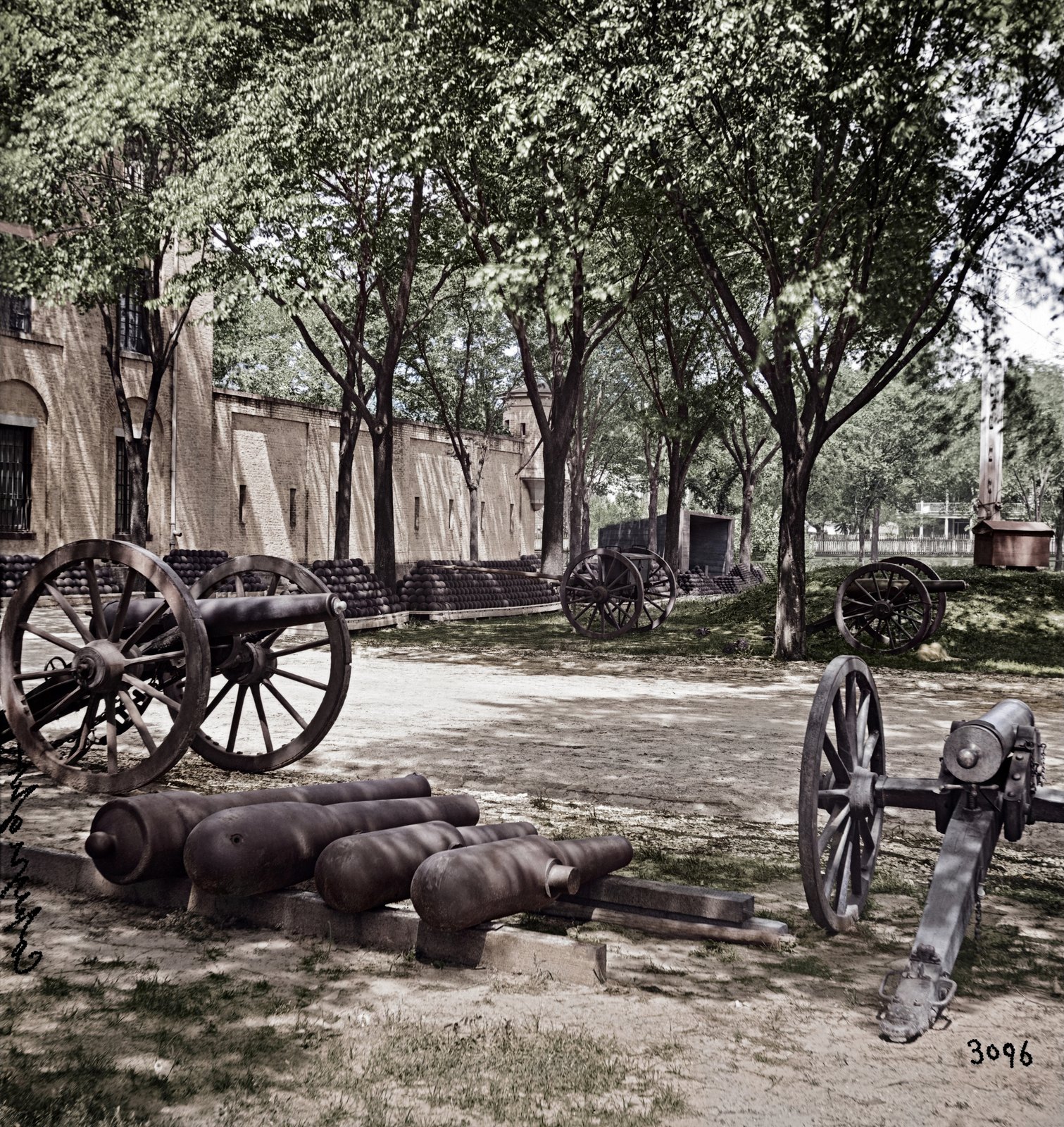
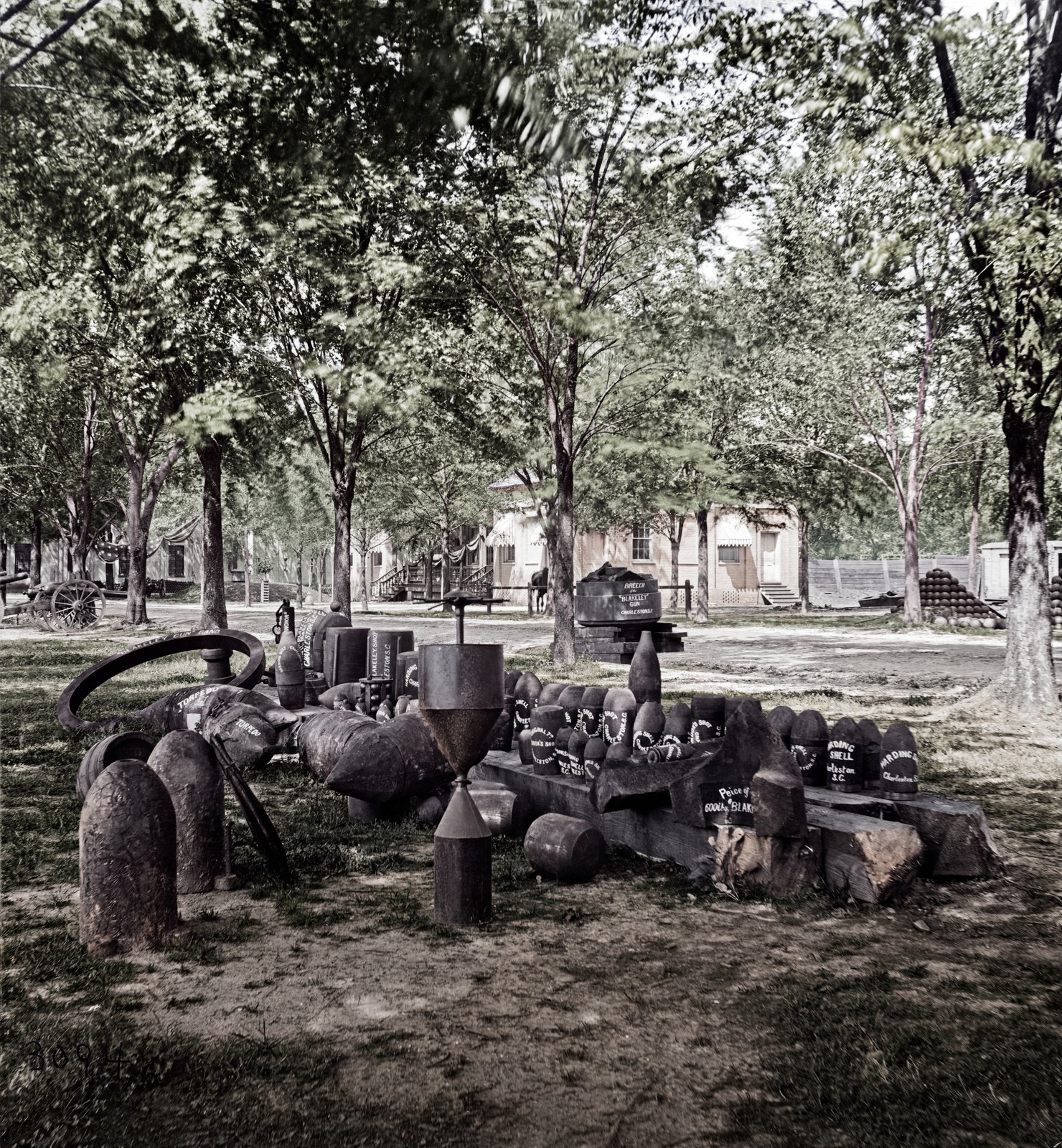
Charleston Arsenal
Arsenal · 3 photographs
United States arsenal seized by South Carolina in December 1860 and used by the Confederacy through the war.