Charleston Personalities · Book p. 44
Edmund Ruffin
The Virginia fire-eater who came to Charleston for secession, stayed for the bombardment, and wrote his own epitaph in hatred.
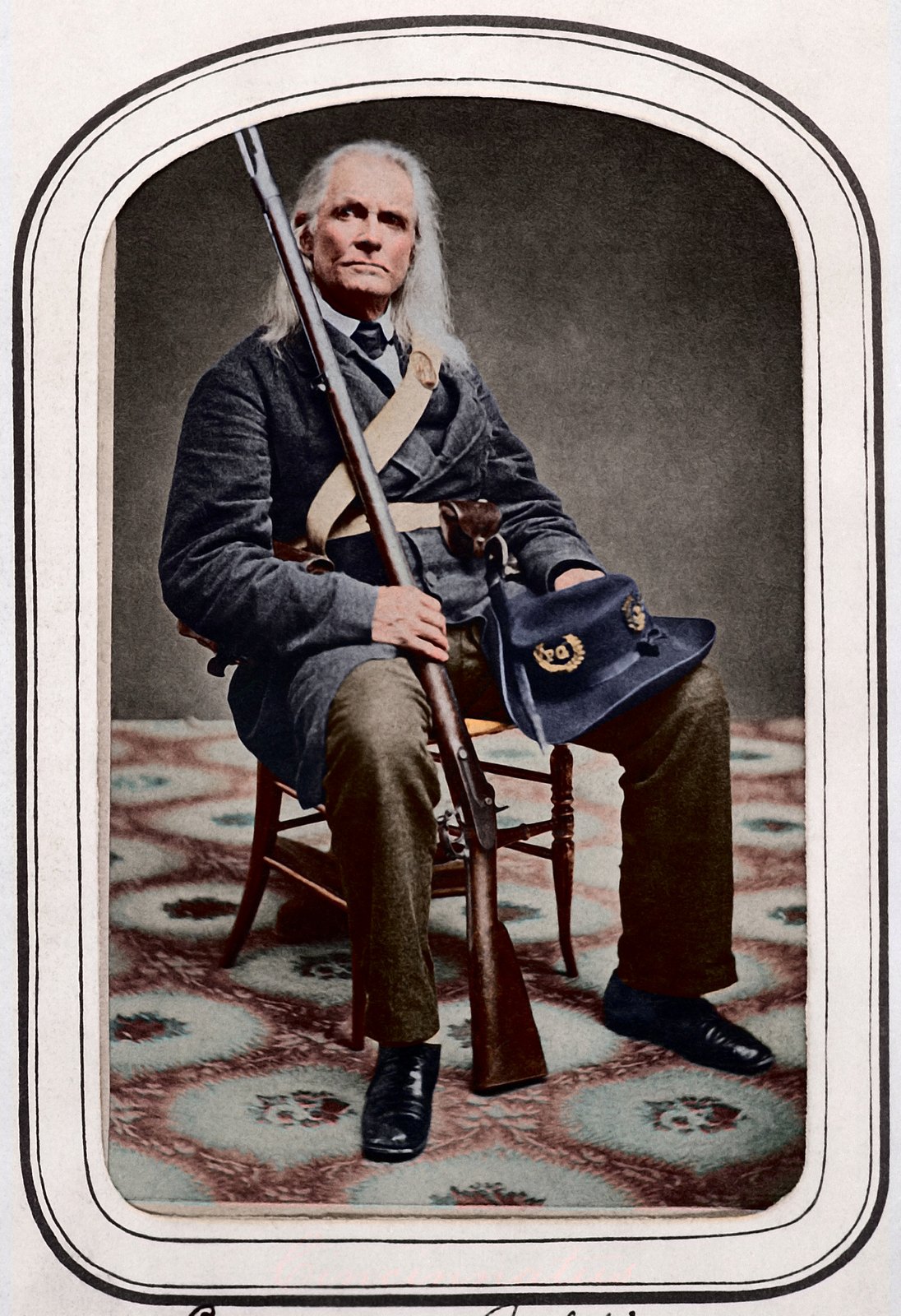
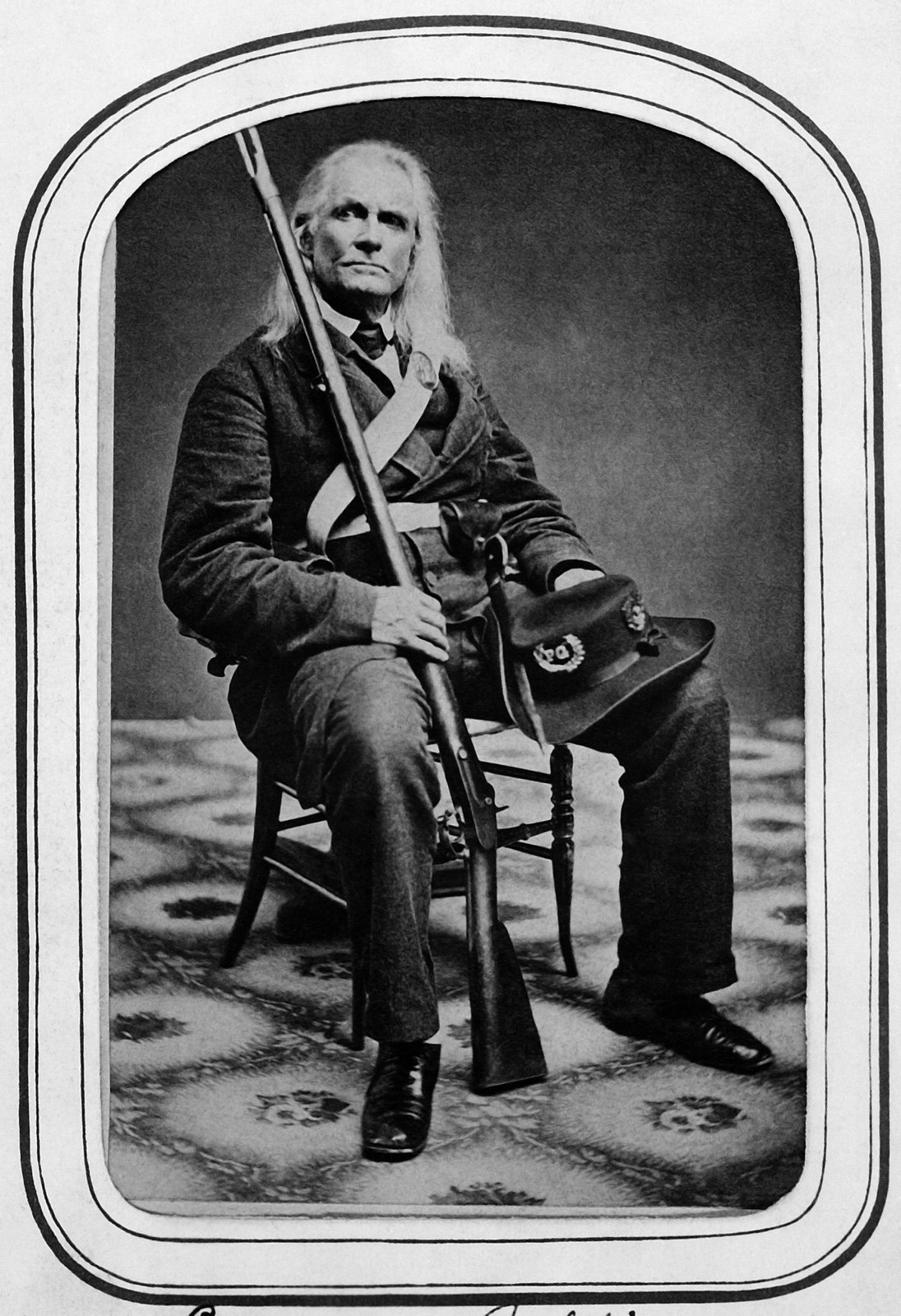
Drag to compareNational Archives
Edmund Ruffin was born in Prince George County, Virginia, on January 5, 1794, and made his reputation not as a politician but as an agricultural reformer. His Essay on Calcareous Manures, first published in 1832, showed Tidewater planters how marling could bring exhausted tobacco land back into production. It was serious, useful work, and it made him a respected man across the South long before he became a notorious one.
Politics consumed him late and completely. By the 1850s Ruffin had become one of the loudest of the fire-eaters, the small band of agitators who argued that the South's only future lay outside the Union. When South Carolina called its secession convention in December 1860, the sixty-six-year-old Virginian traveled to Charleston to watch it — a spectator at the disunion he had spent a decade demanding. He stayed on through the winter standoff at Fort Sumter.
On April 12, 1861, Ruffin was at Cummings Point on Morris Island, attached to the Palmetto Guard, and he pulled a lanyard on the Iron Battery. He is popularly remembered as the man who fired the first shot of the Civil War. He was not. The signal shell came from Fort Johnson, and scholarly consensus holds that the identity of the man who fired the war's first round is unknown; Ruffin is believed to have fired the first shot from the Morris Island batteries after the bombardment was already underway. It is a distinction he did nothing to discourage, and one that has clung to him for a century and a half.
He returned to Charleston once more, in late 1863, and spent the balance of the war on his Virginia land. What he saw coming there was not defeat so much as annihilation. Early in 1865 he set down his view of “subjugation to Yankee power [as] the last & worst of all evils.”
On June 17, 1865 — a little over two months after Appomattox — Ruffin carried a rifle and a forked stick up to his study at Redmoor, in Amelia County. He was interrupted by callers at the front door. When they had gone, he sat down, made a final entry in the diary he had kept for decades, put the muzzle in his mouth, and pushed the trigger with the stick. The cap snapped without firing. He reloaded, and the second attempt killed him. He was seventy-one.
The last thing he wrote has outlived everything else he ever published:
And now, with my latest writing & utterance, & with what will be near to my latest breath, I here repeat, & would willingly proclaim, my unmitigated hatred to Yankee rule — to all political, social, & business connection with the Yankees, & to the perfidious, malignant, & vile Yankee race.
The photograph is a Quinby & Co. portrait, made in Charleston. Ruffin sat for it wearing his hair long to his shoulders, a deliberately archaic look even in 1861, and one that made him instantly recognizable in a crowd.
The caption as printed in the book
(Jan. 5, 1794–June 18, 1865) The final measure of a colorful life is a colorful death-note. Edmund Ruffin was born in Virginia in 1794. An ardent advocate of Southern rights, he traveled to Charleston to attend the secession convention of December 1860. He stayed on to pull one of the lanyards of Southern artillery against Fort Sumter on April 12, 1861. With the exception of a visit to Charleston in late 1863, Ruffin spent the last years of the war at his Virginia estate until his death at age seventy-one. In early 1865, the old man reflected on the prospect of “subjugation to Yankee power [as] the last & worst of all evils.” Determined to avoid such a fate, two months after Lee’s surrender, Ruffin put a rifle muzzle to his mouth and killed himself—but only after penning a final diary entry which has come to rank as one of the most forceful expressions in the lexicon of Yankeephobia: And now, with my latest writing & utterance, & with what will be near to my latest breath, I here repeat, & would willingly proclaim, my unmitigated hatred to Yankee rule—to all political, social, & business connection with the Yankees, & to the perfidious, malignant, & vile Yankee race. (Photograph by Quinby & Co.)