The Burnt District · Book p. 110
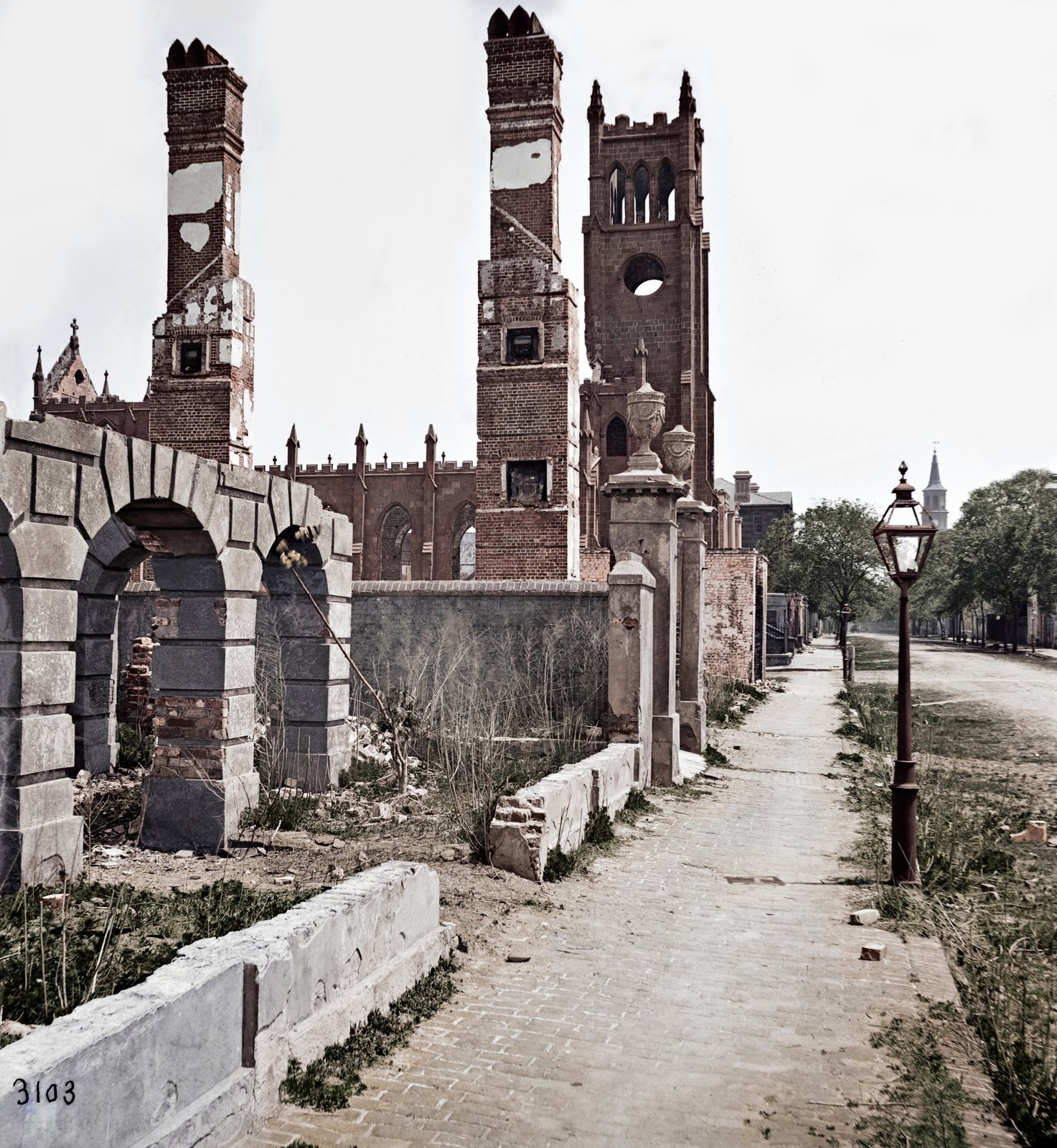
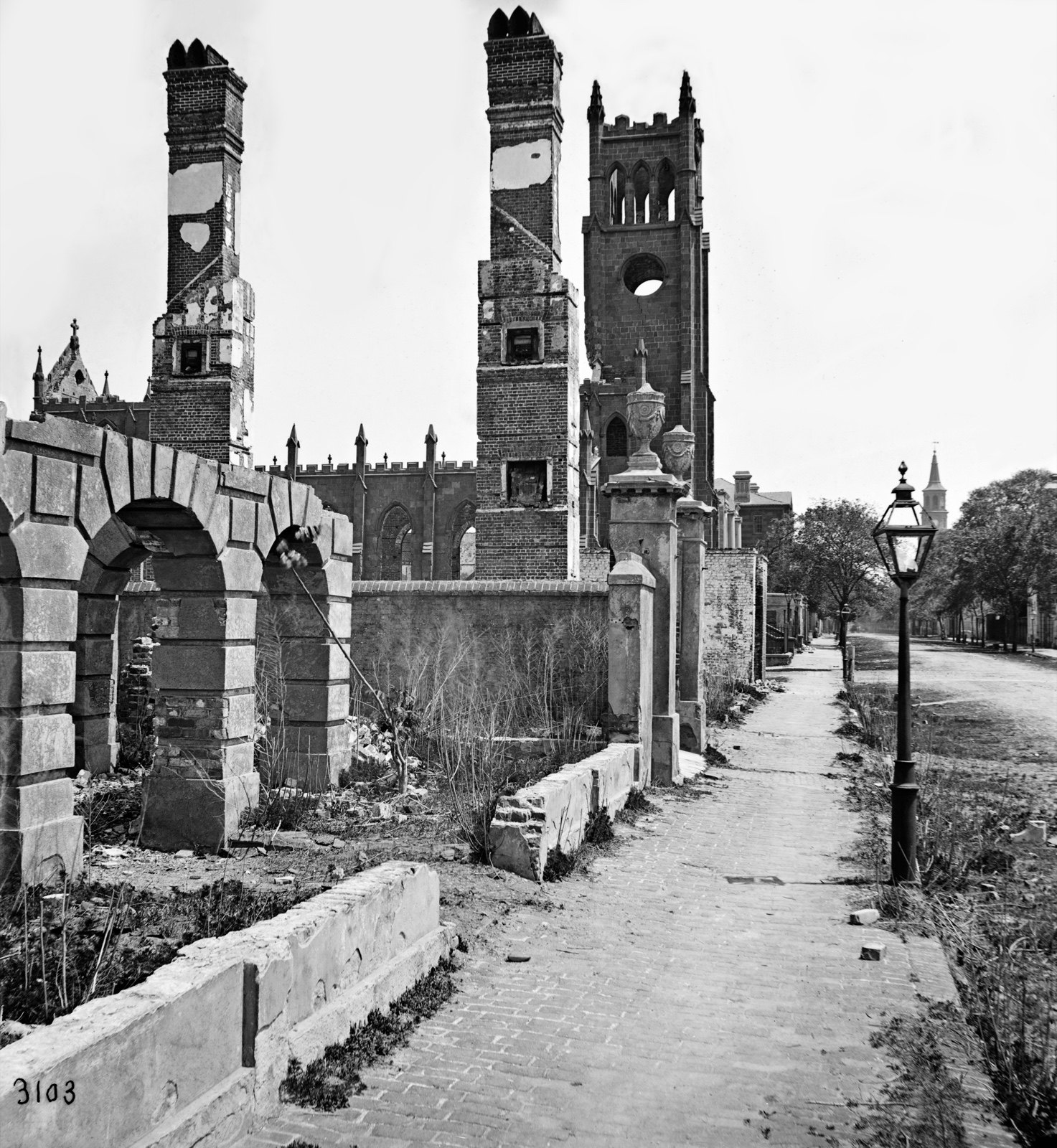
Looking East Along Broad Street
The burnt mansion of the postmaster who once guarded the United States mail with a shotgun.
Drag to compareLibrary of Congress
The ruins on the left were the house of Alfred Huger, for decades the postmaster of Charleston. The name is pronounced yu-GEE; a visitor who says "hugger" identifies himself immediately.
Huger is worth more than the aside the book gives him. In July 1835 the steamer Columbia landed at Charleston with mail sacks full of abolitionist tracts addressed to prominent men of the city. Huger set the sacks aside rather than deliver them. That night a group calling itself the Lynch Men broke into the post office and took the mail, and the following evening burned it before a crowd of some two thousand people, along with effigies of Northern abolitionists. Afterward Huger stood guard over the mail himself, with a shotgun — a federal officer defending federal property against his own neighbors, in a city that would fire on the federal government twenty-six years later.
He was in the street when his own house went. The account has him sitting dumbfounded in a chair someone had pulled out of the burning building, watching it go.
The fire broke out on the evening of 11 December 1861 at the foot of Hasell Street near East Bay — the Mercury put it at Russell & Co.'s sash and blind factory, though others thought it was already burning in Cameron & Co.'s machine shops across the street. Driven by a hard northeast wind, it cut a diagonal swath southwest across the whole peninsula and did not stop until it reached the Ashley River below Tradd Street. It burned some 540 acres and more than a thousand buildings in a single night.
In the background stands the Cathedral of St. John the Baptist and St. Finbar, finished seven years before and gutted in the same night. The rectory beside it went too, with Bishop Patrick Lynch's library of about seventeen thousand volumes. Construction of the present cathedral began in 1890 and was completed in 1907.
The caption as printed in the book
To the left are the ruins of the mansion of Alfred Huger, Charleston’s longtime postmaster. (Charlestonians can detect a non-native from their pronunciation of Huger— it’s yu-gee, not “hugger.”) As his home went up in flames, the postmaster sat dumbfounded in the street, in a chair pulled from his burning house. In the background is the cathedral, which had been constructed just seven years before. Also destroyed were the adjoining rectory and Bishop Patrick Lynch’s library of 17,000 volumes—St. Finbar’s, as it was called, was thought to have been fireproof (it wasn’t). The construction of the present Cathedral of St. John the Baptist was begun in 1890 and completed in 1907.