Charleston Arsenal · Book p. 121
Ordnance at the Arsenal
Drag to compareLibrary of Congress
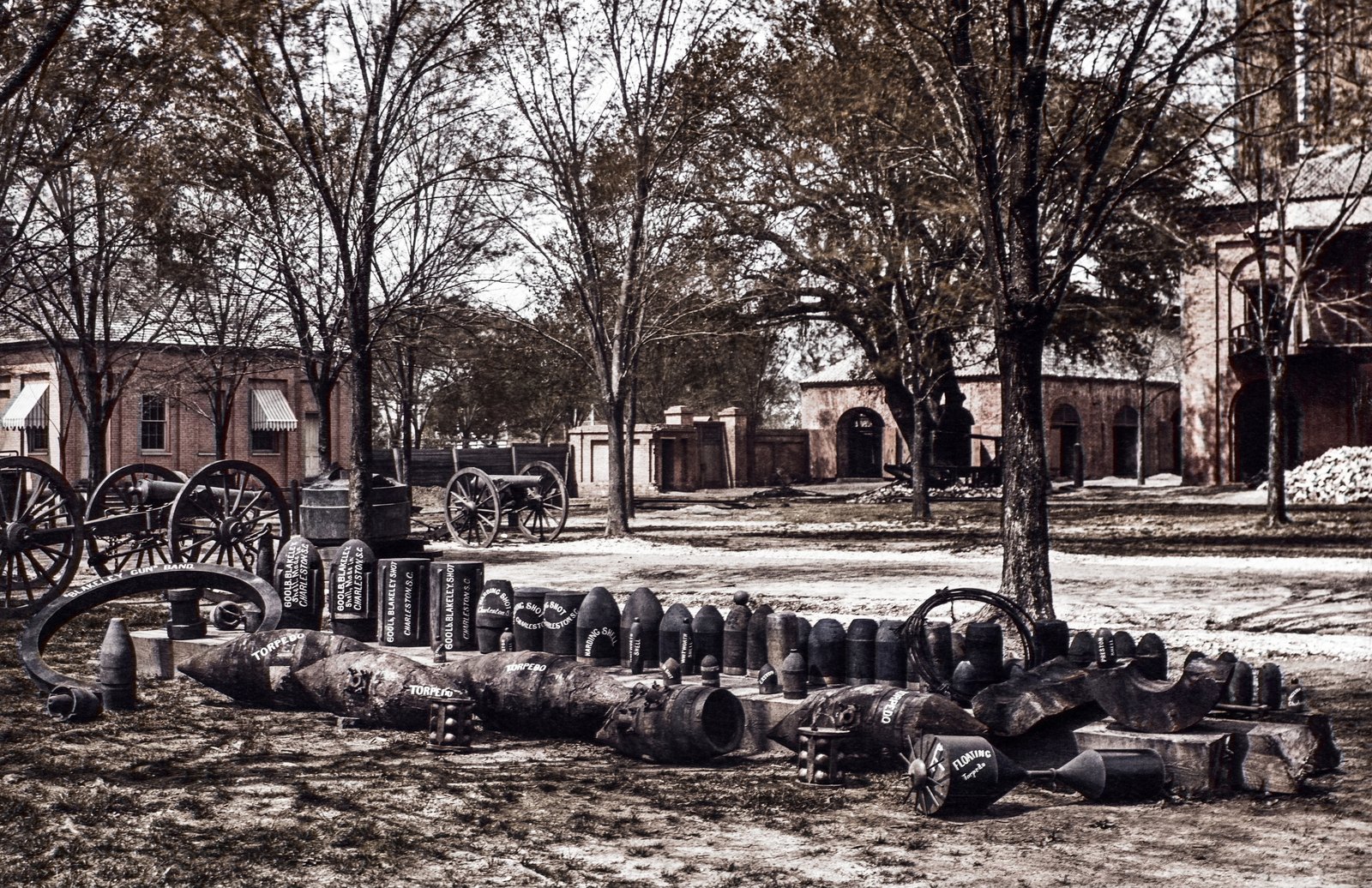
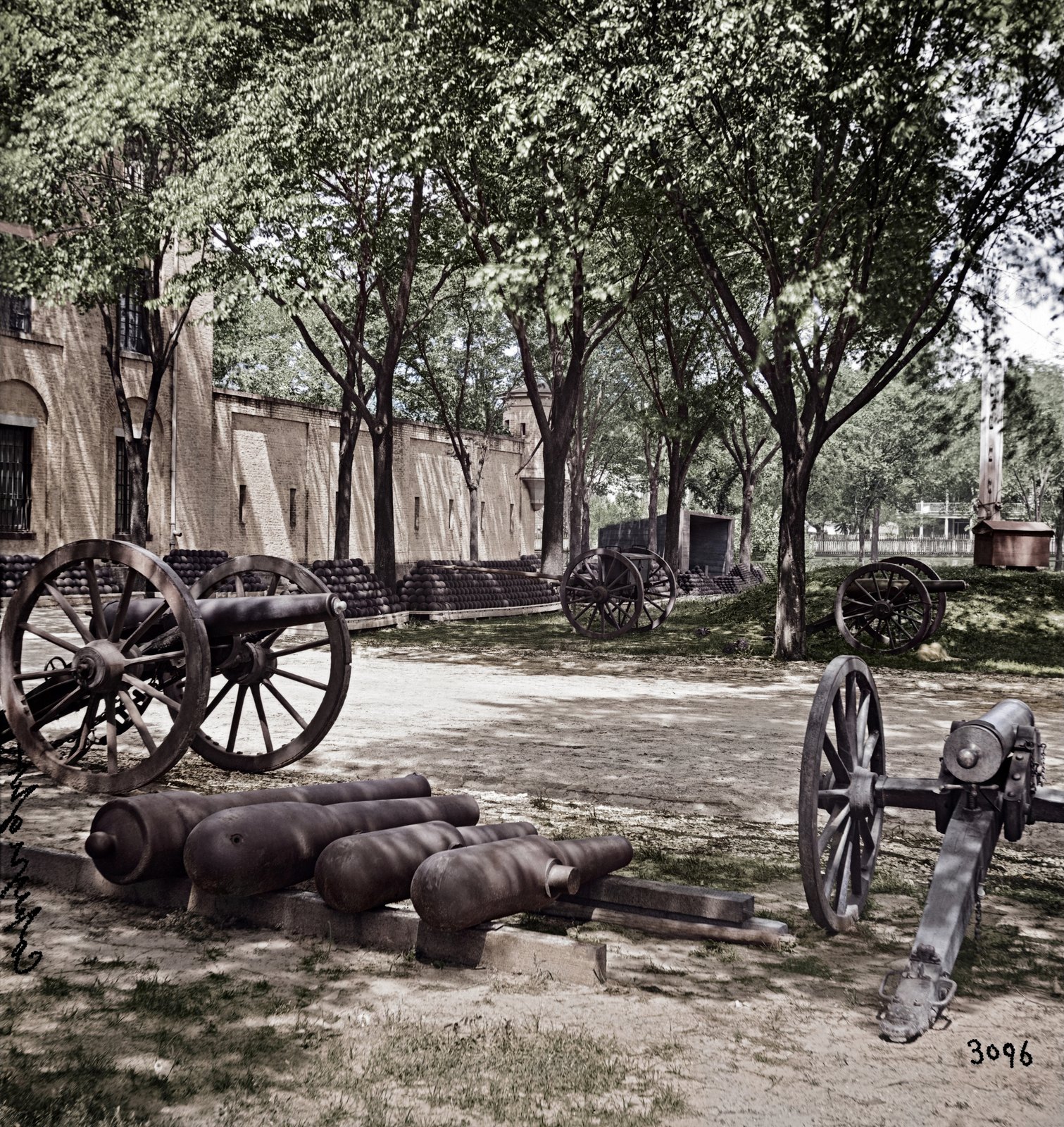
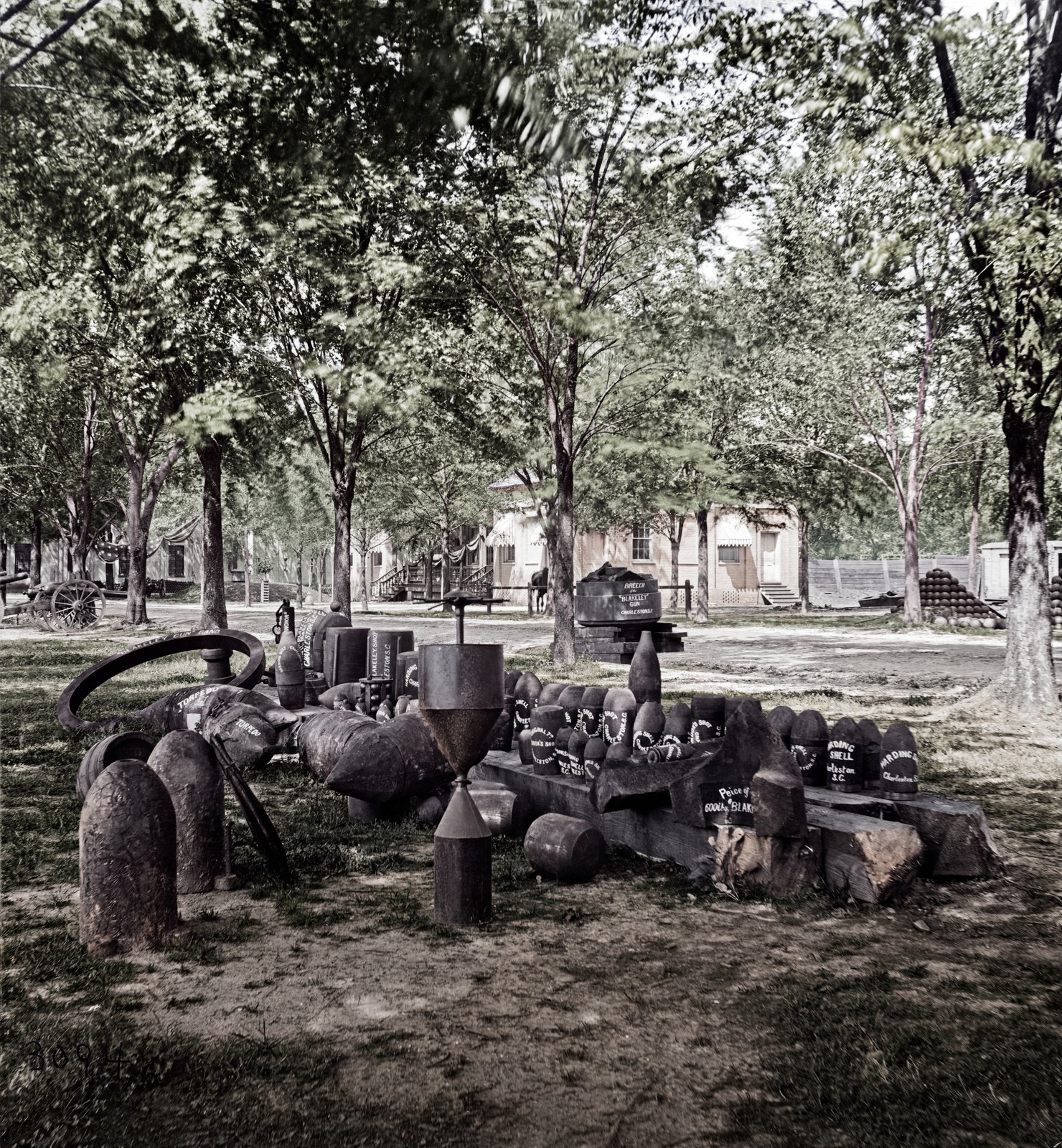
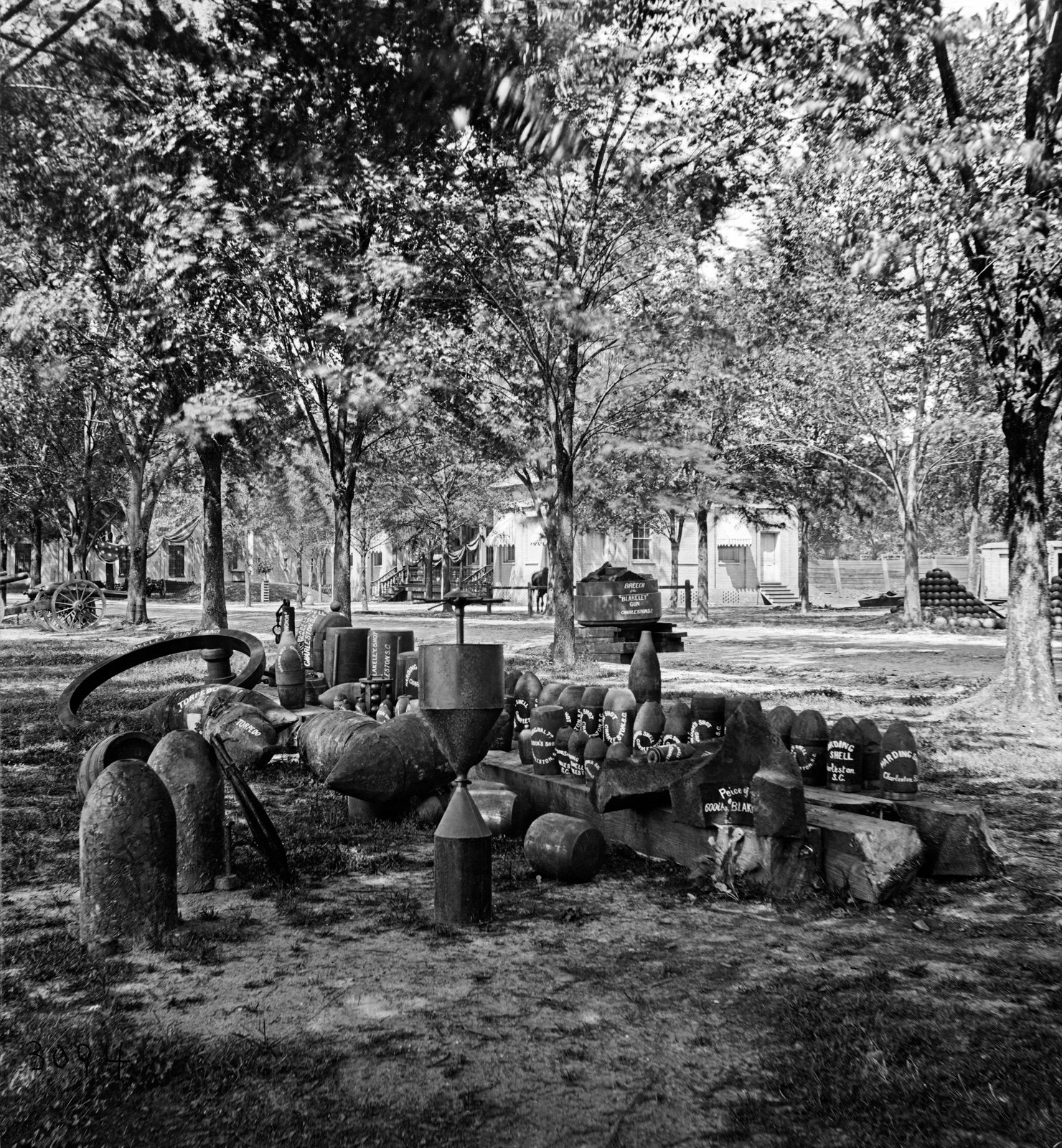
After the evacuation the Federal army gathered what the Confederates had left and stacked it in the yard of the Charleston Arsenal, where it could be counted. This is part of that accumulation, lying under the trees: heavy gun tubes, mortars, and shells, the ordnance of a besieged city collected in one place.
An arsenal yard after a surrender is a peculiar kind of document. Nothing here is arranged for the camera and nothing is in service; the pieces have been dragged in from batteries all over the harbor defenses and set down wherever there was room. What the photograph records is not a battery but an inventory.
The Charleston Arsenal had been a United States installation before the war. South Carolina troops took it over at the end of December 1860, in the same days that Major Robert Anderson moved his garrison from Fort Moultrie out to Fort Sumter, and it served the Confederacy for the next four years. In February 1865 it changed hands again, with its contents lying in the yard.
For anyone working on Confederate heavy ordnance these Arsenal views are among the most informative photographs of the war, because they show large numbers of identifiable pieces together, in one place, at a fixed date.
The caption as printed in the book
The Charleston Arsenal U.S. government arsenals were established to manufacture or store small arms, cannon and ammunition. The Harpers Ferry Arsenal, seized by John Brown and his followers in 1859, had been founded in 1795. The Charleston Arsenal was established in 1841. When South Carolina seceded, the arsenal, which spanned an entire city block bounded by President, Bee, Doughty and Ashley Streets, was manned by an ordnance sergeant, nine enlisted men and six hired hands. On the morning of Dec. 30, 1860—ten days after secession—state troops marched to Sgt. F. C. Humphreys’ quarters and demanded that he surrender the arsenal. Humphreys had no choice but to comply. During the war the Charleston Arsenal sent weaponry to both Lee’s Army of Northern Virginia and the Army of Tennessee. At the time of the Confederate evacuation of Charleston, demolition charges were placed at the arsenal grounds, but none went off. Federal troops occupied it on Feb. 18, 1865. In this view mounted and unmounted artillery are shown. The gun in the lower right is a 12-pounder bronze mountain howitzer; the tubes of three English Blakely rifles are to its left. A banded and rifled tube, possibly a Confederate Parrott, is lying on the timbers to the left of the Blakelys.
Also at Charleston Arsenal