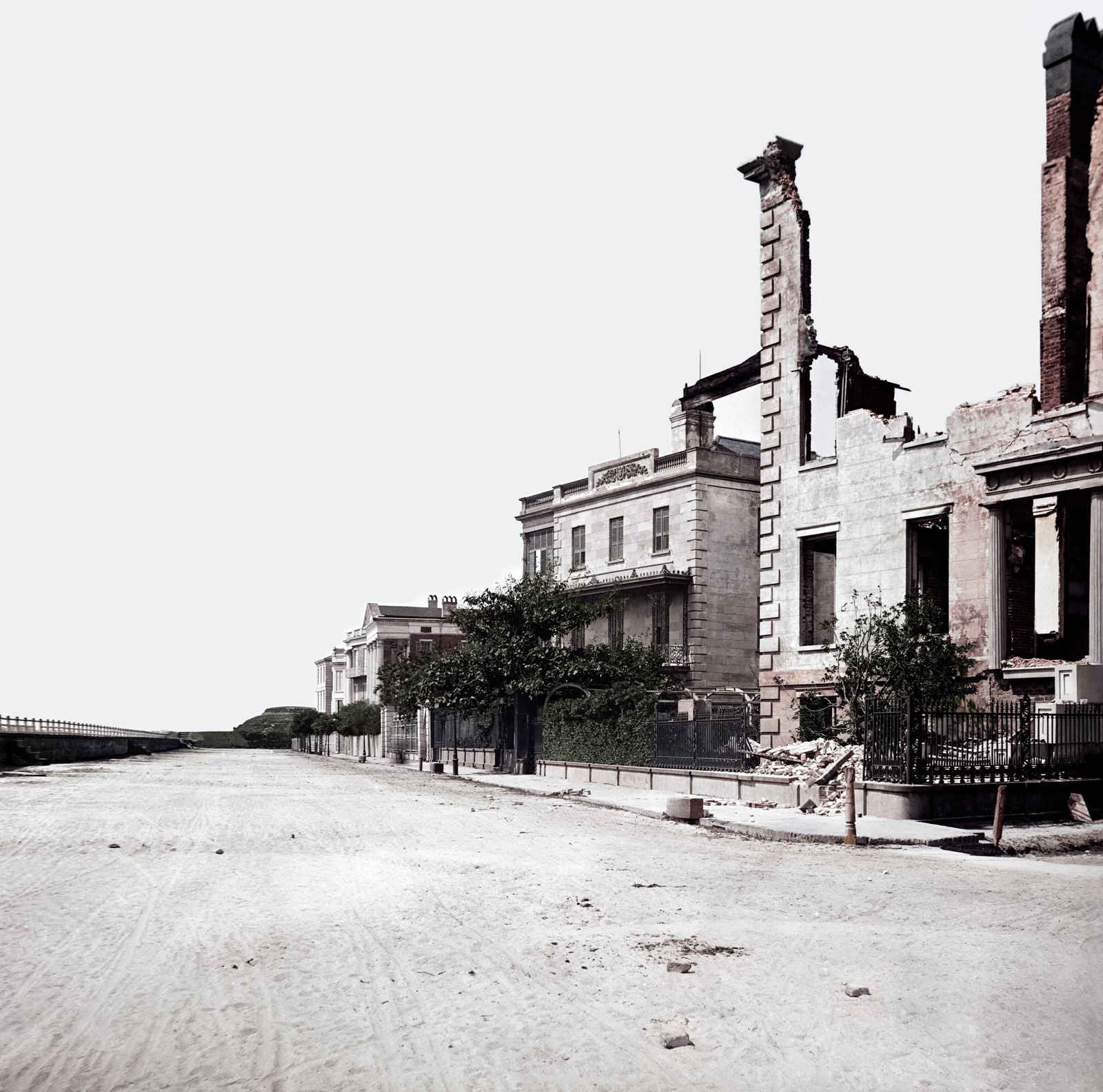
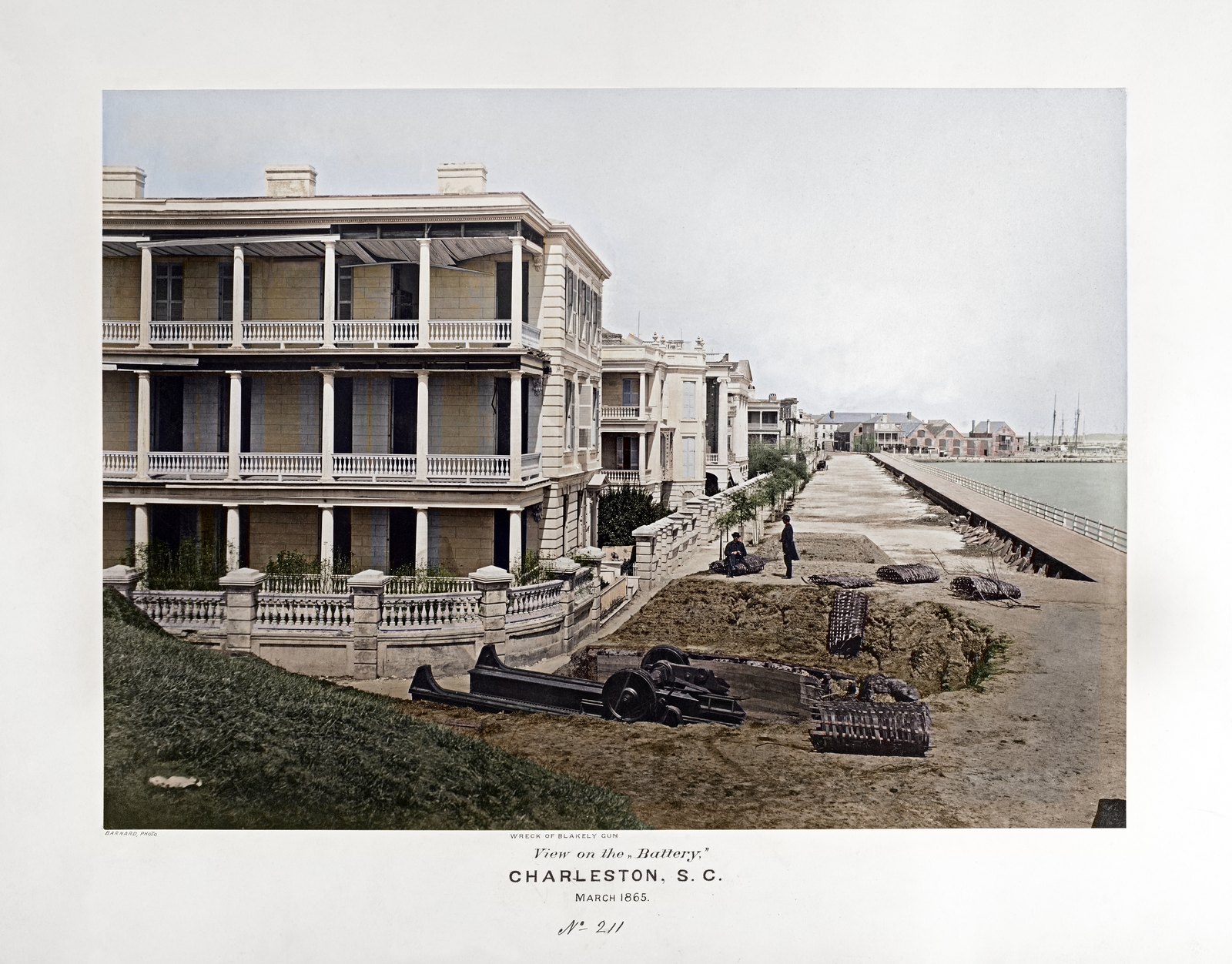
The Battery · Book p. 80
The Shell-pocked Daniel Heyward Mansion
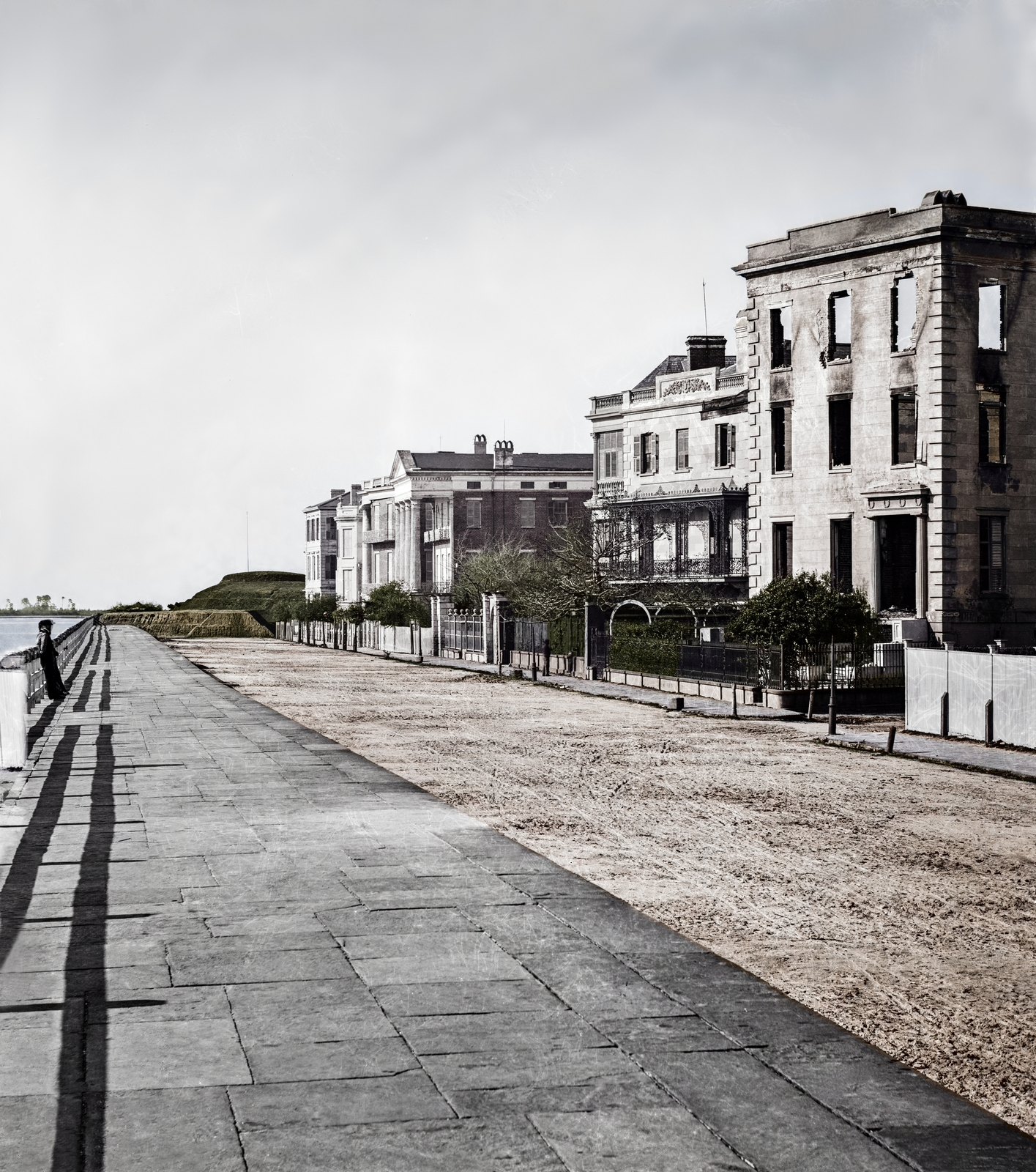
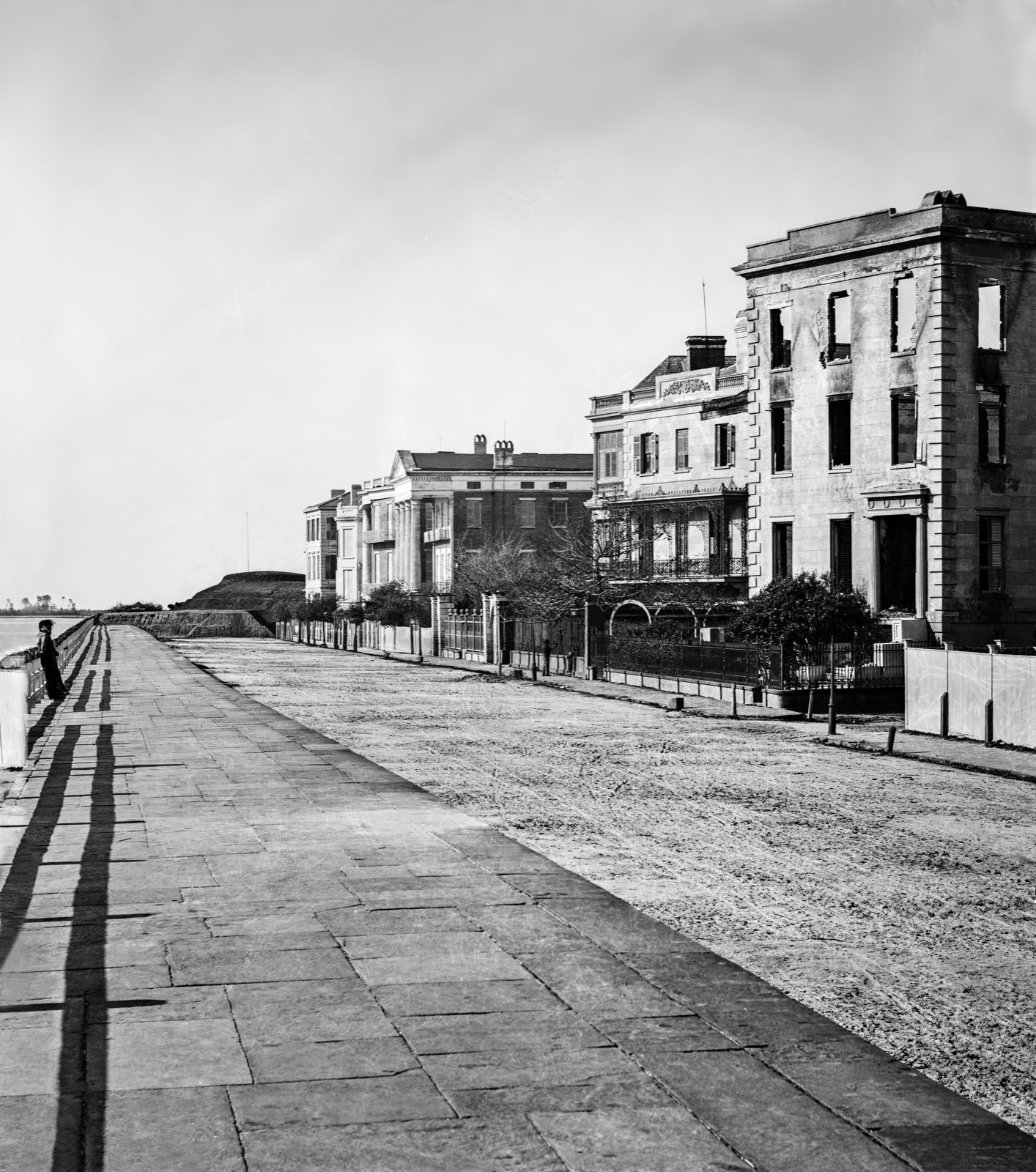
Drag to compareLibrary of Congress
The first Northern shells of what would become a year-and-a-half bombardment of Charleston fell in the early morning of Aug. 22, 1863. After that, only sporadic cannonfire erupted from the Union guns on Morris Island. No shells dropped in the city during September, and only three the next month. But more than a hundred fell around Christmas. The southern part of the city was so often the target of the Federal artillery that it came to be called “the Shell District.” The lowest half-mile or so was within the effective range (8,140 yards, or about 4.6 miles) of the Northerners’ largest cannon, the “Swamp Angel.” It was a huge 8-inch Parrott rifled gun that could throw a 150-pound Parrott shell all the way across the harbor and into the city. This gun burst firing its 36th round. One of the residences in the Shell District was Daniel Heyward’s (East Battery at Atlantic). The projectile that struck it—Federals sometimes filled shells with igneous liquid or “Greek Fire”—caused a blaze that consumed the mansion. According to the Library of Congress, this photograph was taken by George N. Barnard.
This is the caption as printed in 100 Significant Civil War Photographs: Charleston in the War. It has not yet been through this site’s research and fact-checking pass.
Also at The Battery