General Hatch, the Occupier · Book p. 97
African American Presence
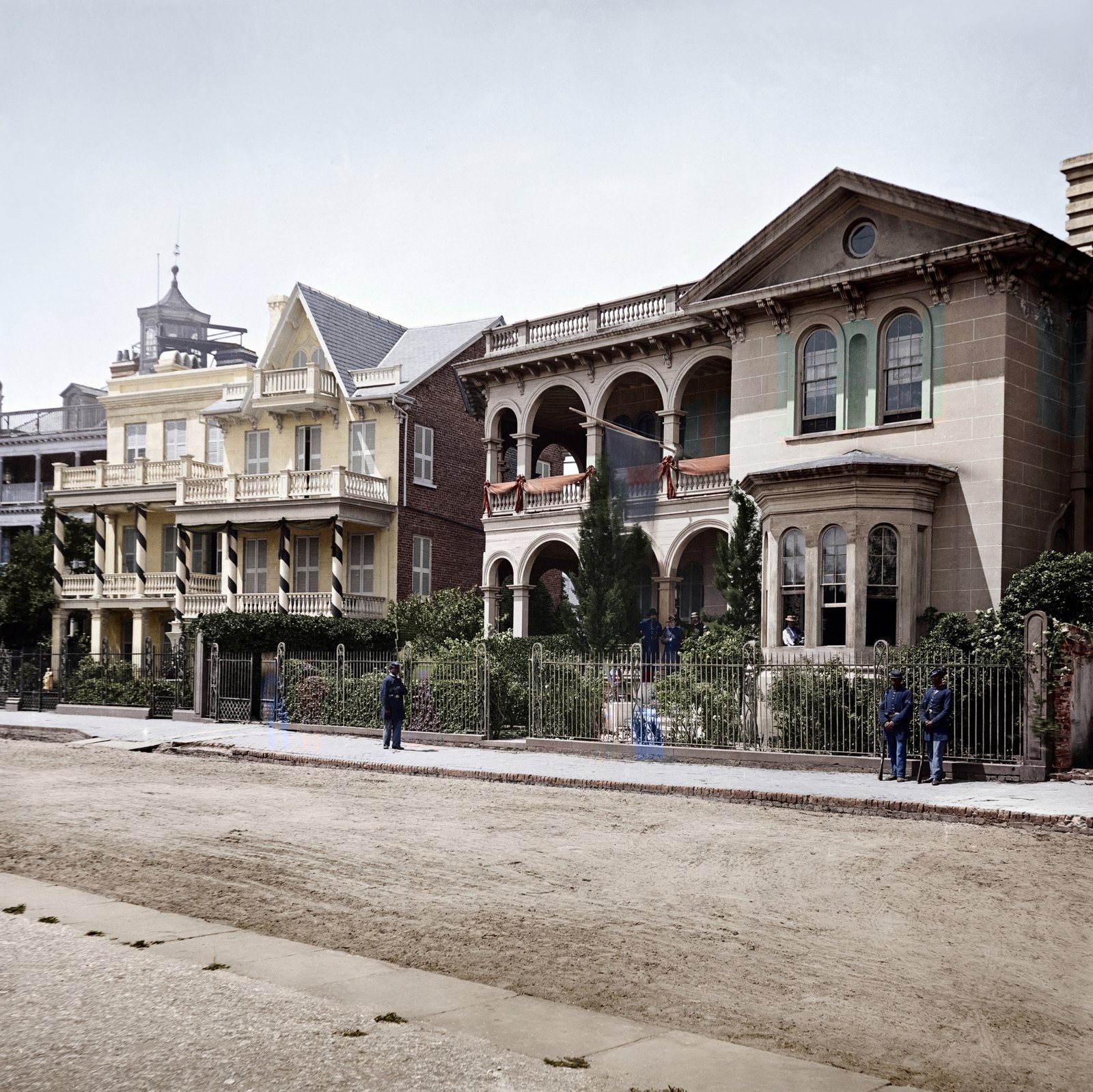
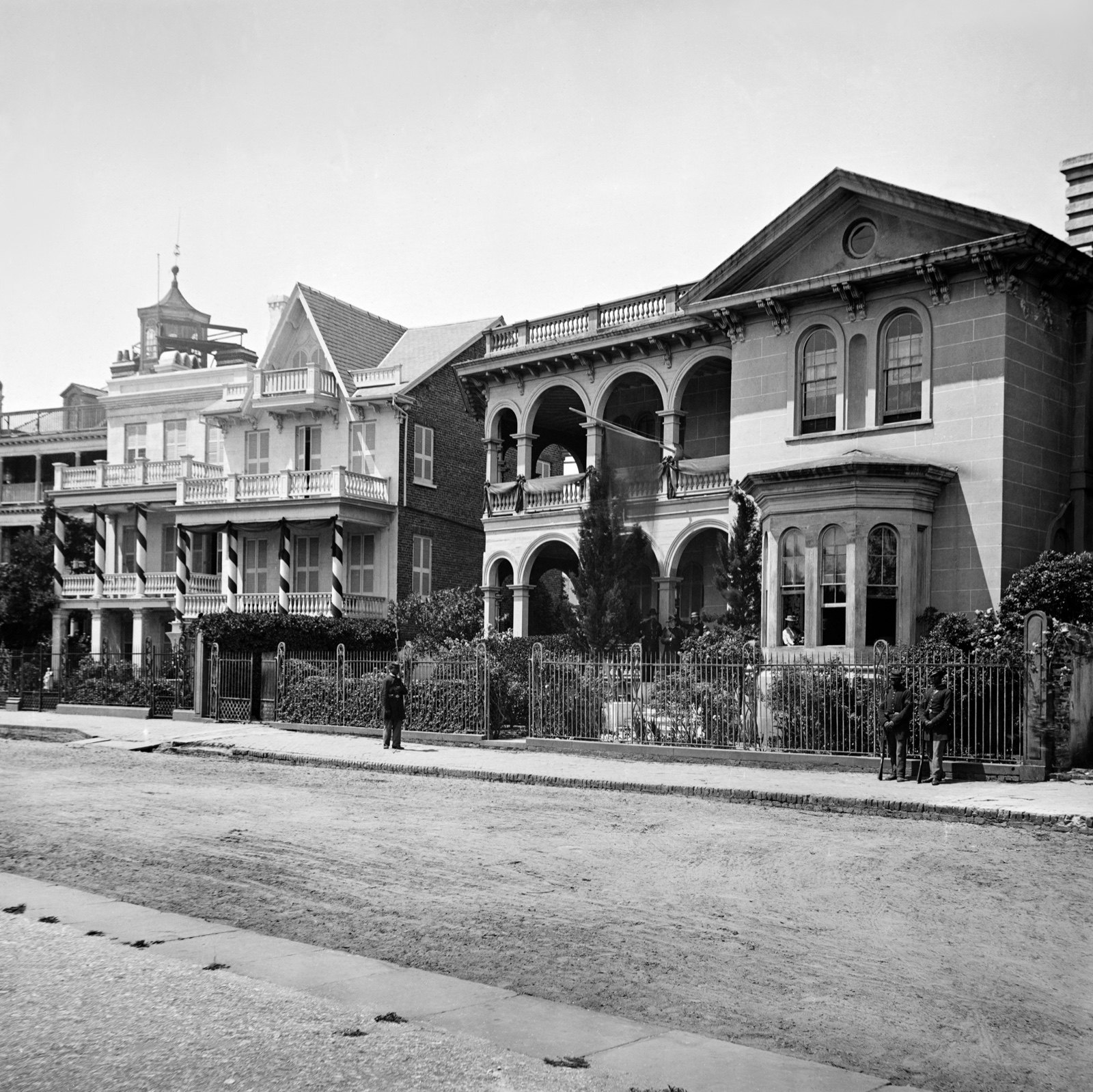
Black soldiers standing guard outside the headquarters of the Union general who now governed Charleston.
Drag to compareLibrary of Congress
Look past the officers and the house and note the men on guard: African American soldiers, under arms, posted outside the headquarters of Brig. Gen. John P. Hatch on South Battery. Hatch held military command of Charleston from February to August 1865. For the city that had opened the war, no image of the occupation carried a sharper edge than this one.
The men on that sidewalk were the end of a long argument. Congress had opened the door in July 1862, when the Second Confiscation Act and the Militia Act together gave President Lincoln authority to employ men of African descent as soldiers. Lincoln moved slowly and reluctantly, but he did not stop others from moving. Kansas senator James H. Lane raised a black regiment in his state that summer without waiting for permission. A regiment of Louisiana Native Guards was mustered into Federal service in September 1862. In October, Brig. Gen. Rufus Saxton began organizing freedmen along the South Carolina coast as the 1st South Carolina Volunteers (African Descent).
The Emancipation Proclamation of January 1, 1863, removed the last hesitation. Col. James Montgomery raised the 2nd South Carolina. In Massachusetts, Governor John A. Andrew obtained authority for the 54th Massachusetts, the first regiment recruited from Northern free black communities — the regiment that would leave a third of its strength on the slope of Battery Wagner that July, six miles from where this photograph was made.
By April 1865 roughly 175 regiments of United States Colored Troops had been organized. About 179,000 black men served in the Union army, with some 19,000 more in the Navy — close to one man in ten of the Federal land forces. More than 40,000 died.
Charleston's own liberation was carried out largely by such men. When the city surrendered on February 18, 1865, the first Federal troops into the streets were from the 21st United States Colored Infantry, a regiment recruited in large part from formerly enslaved men of the South Carolina lowcountry — soldiers coming home in Federal blue to a city that had sold people at auction within a few blocks of this house. They found Charleston burning in places and put the fires out. The 55th Massachusetts marched in three days later, on February 21, to crowds in the street.
The three soldiers standing at Hatch's door are not identified. They were almost certainly drawn from the USCT regiments then garrisoning the city.
The caption as printed in the book
General Hatch the Occupier Note the several African American soldiers standing guard in front of General Hatch’s headquarters on 26 South Battery Street. In the summer of 1862, U.S. congressional action had given President Lincoln authority to employ African American soldiers, but he had been slow to act. Still, he did not object when Kansas senator James H. Lane raised a black regiment from his state during the summer of 1862. A regiment of “Louisiana Native Guards” was also mustered into the Union army in September 1862. A month later Brig. Gen. Rufus Saxton organized freed slaves as the 1st South Carolina Regiment African Descent. Then came the Emancipation Proclamation in January 1863, which removed any barrier to raising more black regiments. Col. James Montgomery organized the 2nd South Carolina, while Massachusetts governor John Andrew took steps to raise a black regiment, the 54th, which became the first recruited from Northern African Americans. Some 166 regiments of U.S. Colored Troops were raised by the end of the war. When counted, 179,000 blacks served in the Union army. These three men in Charleston were among them.