The Burnt District · Book p. 114
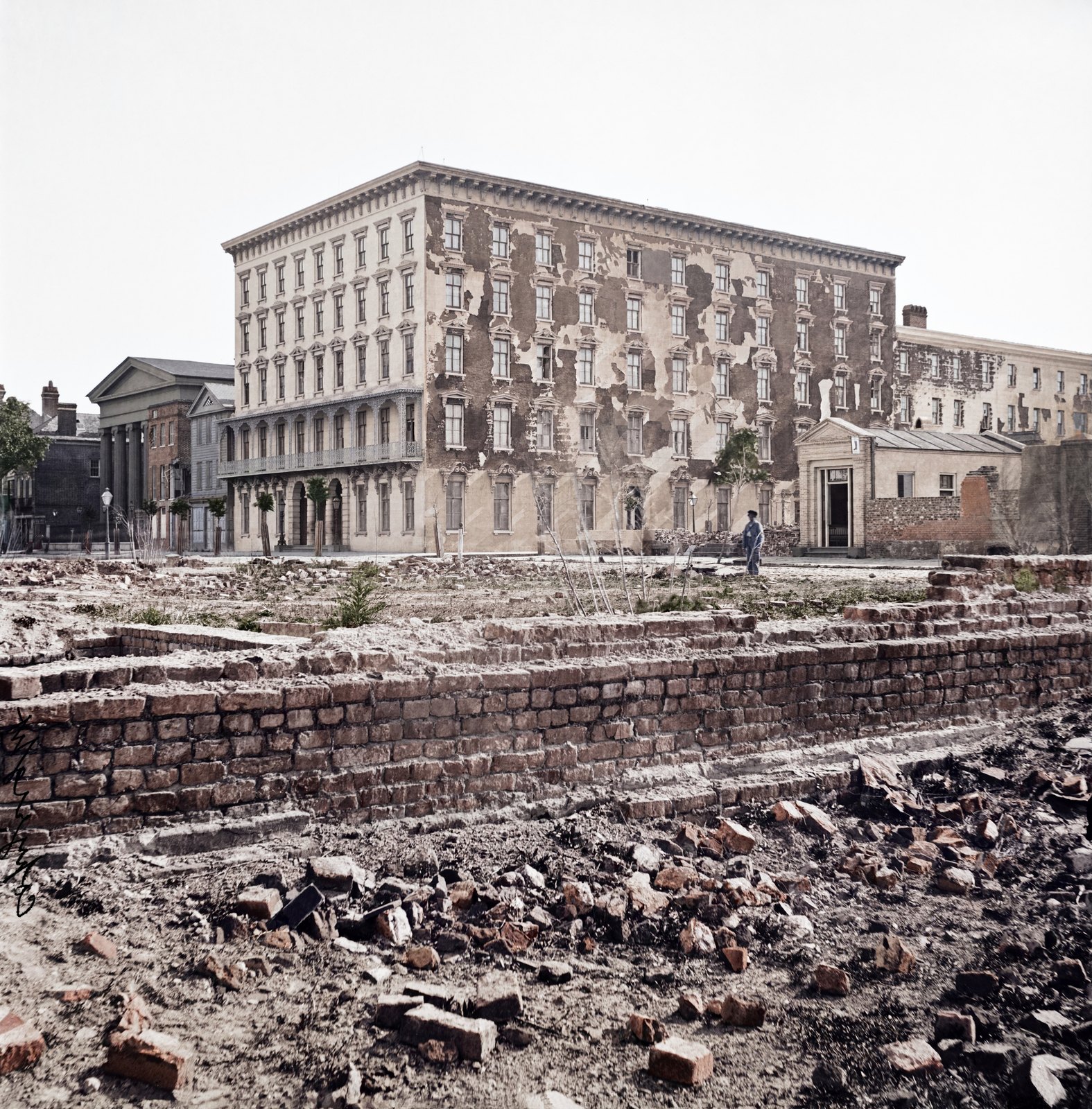
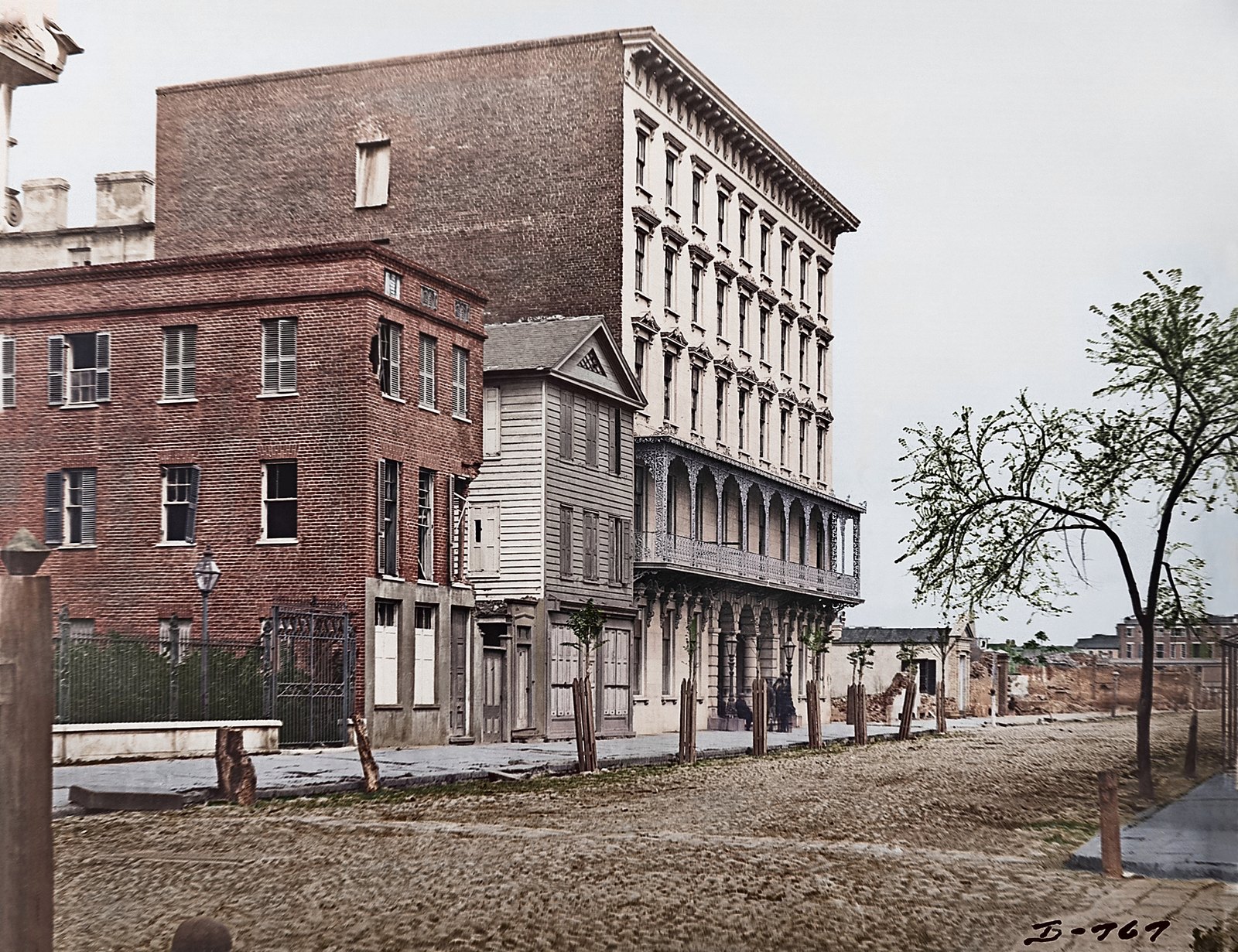
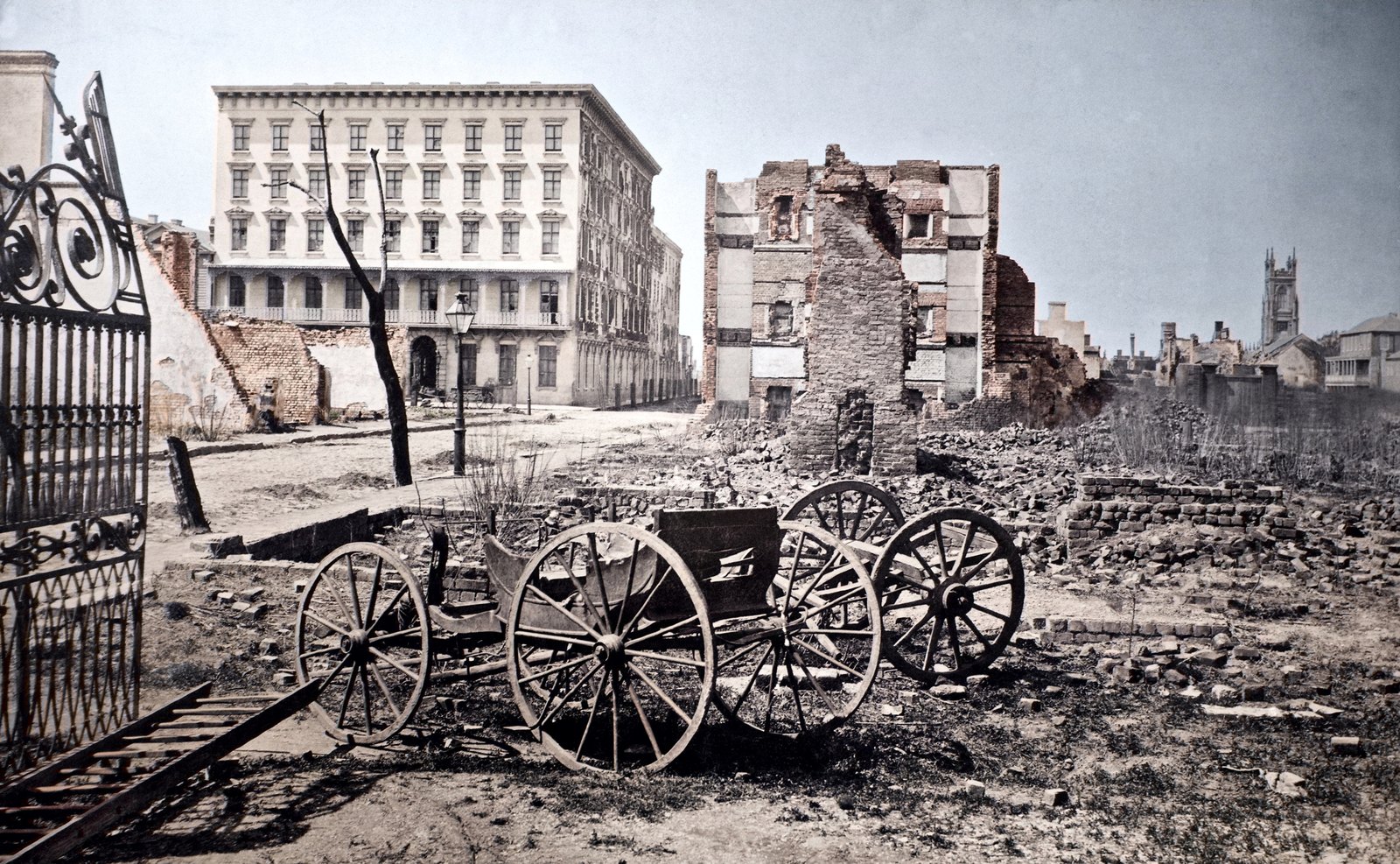
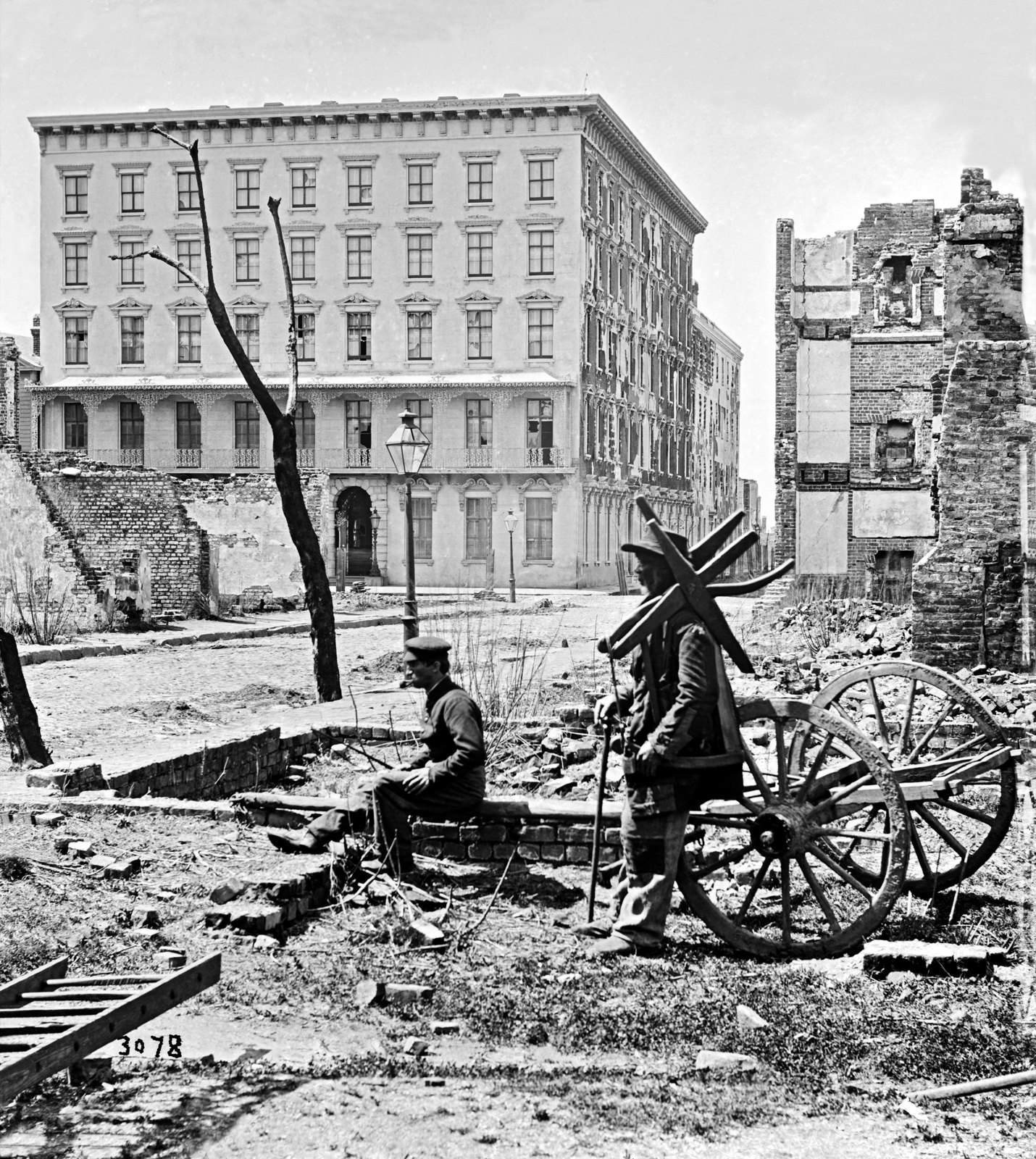
The Mills House with Adjacent Ruins
Wet blankets at the upper windows and men on the roof — how one building survived the night.
Drag to compareLibrary of Congress
The hotel survived the Great Fire because its staff fought for it. The account has them hanging wet blankets from the upper-floor windows while men stood on the roof stamping out the embers coming down on the wind before they could catch. Everything around it burned.
The fire broke out on the evening of 11 December 1861 at the foot of Hasell Street near East Bay — the Mercury put it at Russell & Co.'s sash and blind factory, though others thought it was already burning in Cameron & Co.'s machine shops across the street. Driven by a hard northeast wind, it cut a diagonal swath southwest across the whole peninsula and did not stop until it reached the Ashley River below Tradd Street. It burned some 540 acres and more than a thousand buildings in a single night.
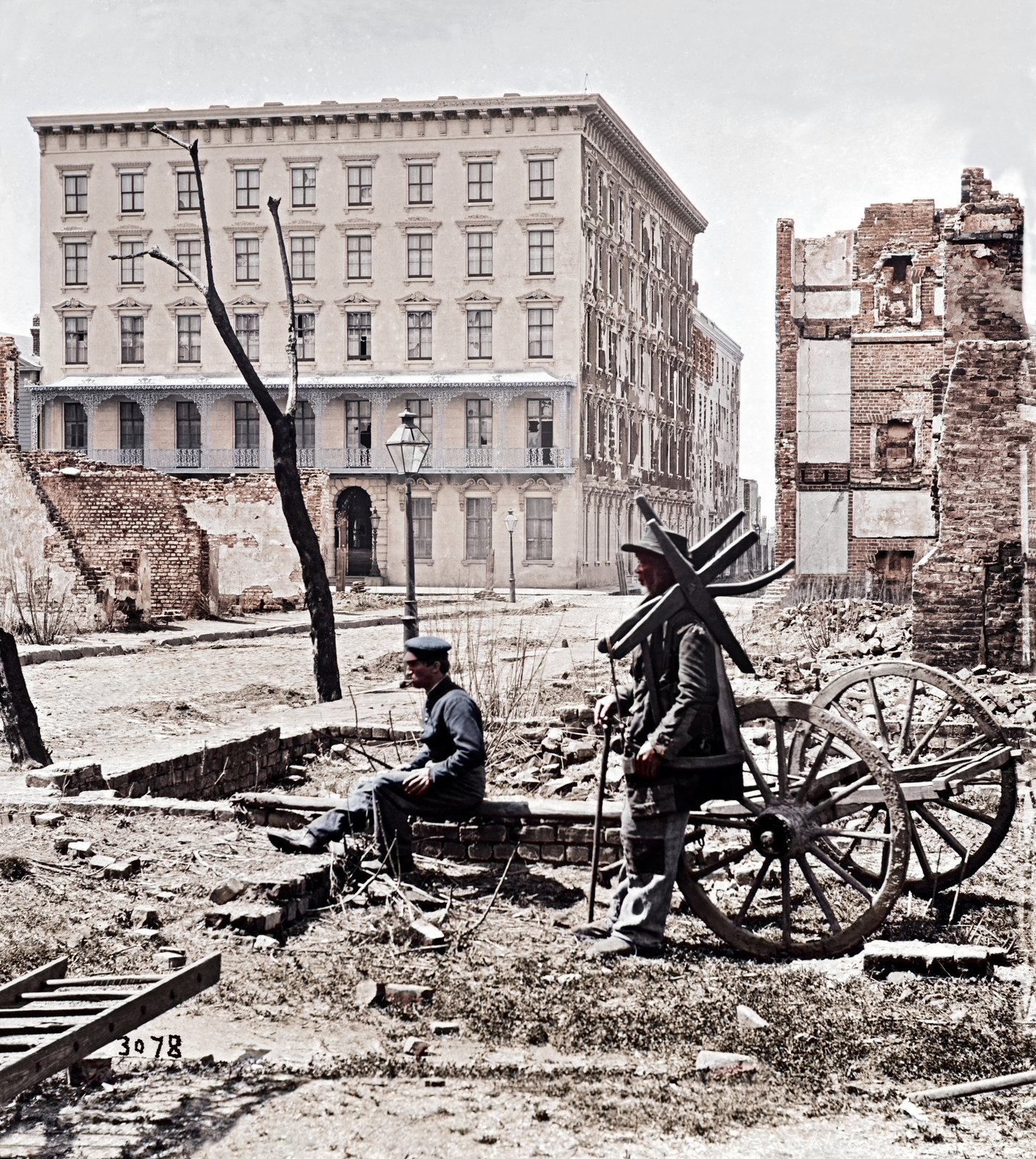
You can read the result in this frame. The Mills House stands intact and the block behind it does not exist any more — walls to window height, chimneys, and gaps. That contrast is the reason the photograph was made.
General Robert E. Lee was a guest in the hotel that night and had to be moved out. He had arrived in Charleston in November 1861 to take command of the newly created Department of South Carolina, Georgia and East Florida, with the coastal defenses as his problem; the fire was five weeks into the assignment.
Three years later the burnt district was still burnt. The men who would have rebuilt it were in the army, and after August 1863 the Federal bombardment made repair work pointless. The ruins in this picture had been standing open to the weather since the night they were made.
The hotel was demolished in 1968. The building on the corner today opened in 1970 and reproduces the facade, one storey taller than the original.
The caption as printed in the book
In the Great Fire, the Mills House had been saved when members of the hotel staff hung wet blankets from upper floor windows. Men stood on the roof, stamping out flying embers before they could start flaming. Around the hotel, though, everything was destroyed. This view looks across the intersection of Meeting and Queen Streets; George Barnard took it in mid-March 1865. At the center is one of the photographer’s assistants, plus a newly-emancipated black man. By trade he was a bucksawyer—see the portable sawhorse on his back, over his bucksaw. During the fire General Robert E. Lee, who was staying at the Mills House, ascended to the roof. There he and his staff could see the conflagration sweeping across the city. Major Armistead Long later recalled in his memoir that when the fire approached the hotel the general, himself and others hurried downstairs. In the parlor were women and children. “General Lee took one baby in his arms and Major Long took another,” as they slipped out of the hotel through the cellar. “On emerging from the cellar the group were met by the glare and heat of the burning buildings on the opposite side of the street,” Long remembered. Fortunately a carriage was nearby; the group boarded and were borne to safety near the Battery.
Also at Mills House