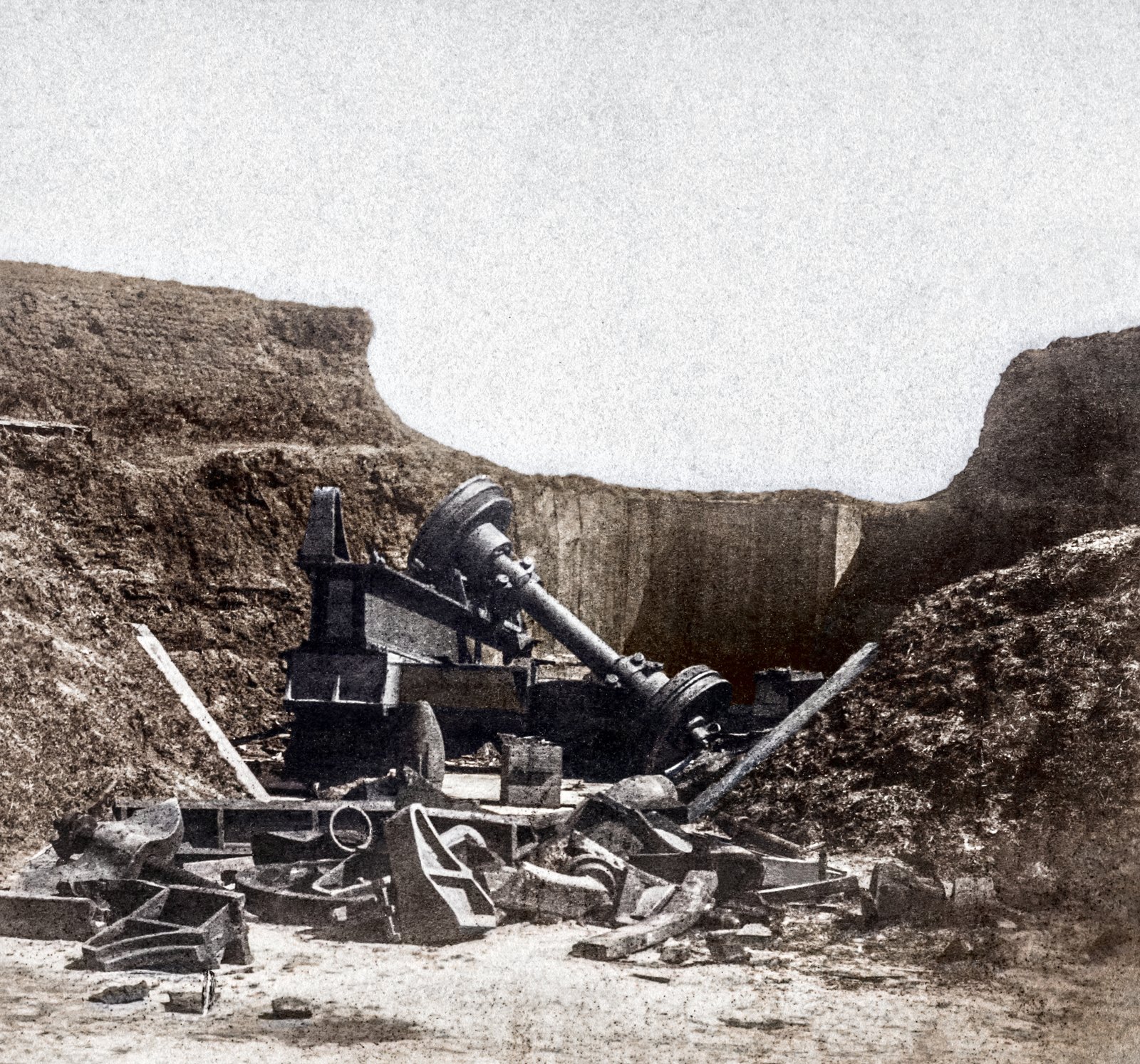
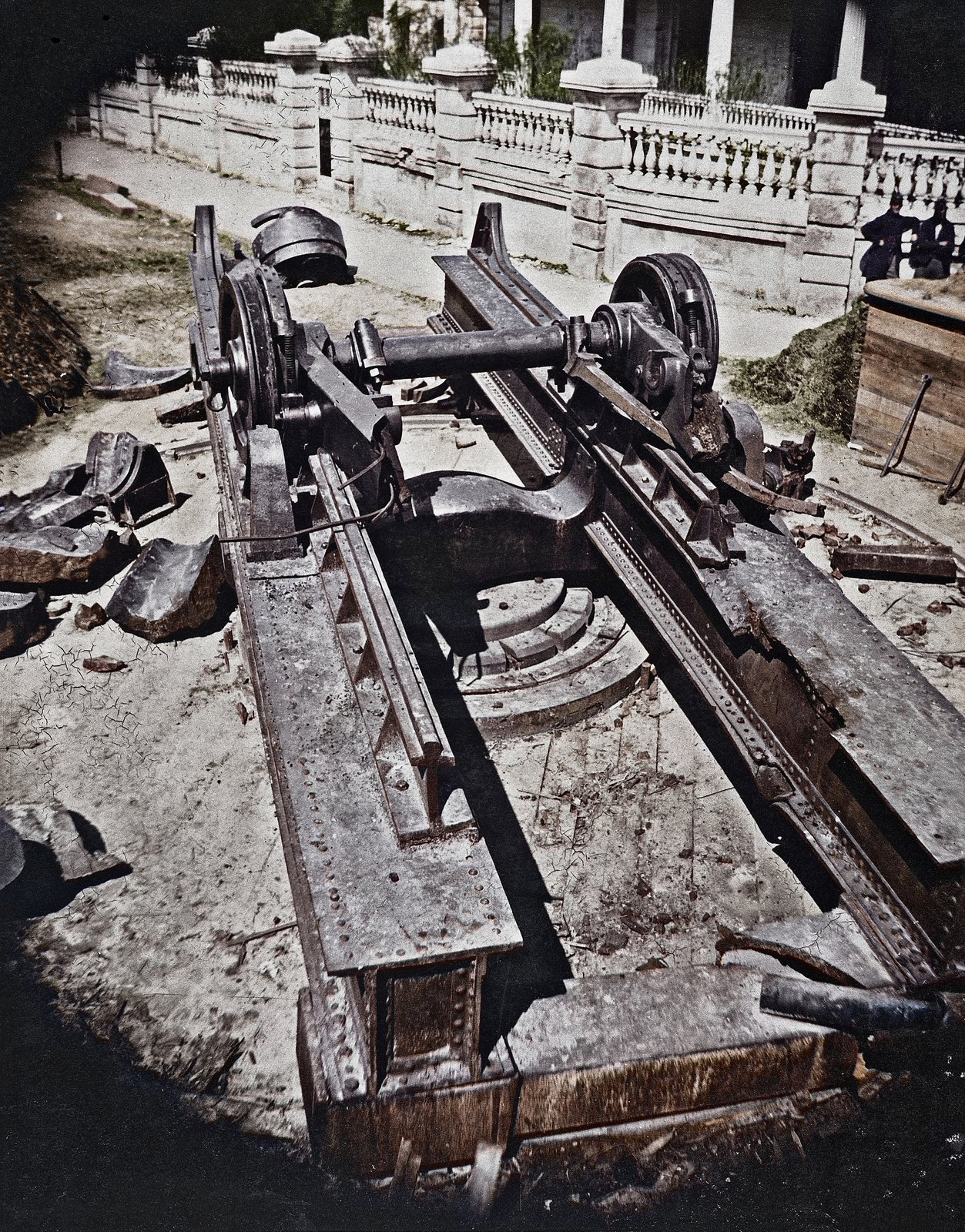
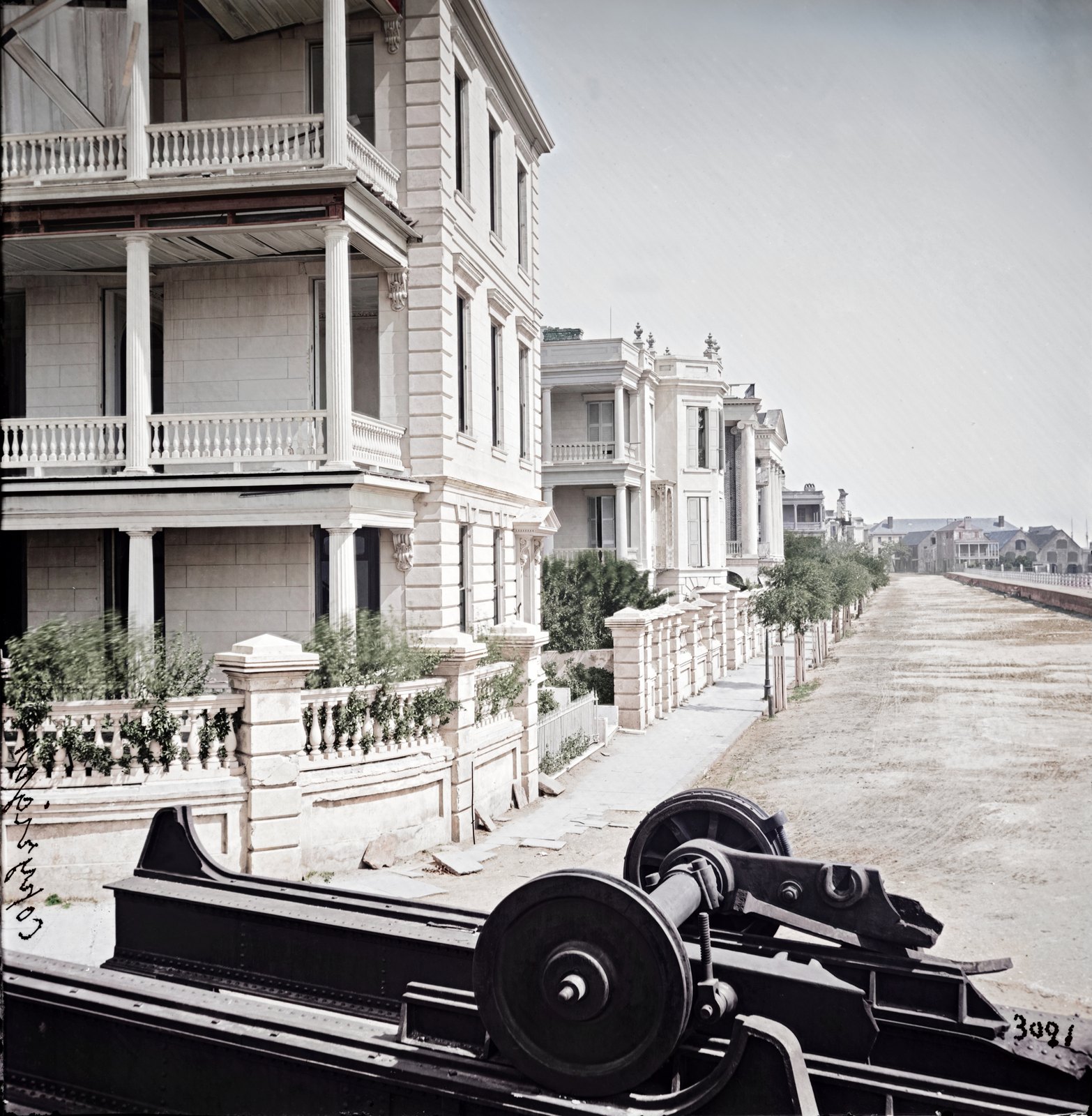
Charleston Defenses · Book p. 100
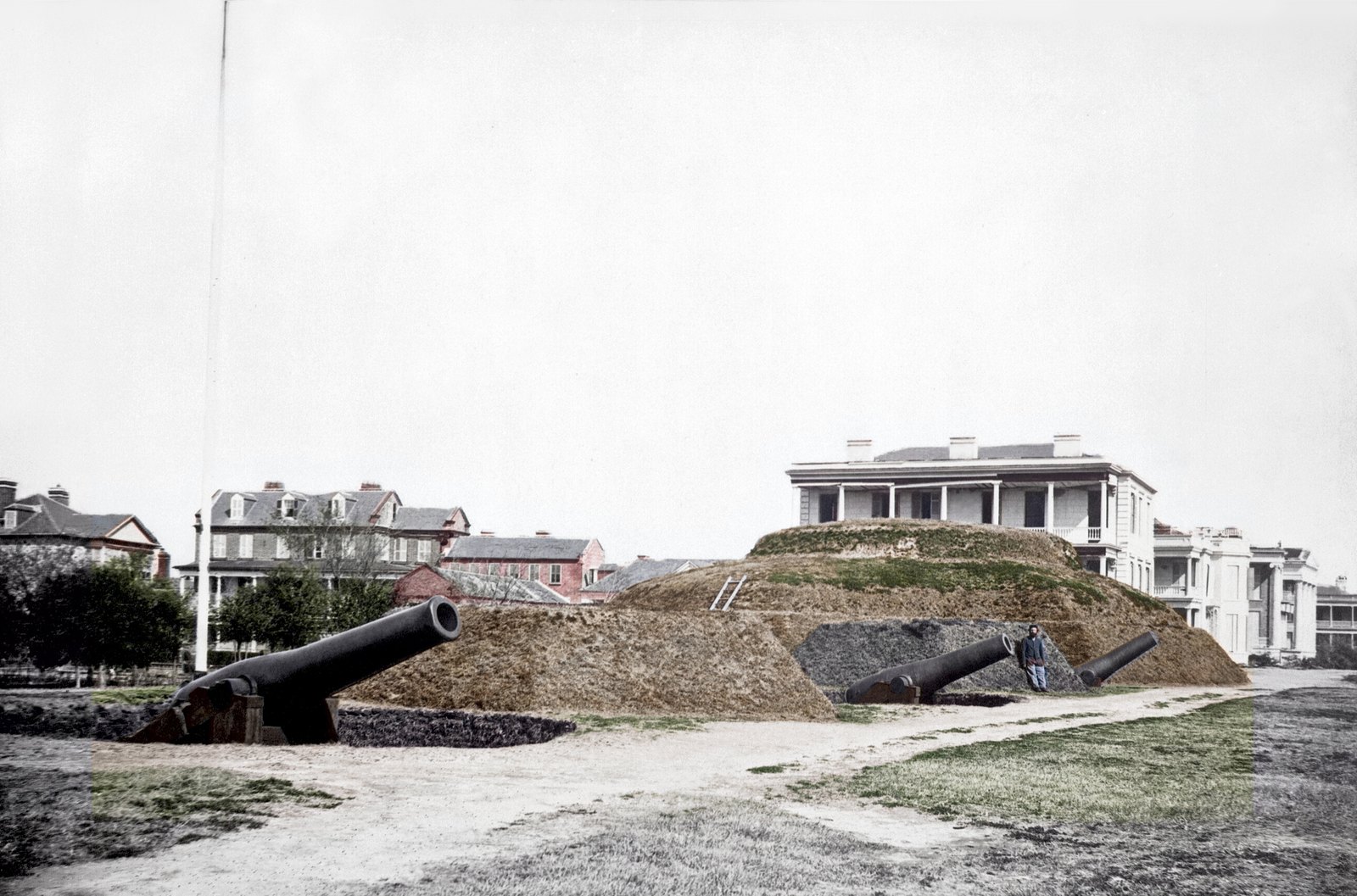
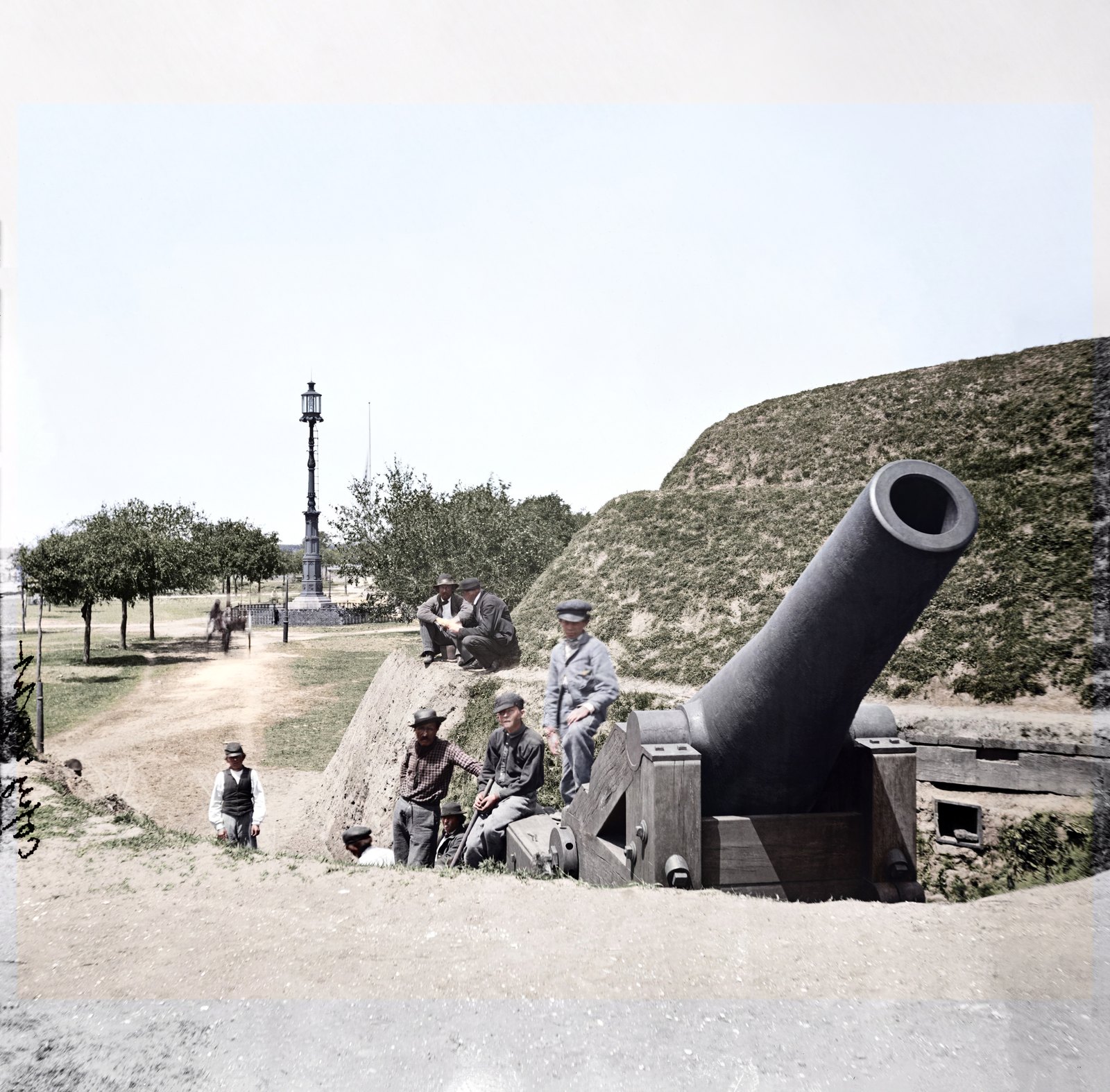
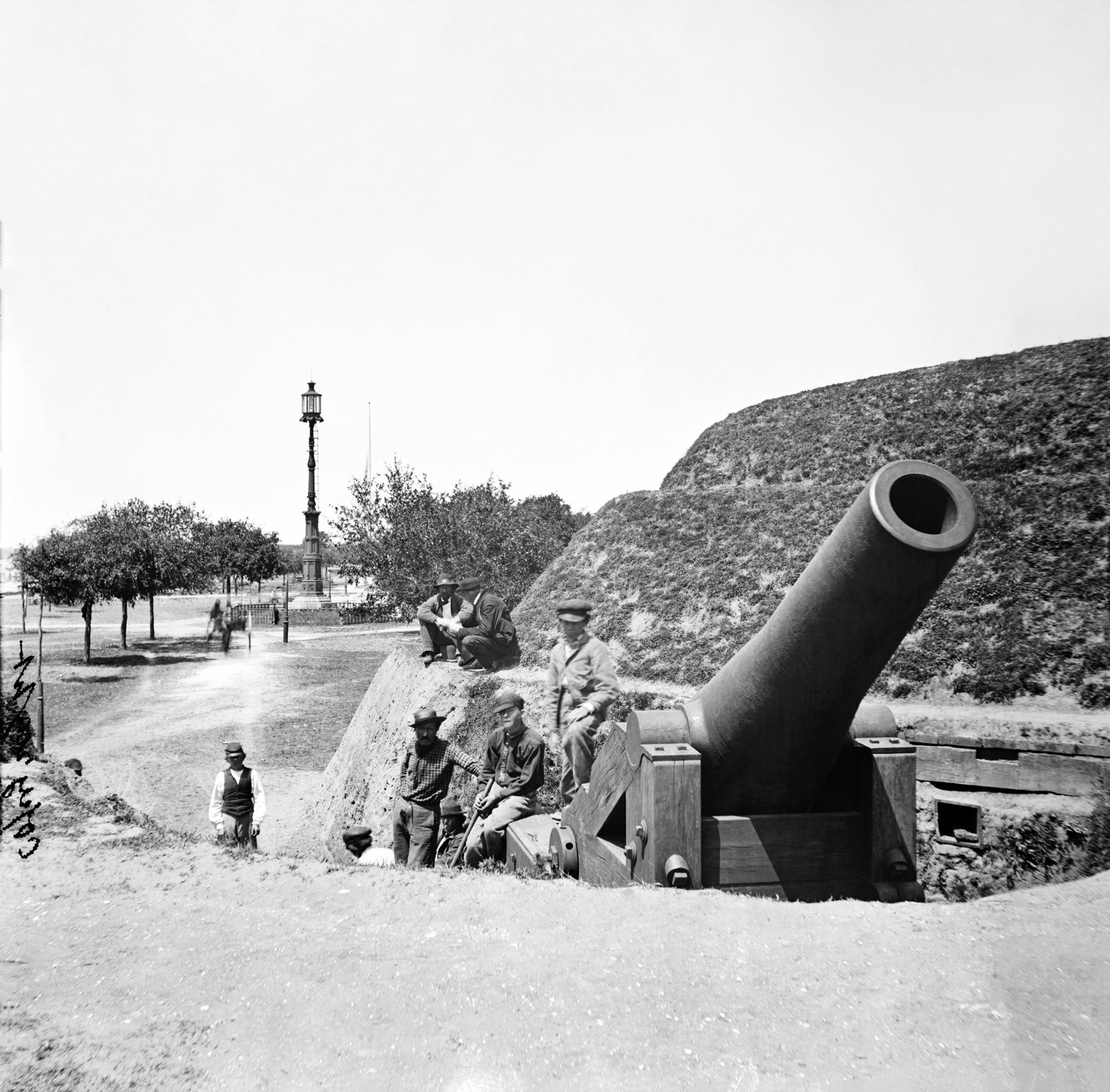
10-inch Columbiad at the Point Battery
A Tredegar-made seacoast gun at White Point Garden, photographed as laborers took the battery apart.
Drag to compareLibrary of Congress
Brig. Gen. Roswell S. Ripley commanded the First Military District — the Charleston area — in Beauregard's department, and what worried him most was a Federal ironclad working its way past the outer forts and into the inner harbor, close enough to shell the city at will. His answer was depth: three successive zones of fire that a monitor would have to survive in turn.
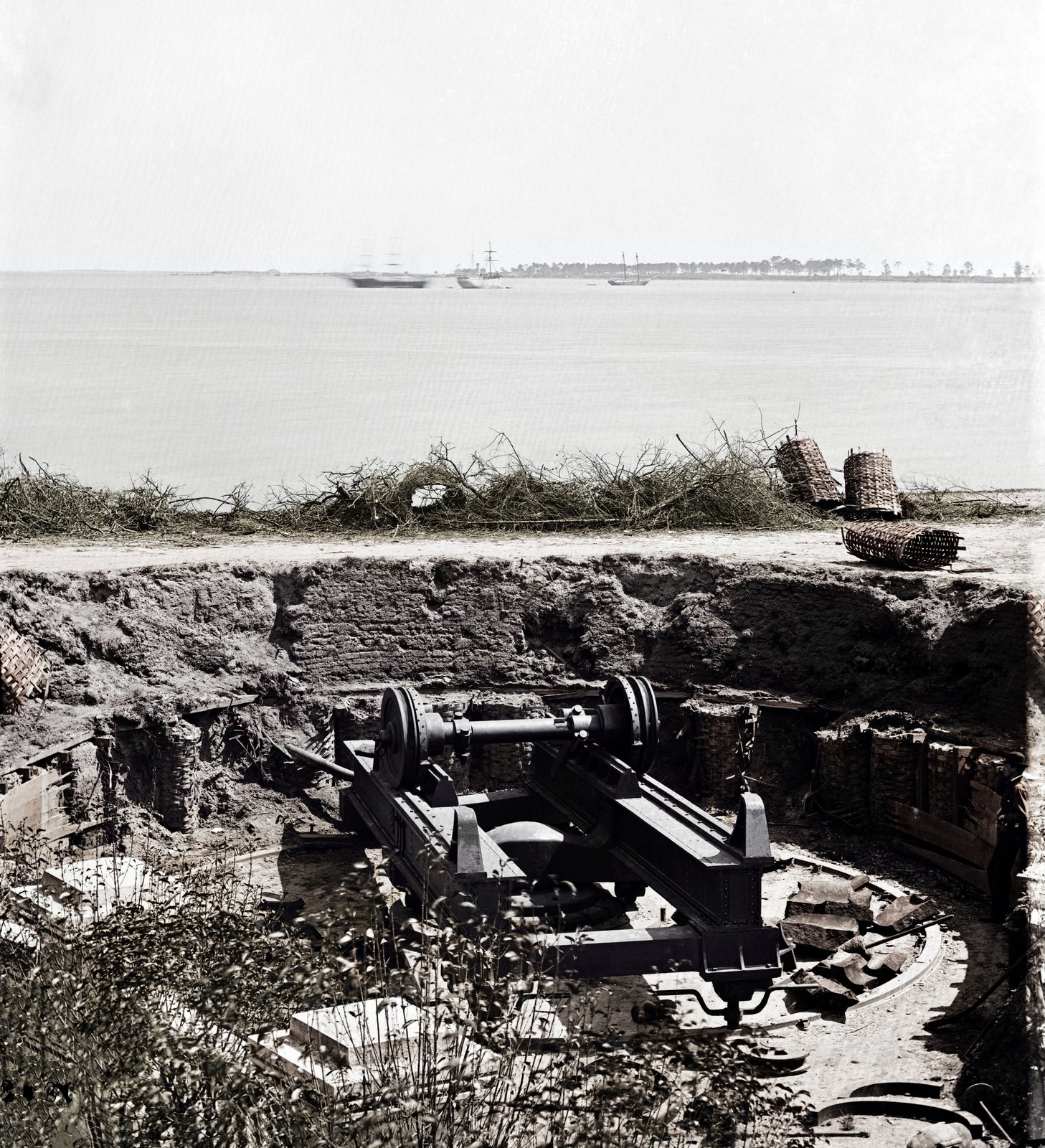
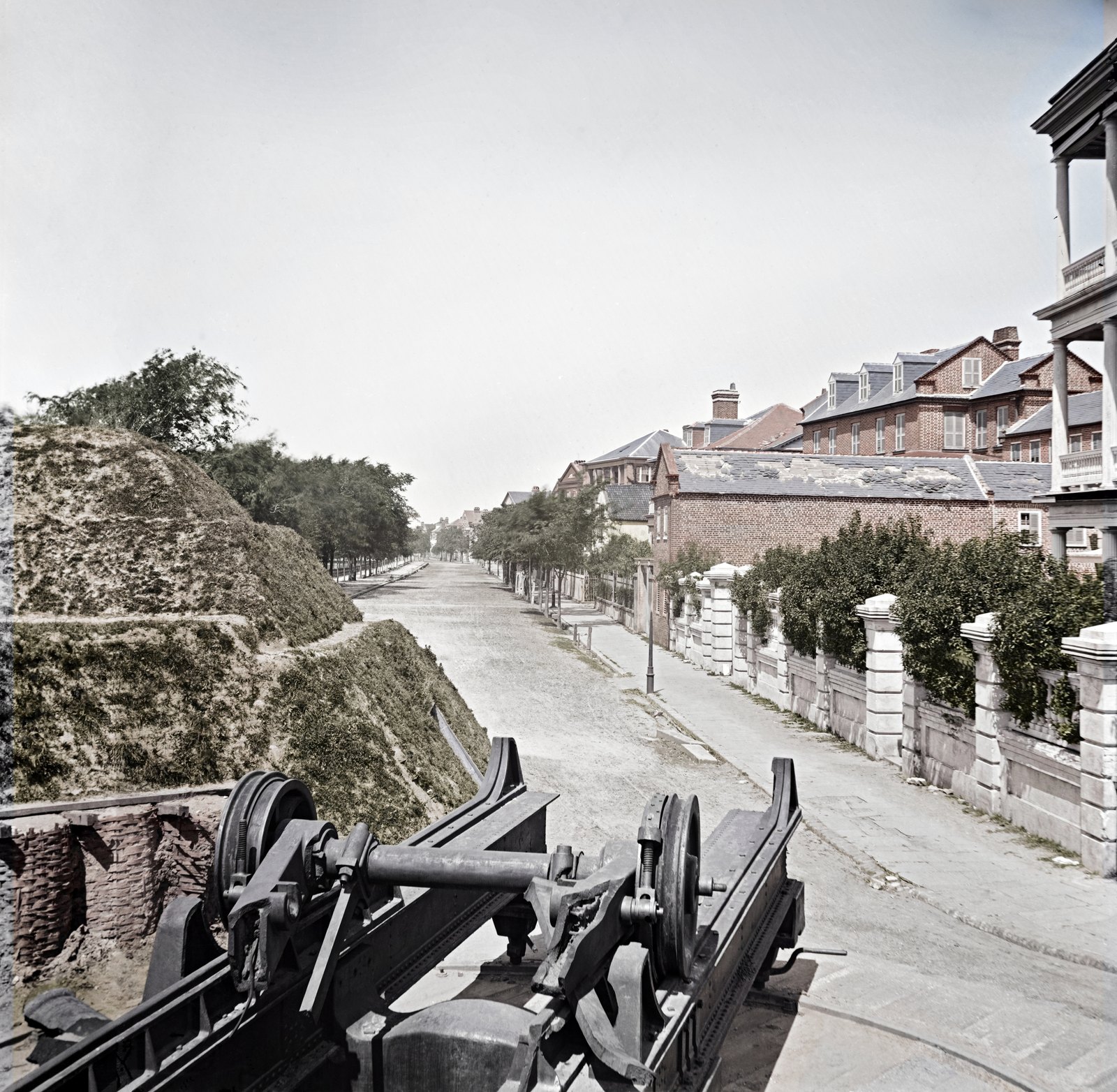
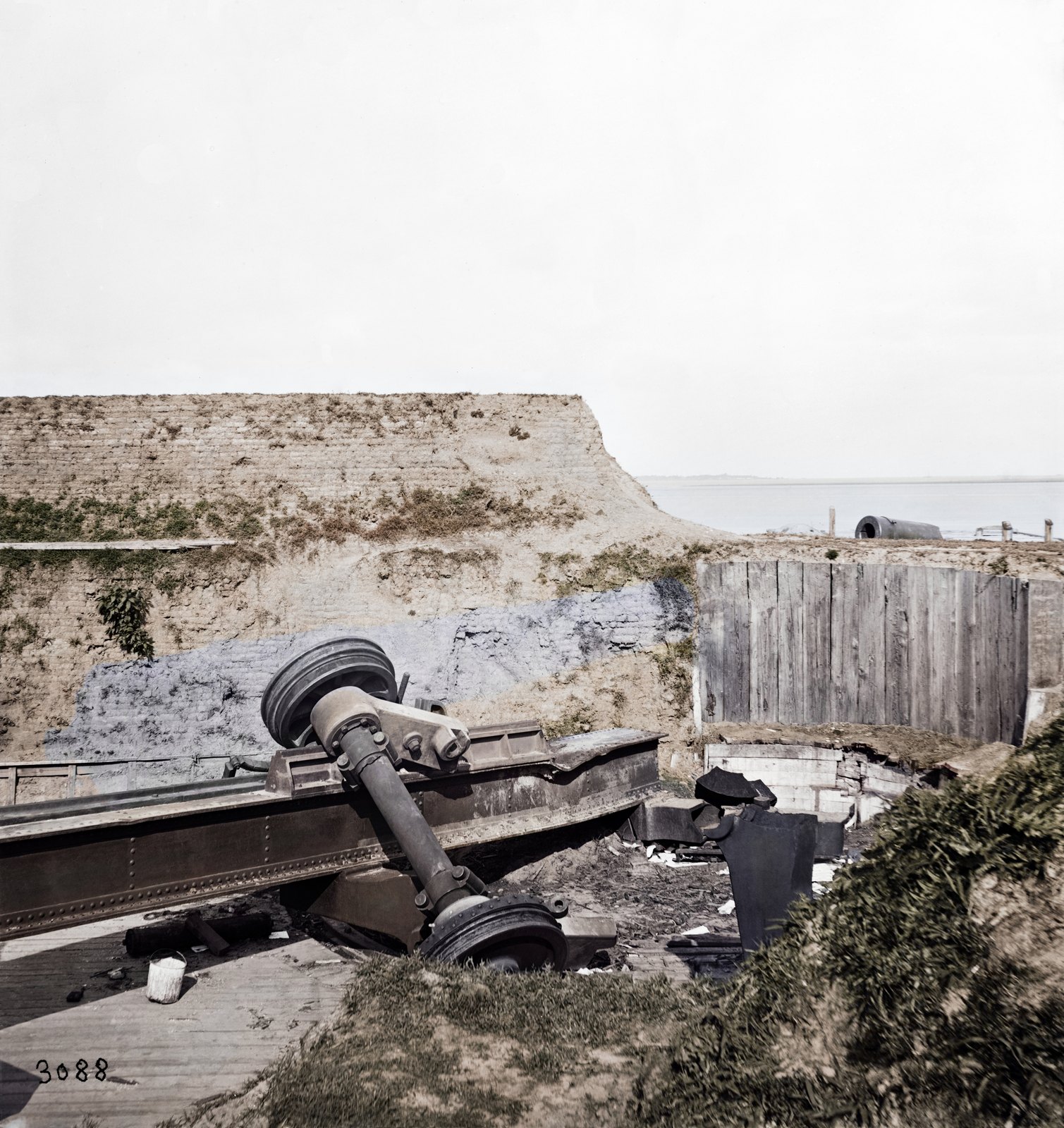
The first lay in the main channel between Fort Sumter and Fort Moultrie. The second ran between Sumter and Fort Ripley, a battery begun in 1862 on the Middle Ground Shoal, built up on piles in the open harbor between Castle Pinckney and Fort Johnson, and named for the general himself. The third was the innermost: a triangle closing on the city, formed by the batteries at White Point Garden on the tip of the peninsula, Battery Glover on James Island, and Castle Pinckney on its small island a mile east of the city.
The scheme was never tested at its innermost ring, because the outer one held. Confederate gunners at Sumter, Moultrie, and the Sullivan's Island batteries handled the monitors roughly enough — most memorably in the ironclad attack of April 7, 1863 — that the Federal navy never pushed into the upper harbor. The heavy guns at White Point Garden, this one among them, spent the war loaded and waiting for a target that never came.
The piece is a 10-inch Columbiad, a smoothbore seacoast gun, cast at the Tredegar Iron Works in Richmond. The Columbiad was the backbone of Confederate coast defense: a heavy chambered gun that could throw either shot or shell at high or low angle, mounted here on a wooden barbette carriage and chassis that let it traverse across a wide arc of the harbor. Note the cast-iron surface — the dark, slightly pitted finish is correct for the material and should not be mistaken for bronze.
The men working around the gun are laborers, not gunners. The photograph dates from about mid-April 1865, and what is being recorded is not a battery in service but a battery being dismantled — the guns coming off their carriages for removal, weeks after the Confederate evacuation.
The caption as printed in the book
Confederate Brig. Gen. Roswell S. Ripley, commander of the Charleston District in Beauregard’s department, always worried about Federal ironclad gunboats getting too close to the city. He therefore developed three fire zones to keep them well out in the harbor. The first lay between Forts Sumter and Moultrie, the second between Sumter and a fort named after him, built in 1862 on a harbor sand bar. The third created a triangle between White Point Garden, Battery Glover on James Island, and Castle Pinckney, nearly a mile east of the city on a small island. The Confederate artillery at Sumter, Moultrie, and other positions proved so effective against venturesome monitors that they never got into Charleston’s inner harbor. This and other big guns at the White Point Garden Battery therefore did not have to be called into play. This 10-inch Columbiad smoothbore cannon was manufactured by Tredegar Iron Works in Richmond, Virginia. The men around the gun are laborers. In mid-April 1865, they were at work removing the battery’s cannon.
Also at White Point Garden