The Blakelys · Book p. 89
The Wrecked Blakely at the Battery
Drag to compareLibrary of Congress
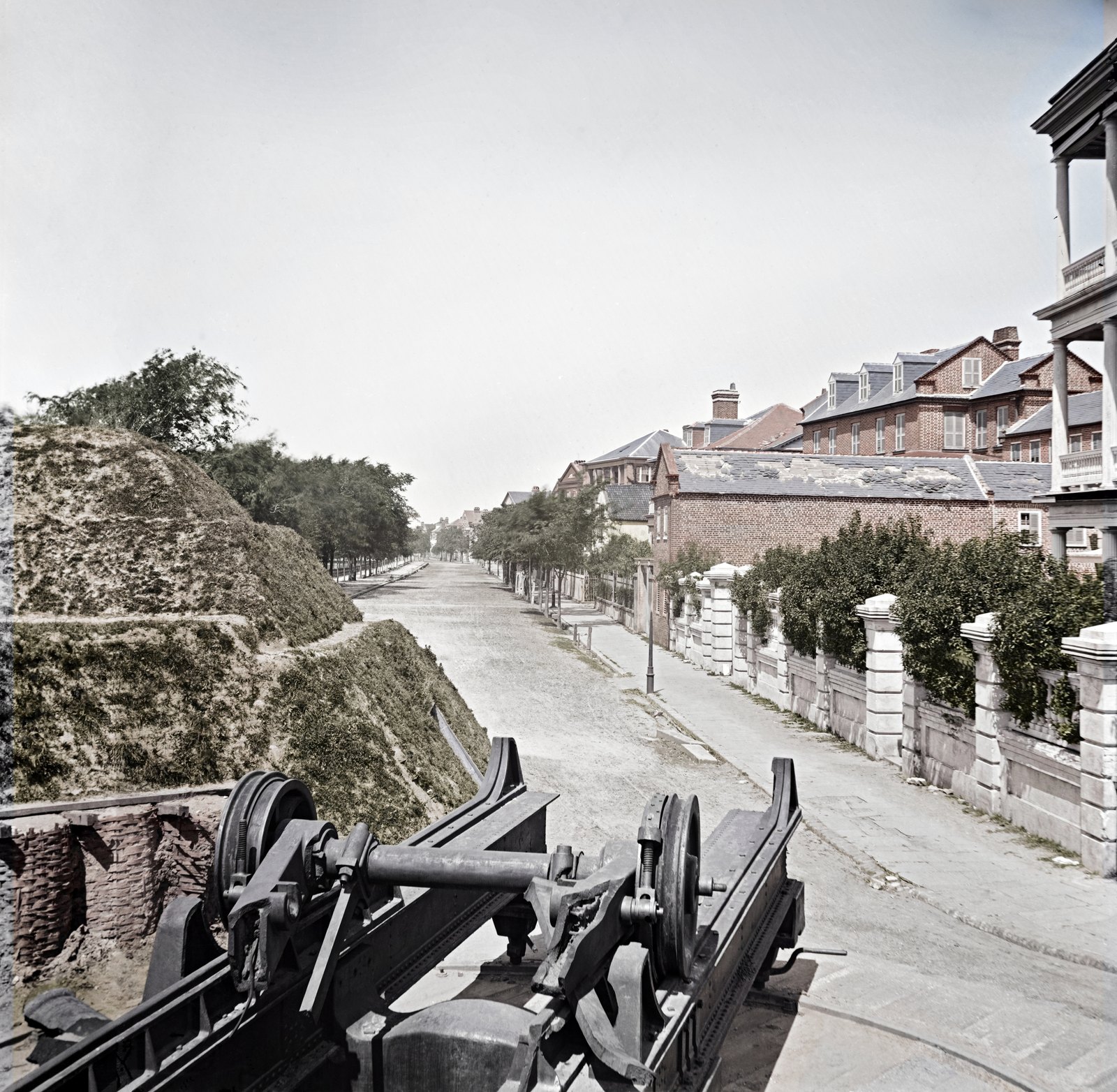
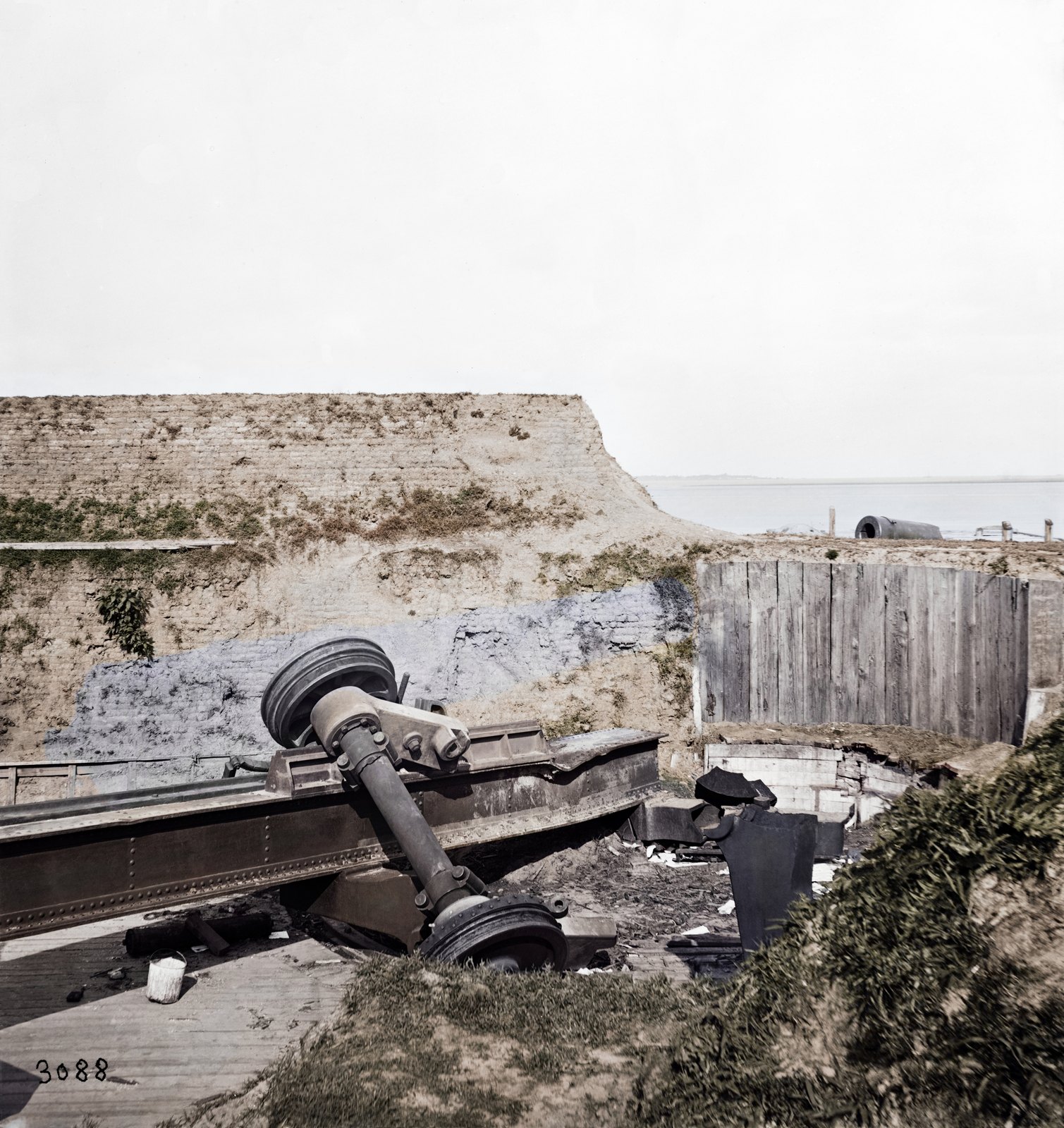
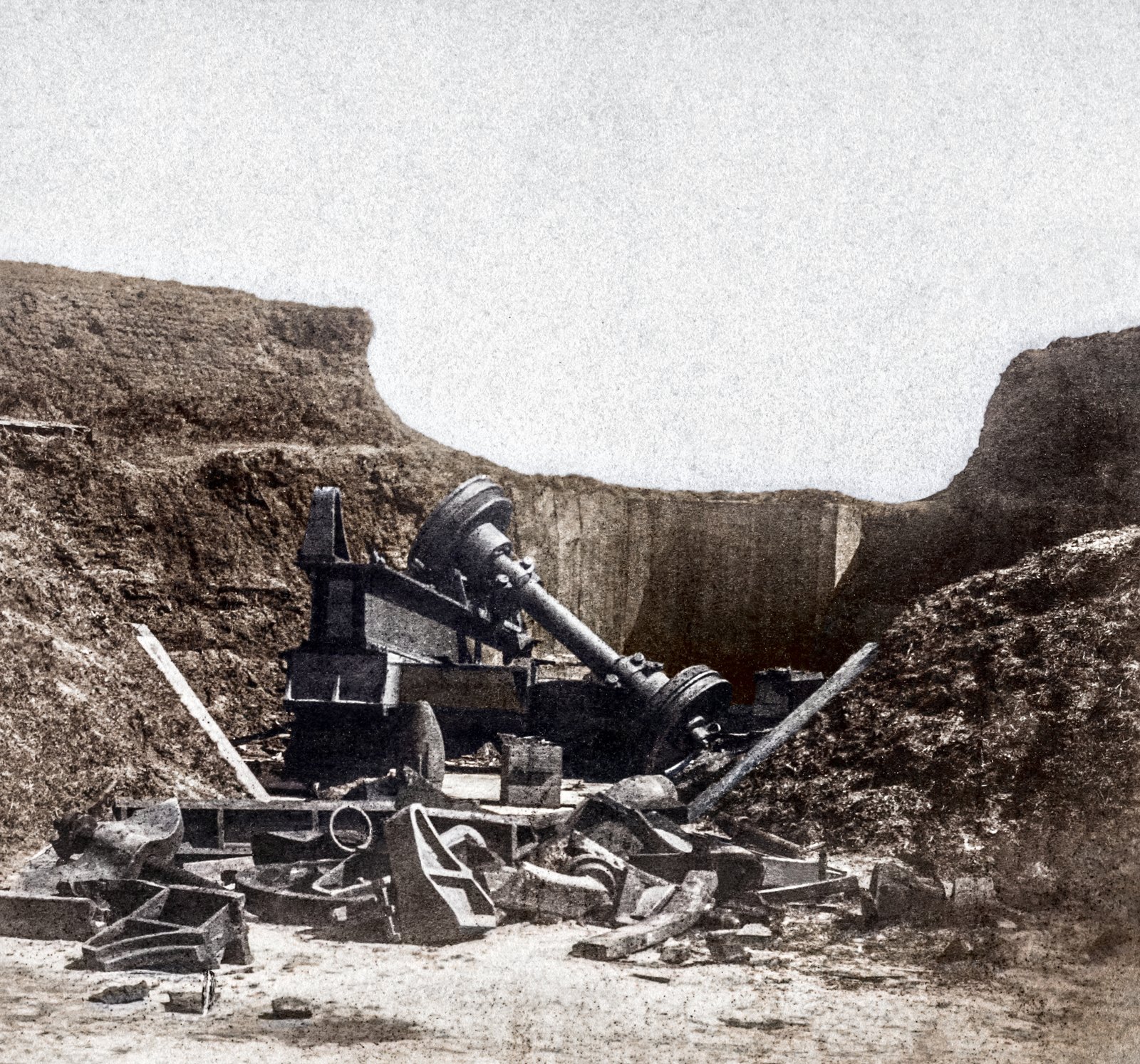
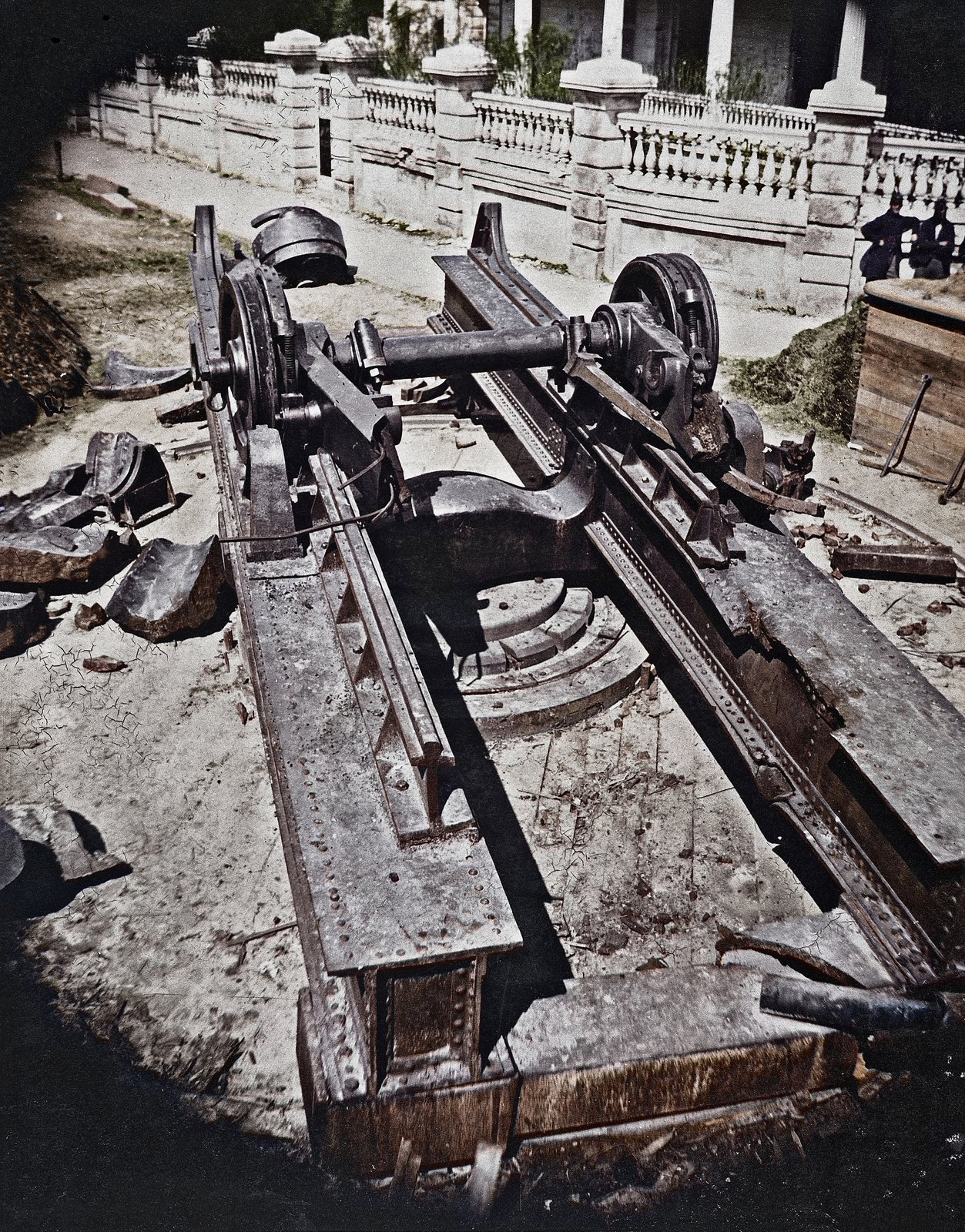
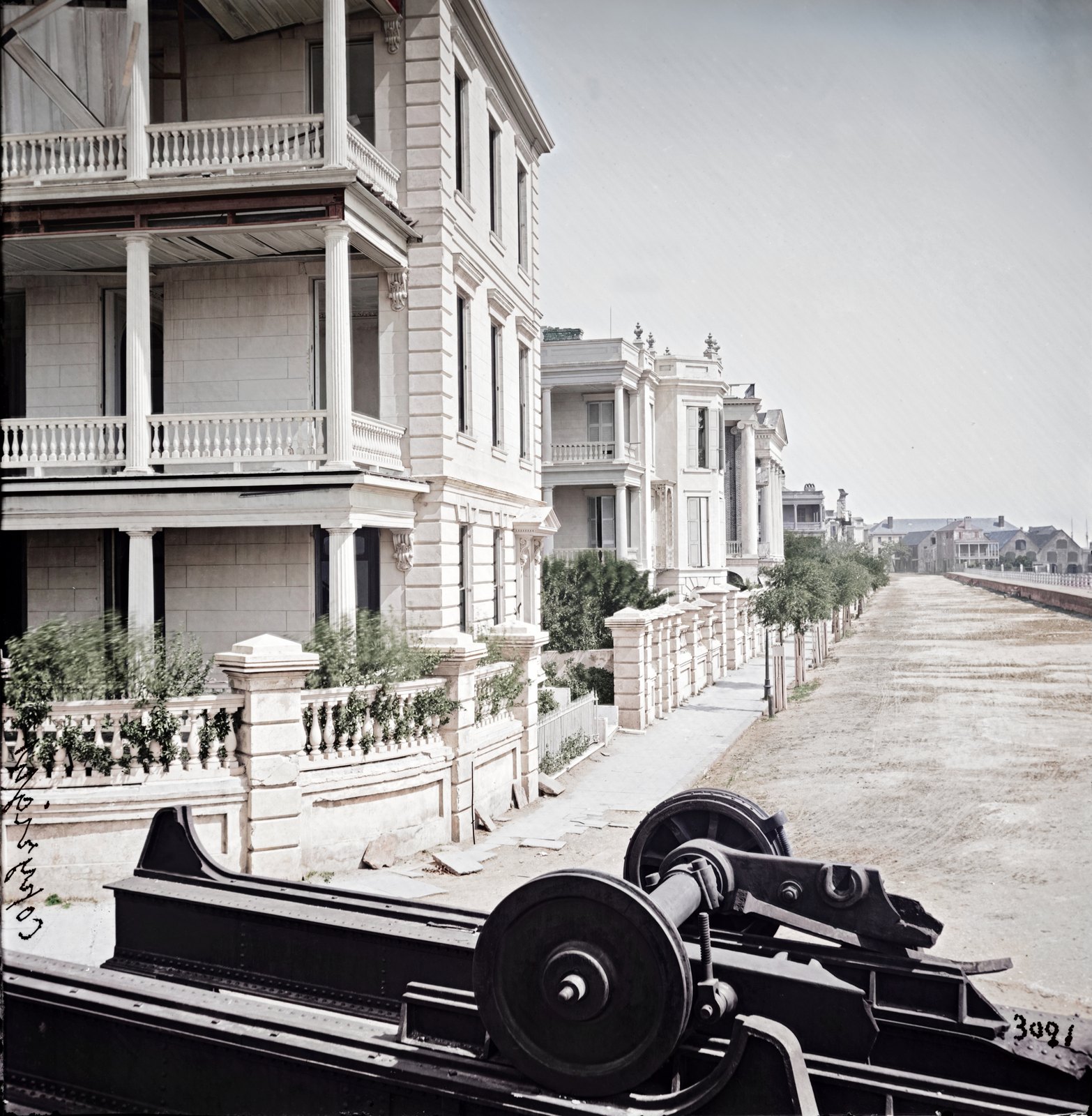
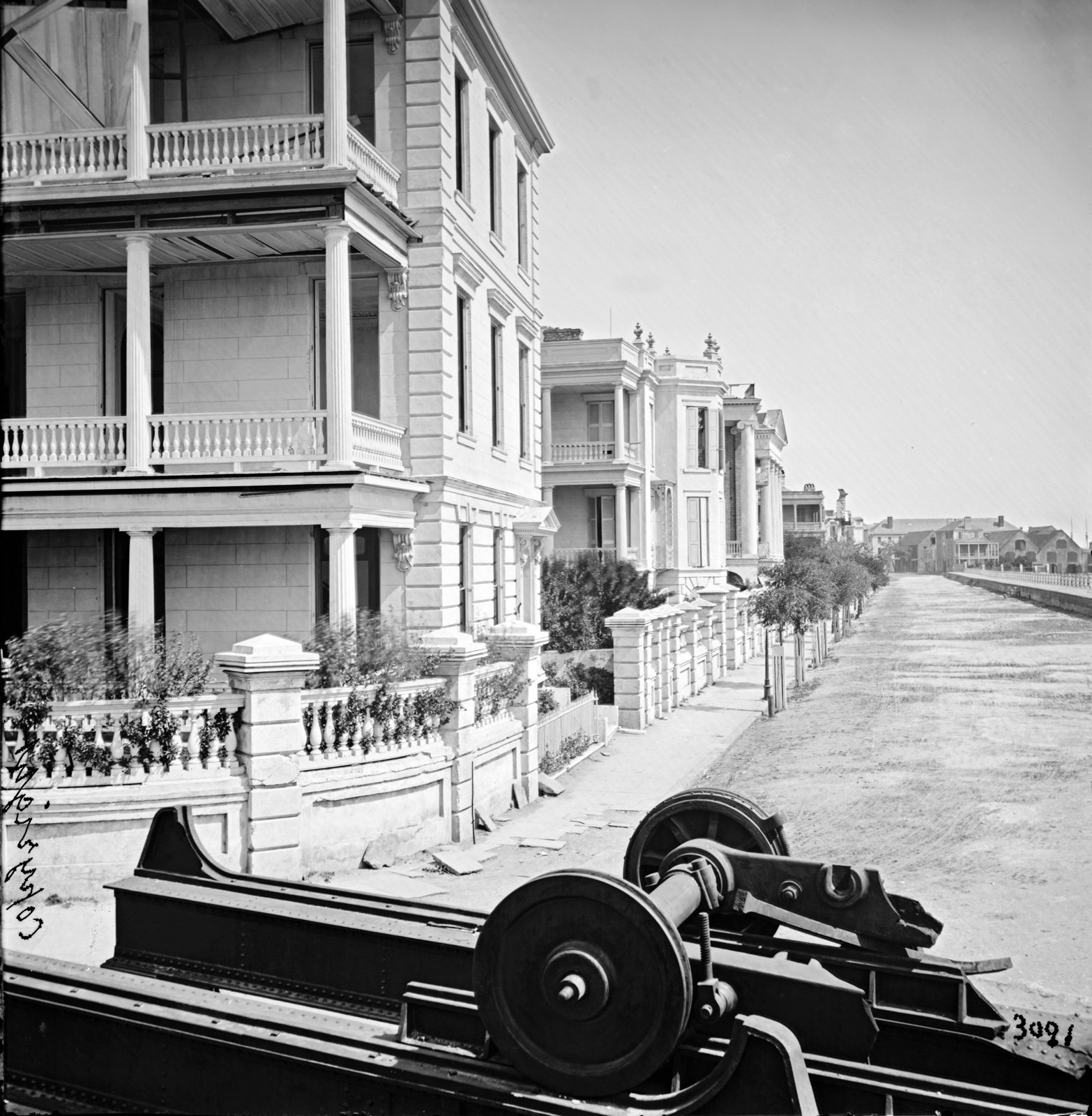
Barnard's photograph of March 14, 1865, taken along East Battery with the wreckage in the foreground and the great houses running away to the left. The iron in the street is what the Confederates left of the Battery Ramsay Blakely when they blew it up the month before, as they gave up the city.
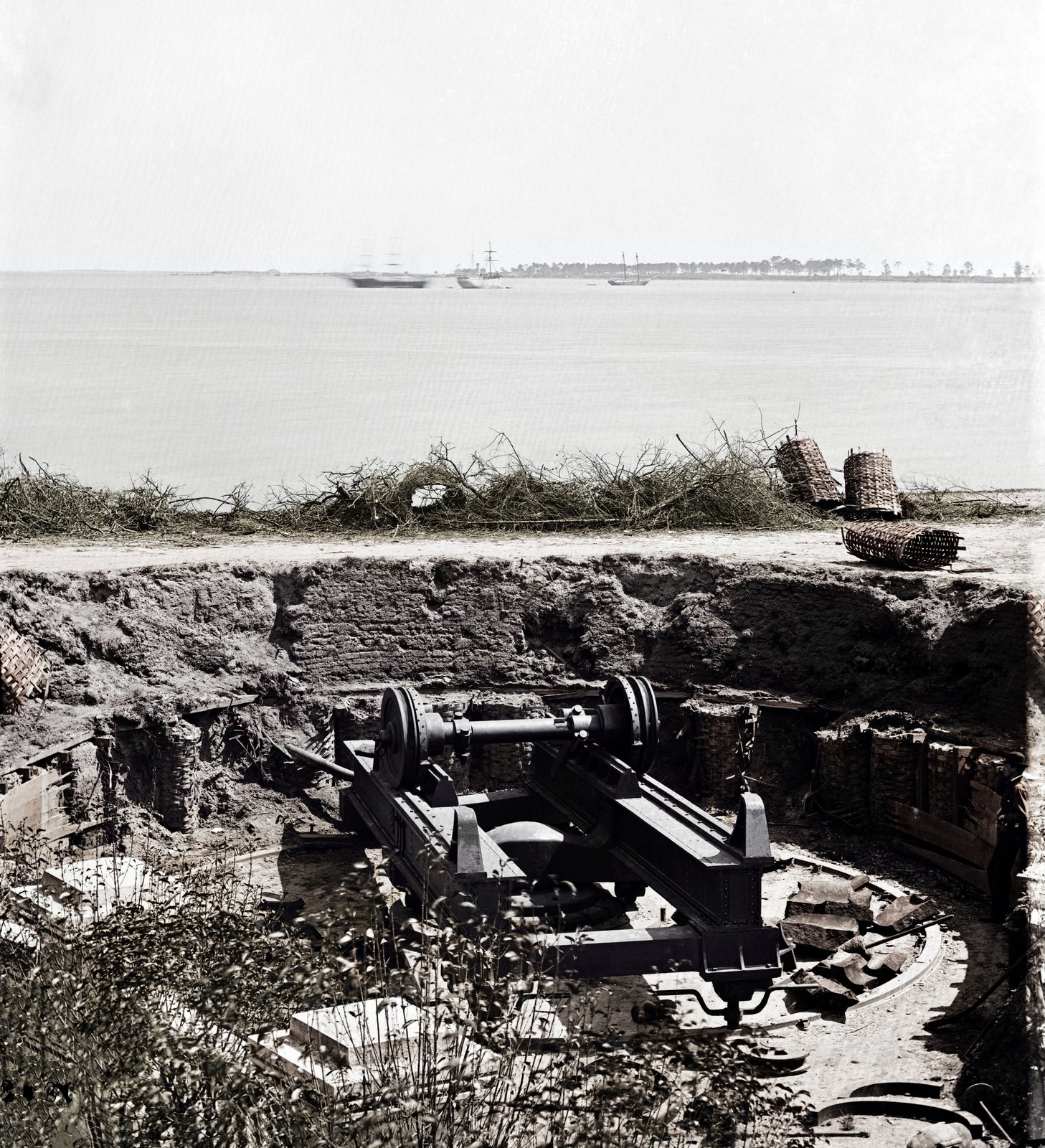
The pieces lie about the corner of East Battery and South Battery. What is recognizable here is mostly mounting rather than gun: the carriage and the chassis it recoiled on. A heavy seacoast piece of this period did not sit on wheels in any useful sense. It rode in a carriage that ran back on inclined rails set into a pivoting chassis, so that the recoil was taken up the slope and gravity helped run the piece back into battery. That machinery is what survives in the foreground; it was iron, and heavy enough that the blast which shattered the tube left the mounting largely intact.
The houses on the left are the East Battery mansions with their stacked piazzas, built to catch the harbor breeze and, in 1865, standing empty. Much of the lower city had been evacuated under the long-range Federal bombardment that began in August 1863 and continued, on and off, for some five hundred days.
The remains were eventually carted to the yard of the Charleston Arsenal, where Federal officers gathered the captured ordnance and where several of the other photographs in this collection were made.
The caption as printed in the book
Charleston Defenses George Barnard’s photograph, taken on March 14, 1865, shows the iron remains of the big cannon that Confederates blew apart as they evacuated Charleston the month before. Bits of the breech and barrel lie about at the corner of East Battery and South Battery Streets. They were later deposited in the yard of the Charleston Arsenal.
Also at White Point Garden