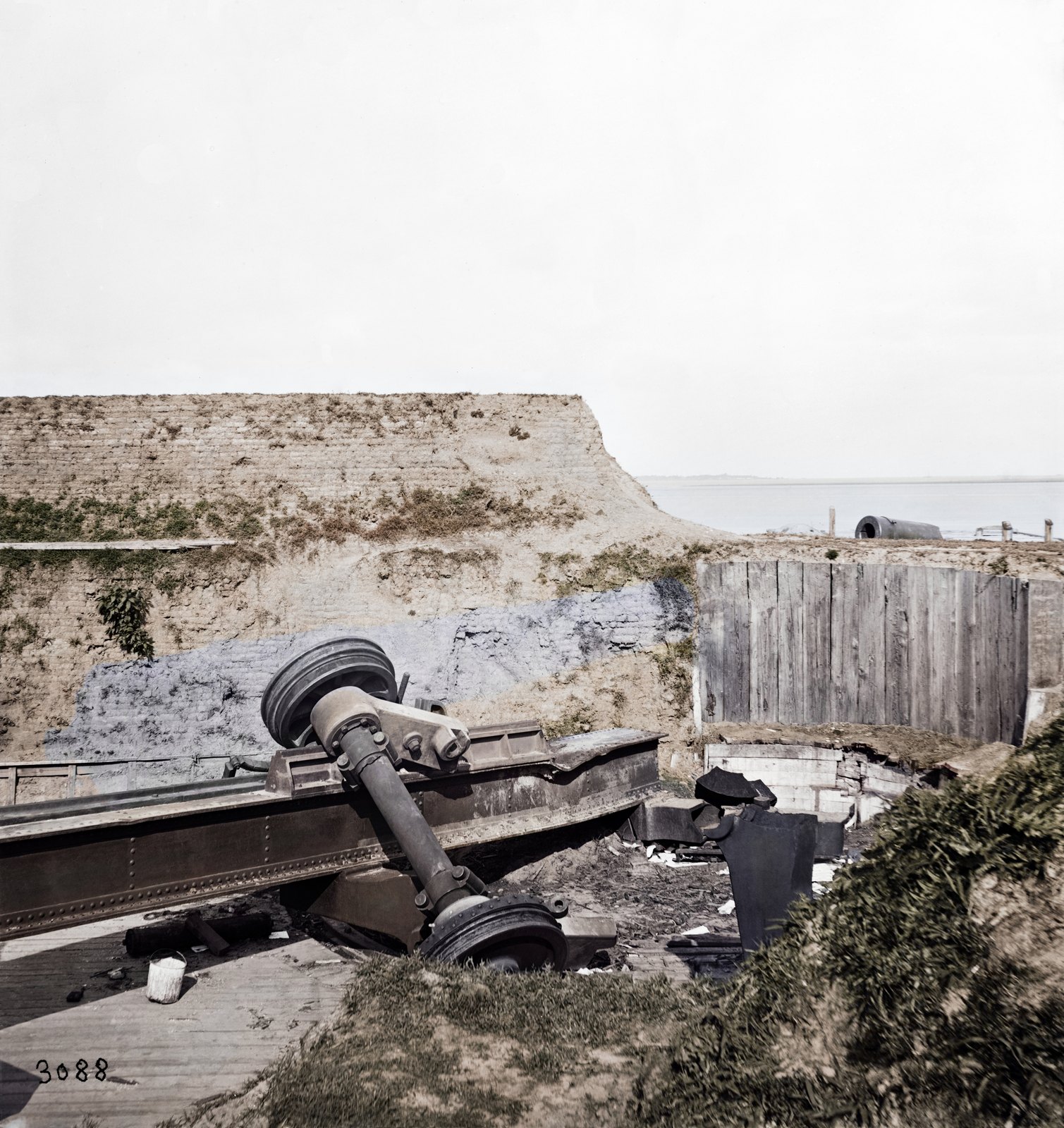
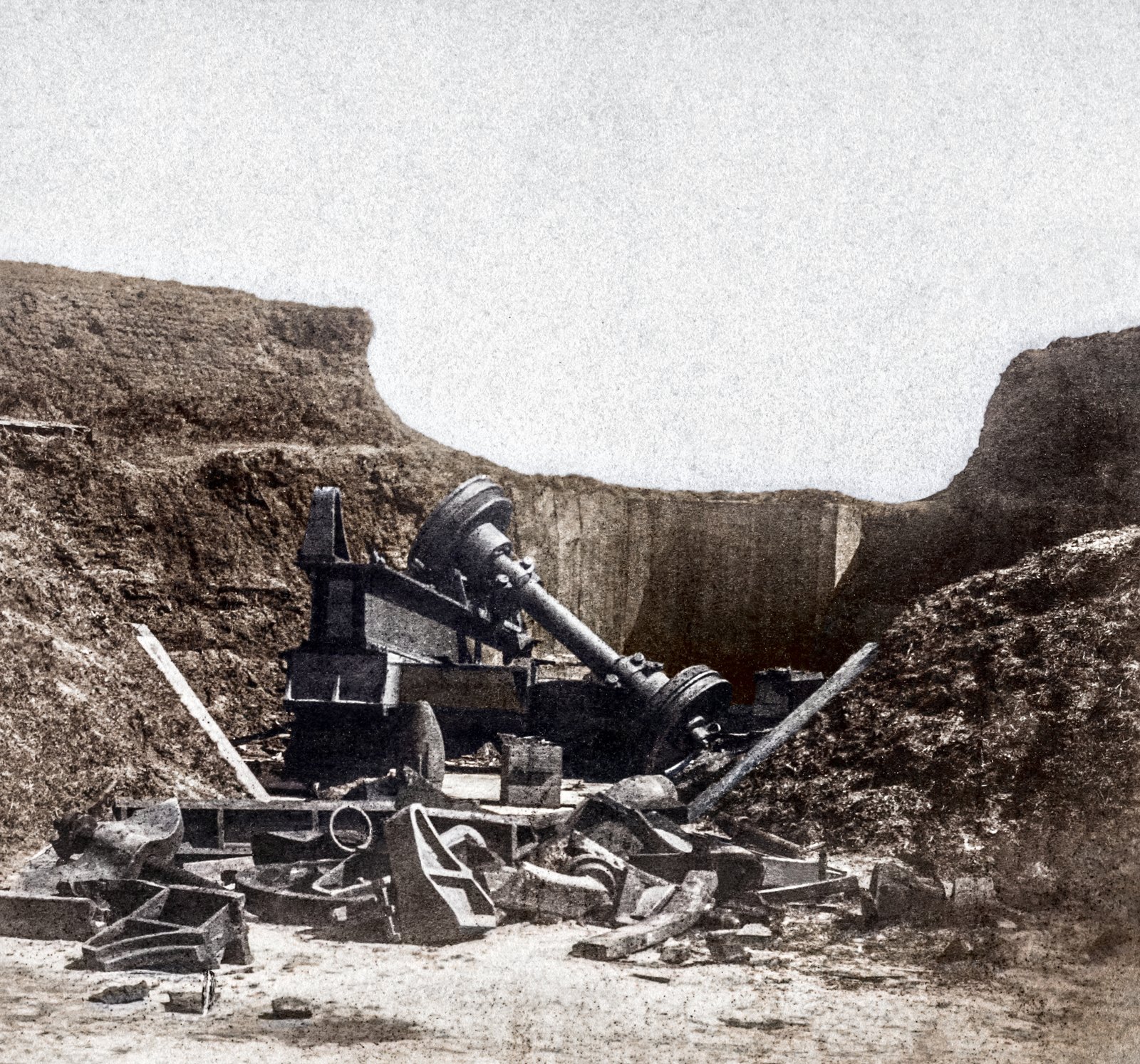
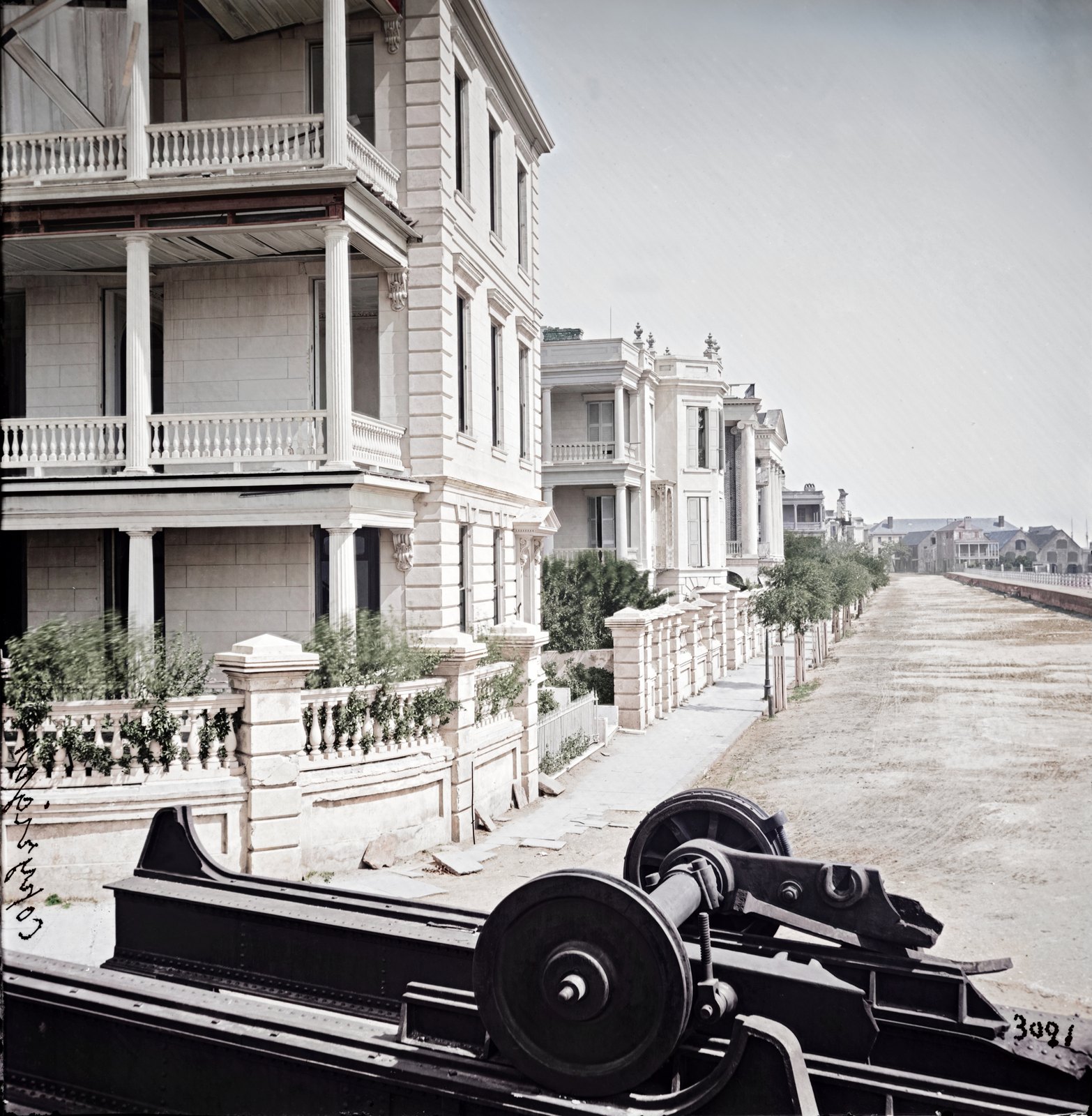
The Blakelys · Book p. 89
The Wrecked Blakely at the Battery (second view)
Drag to compareNational Archives
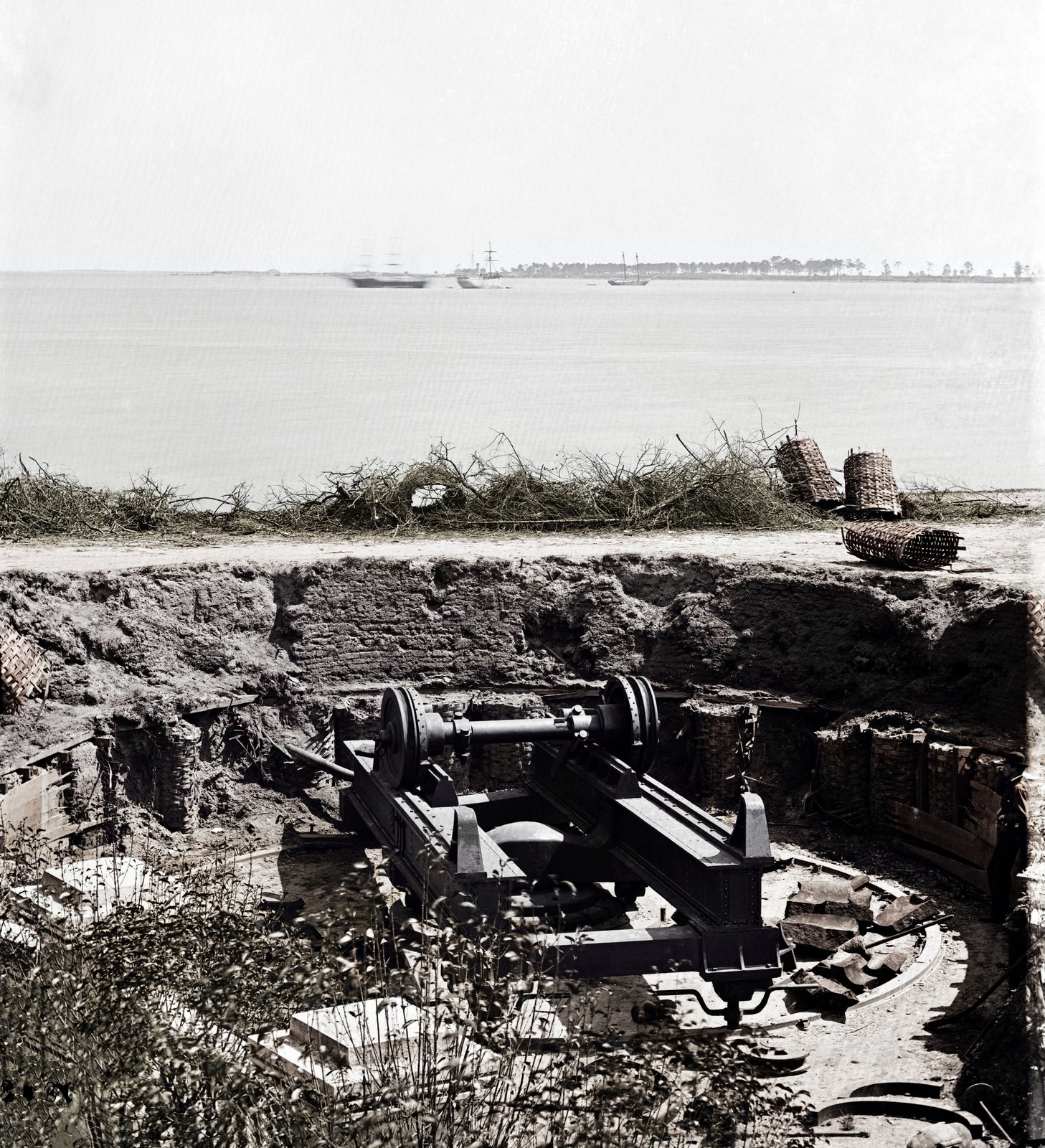
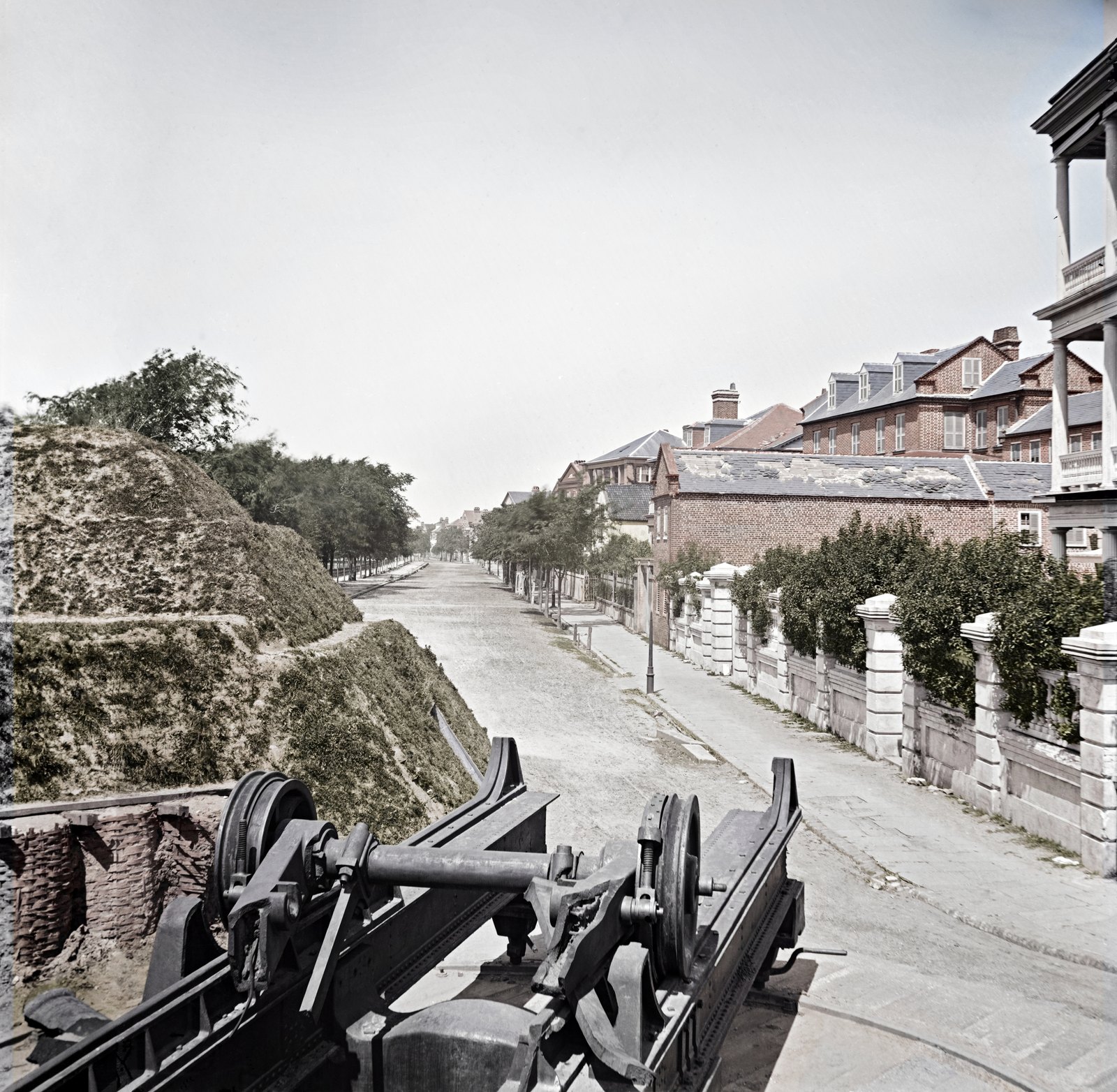
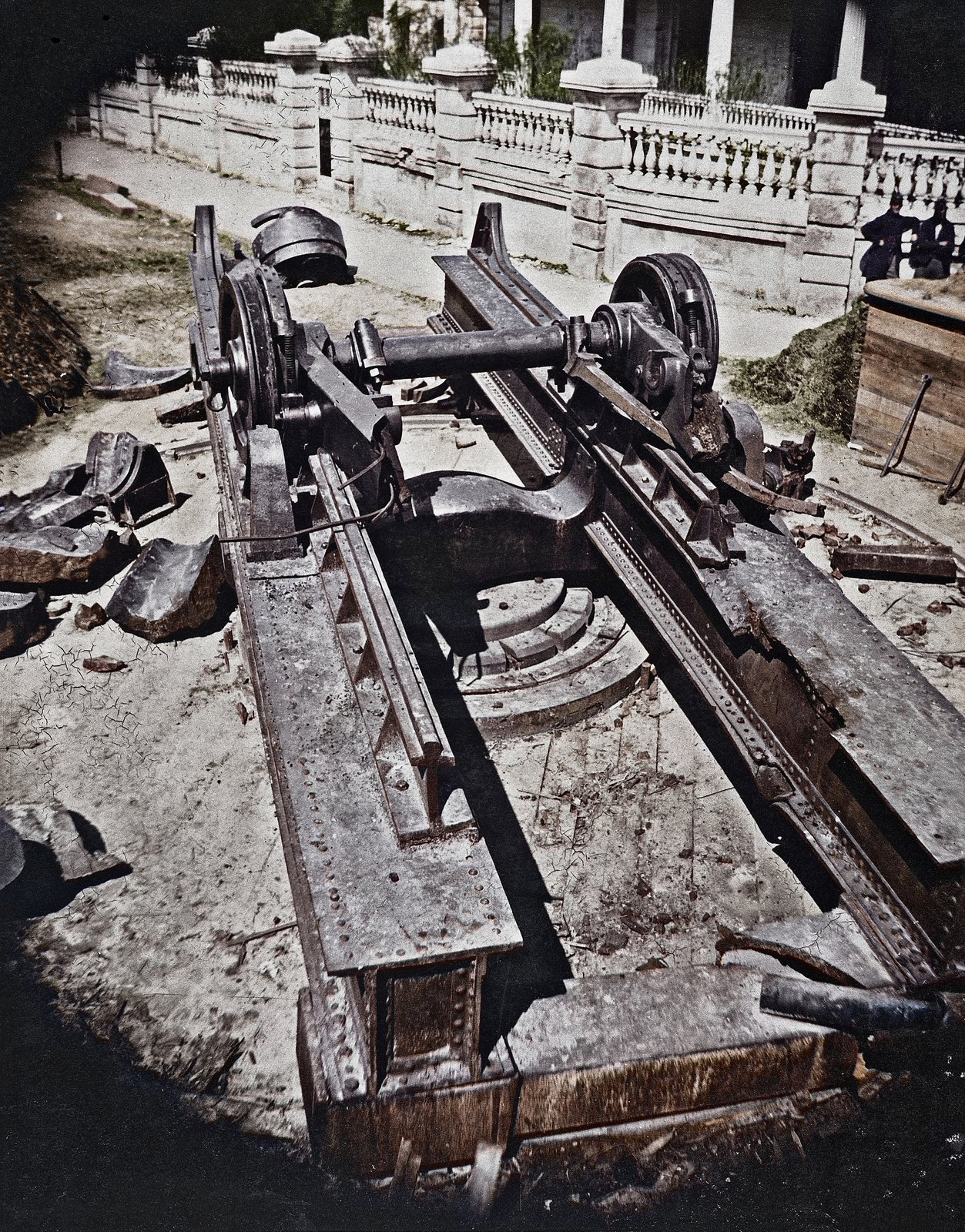
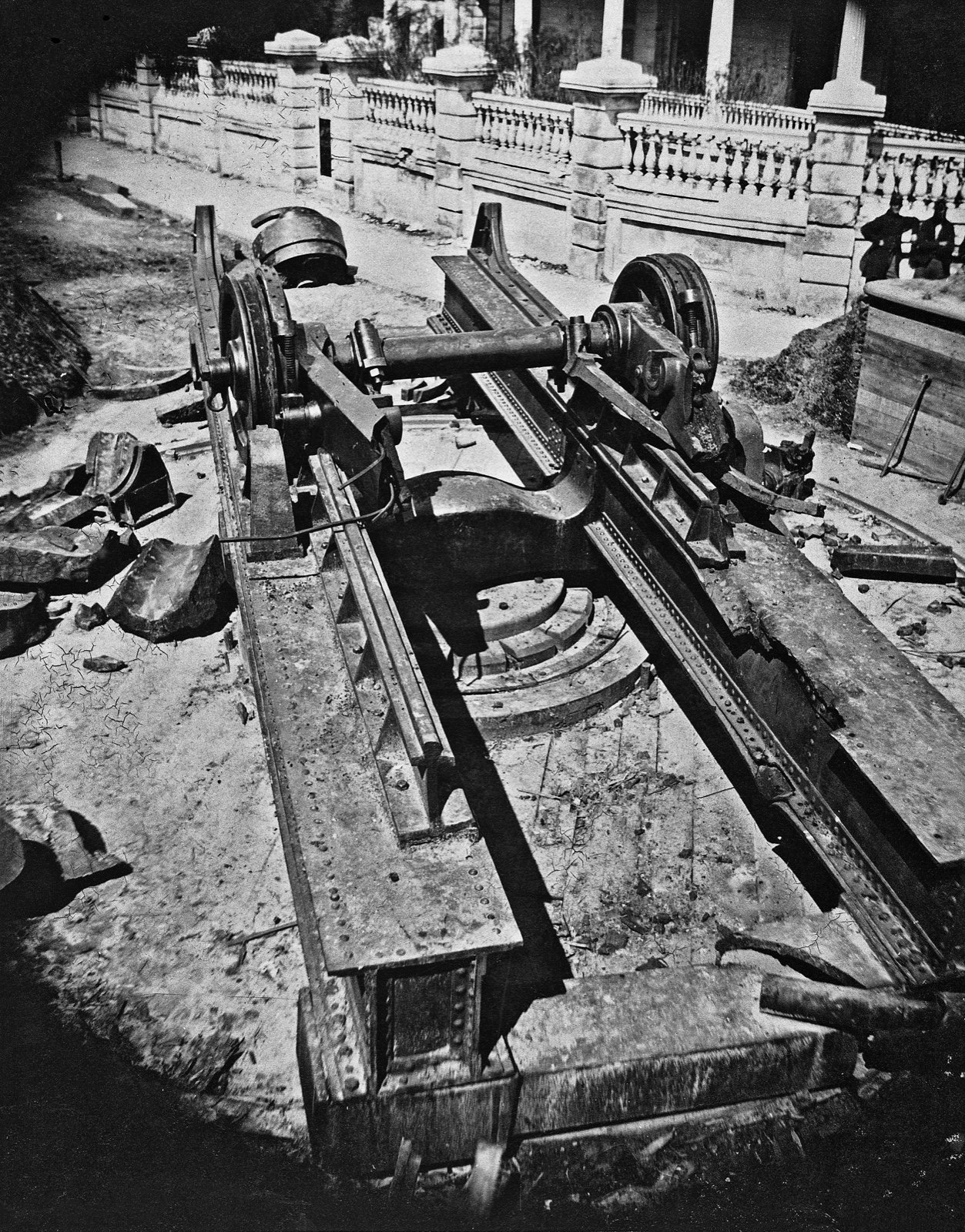
The second view of the same wreck, and a very different photograph: the camera is high and close, looking down into the ironwork rather than along the street. Barnard has moved onto a piazza above the site and pointed almost straight down at the mounting.
The angle is the most useful one in the collection for understanding how a heavy gun of this class was carried. Running from lower left to upper right is the chassis — the pivoting bed, with its rails, on which the whole assembly traversed to follow a target. Sitting across it, canted over where it fell, is the carriage that held the trunnions. The inclined rails are what absorbed recoil: the carriage ran up and back along them when the gun fired, then was allowed to run down again into firing position. Traverse wheels and the racer they turned on are visible where the chassis pivoted.
Beyond the wreck is the balustrade of White Point Garden. The garden had been a promenade before the war and a gun position during it; here the two are in the same frame, the ornamental railing a few yards from the ruin of the largest rifle in the Confederate service.
Nothing of the gun tube proper is identifiable in this view. That is the measure of what the destruction charge did: the mounting is battered but readable, and the gun it carried is gone.
The caption as printed in the book
Charleston Defenses George Barnard’s photograph, taken on March 14, 1865, shows the iron remains of the big cannon that Confederates blew apart as they evacuated Charleston the month before. Bits of the breech and barrel lie about at the corner of East Battery and South Battery Streets. They were later deposited in the yard of the Charleston Arsenal.
Also at White Point Garden